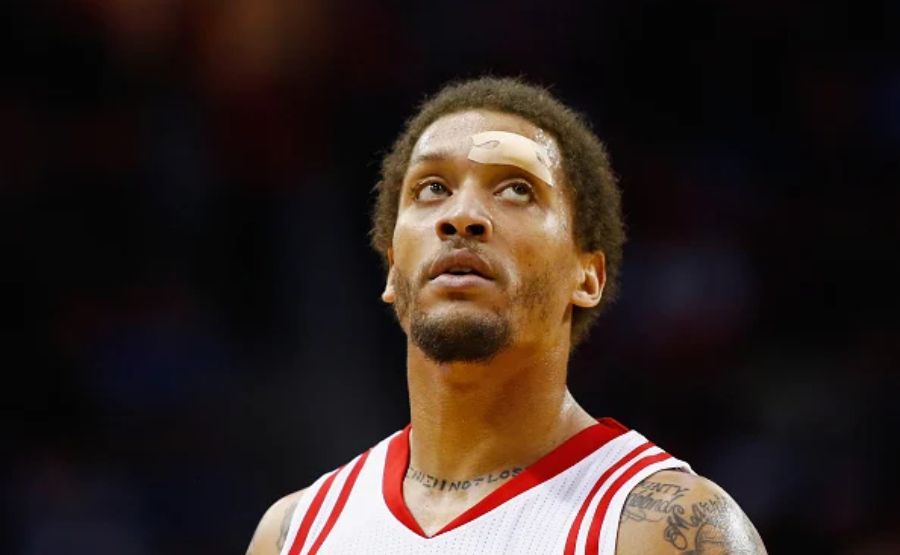
Michael Beasley Net Worth: The $33 Million Man Who Somehow Ended Up With $10 Million
He was supposed to be a star. Like, an actual one. Not a “solid contributor” or a “locker room presence.” A star. The kind of player you build a franchise around and name arenas after. And for about six weeks in 2008, everyone believed it.
Then everything kind of just… didn’t happen. And the story of how Michael Beasley went from second overall draft pick to BIG3 MVP to ranting about slavery comparisons against a three-on-three league is one of the most maddening, fascinating, genuinely sad cautionary tales in NBA history.
Let’s get into it.
Quick Bio
| Detail | Info |
| Full Name | Michael Paul Beasley Jr. |
| Born | January 9, 1989, Cheverly, Maryland |
| Height | 6’9″ |
| Draft | 2008, 2nd overall, Miami Heat |
| NBA Career | 11 seasons, 7 teams |
| Career Earnings (NBA) | ~$33.68 million |
| Estimated Net Worth (2025) | $10–15 million |
| Children | 9 (reported) |
| Post-NBA | BIG3, China, podcasting |
| Nickname | SuperCoolBeas |
The Kid From Cheverly
Cheverly, Maryland. Not exactly a basketball pipeline. Single mom, five kids, not a lot of money, a lot of moving around. Beasley spent parts of his childhood bouncing between schools and states. He attended something like six high schools total — I’ve seen different counts and nobody quite agrees — which tells you something about the stability of his early life.
What everyone does agree on: the kid could hoop. From day one. Absurdly.
He lands at Notre Dame Prep in Massachusetts for his senior year, and by then the recruiting world is in a full frenzy. He’s ranked number one in the class of 2007. Number one. Ahead of Derrick Rose. Ahead of James Harden. Ahead of Blake Griffin. In retrospect that’s a murderer’s row of talent and Beasley was considered the best of all of them.
That sentence should really sink in for a second.
One year at Kansas State. That’s all he played. One season, 33 games, and he averaged 26.2 points and 12.4 rebounds per game. Led the entire NCAA in rebounding. Won the Pete Newell Big Man Award. Won the Big 12 Player of the Year. The consensus was simple: this guy was going to be a monster in the pros.
The Miami Heat took him second overall in 2008 behind Derrick Rose. At the time, people genuinely debated which of the two was the better pick. That debate aged… poorly, in several directions, for reasons neither party fully controlled.
See also “Joel Smollett: The Man Who Built a Dynasty Nobody Talks About“
The Rookie Year That Was Also the Beginning of the End
Here’s the thing about Beasley’s rookie year: he was actually pretty good at basketball. Averaged 13.9 points per game off the bench for a Heat team that wasn’t doing much. Made the All-Rookie First Team. Showed flashes of exactly what scouts saw. He could score from anywhere. Catch-and-shoot, put it on the floor, post up, midrange, whatever you need. The arsenal was real.
But even then. Even in year one. The noise started.
The NBA holds a rookie symposium. A whole seminar — literally an official event — designed to teach young players how not to mess up their careers. The kind of event where they probably had sessions titled “Do Not Do These Things” with illustrated slides. Beasley managed to get caught in a room where marijuana was found during this exact event. The event about not getting caught with marijuana. He was fined $50,000.
He was basically the kid who cheated on the exam about academic integrity.
Pat Riley was not amused.
The Summer of 2009 and the Twitter Tattoo Incident
This is the part of the story where things get both funny and genuinely troubling, and the troubling part gets ignored because the funny part was so… vivid.
Beasley posts a photo on Twitter showing off his new tattoo. “SuperCoolBeas” across his upper back. Fine, whatever, NBA players get tattoos. But in the background of the photo — barely visible, subject of massive debate — were two small plastic bags on a coffee table that some people thought looked like marijuana.
The internet in 2009 lost its mind.
Then the tweets started. Beasley was clearly in a dark place emotionally. “Why do I feel like everyone is against me!!!!!?” is not the tweet of a man doing fine. He deleted the account. Posted another one. Deleted that too. A photo of him asleep on a boat surrounded by beer bottles circulated. The Heat said he was on a team fishing trip and his counselor was there. Sure.
By August, his rehab status had switched from outpatient to inpatient. The NBA doesn’t announce why. They don’t have to. But the math isn’t complicated.
Here’s what I keep coming back to though: nobody in 2009 had the language for what Beasley was clearly going through. Mental health wasn’t a conversation the NBA was having yet. You didn’t get a therapist on staff. You got a fine and a press conference and a warning. The league had “drug programs” and “substance treatment” but the idea that a 20-year-old kid from a chaotic upbringing, suddenly millionaire and famous and surrounded by yes-men and microscopes, might just be struggling with his mental health in ways that needed actual support — that concept was basically alien.
He wasn’t just high. He was drowning. And everyone watched and laughed at the tattoo photo.
The Journeyman Years
Miami traded him to Minnesota in 2010. He played two seasons for the Timberwolves and was, honestly, pretty good. Had a 42-point game. scored 19.2 points a game on average in 2010–11. If you adjust his stats for per-36 minutes — which is the fair way to evaluate a guy who never got consistent starters’ minutes — he was a legitimate star-level scorer basically every single season he was in the league.
Per 36 minutes: 19.6 points per game for his entire career. That’s not a journeyman number. That’s an All-Star number.
But
2011 in Minneapolis: ticketed for marijuana and speeding. He said it belonged to a friend. Sure, Michael.
The Phoenix Suns signed him in 2012. Three years, $18 million. He gave a press conference. Said he was done with marijuana. Said, and I’m quoting here paraphrased, that ten minutes of feeling good wasn’t worth his career and legacy. The Suns took it seriously. People believed him.
2013: traffic stop in Scottsdale. Three cigarettes smelling of marijuana in the Mercedes. Arrested. Felony charges. The Suns cut him.
I don’t even say that with meanness. It’s genuinely sad. He kept trying to turn it around and kept not turning it around.
Back to Miami briefly. Then China. Then back. Then Houston for a cup of coffee. Milwaukee for a cup of coffee. New York Knicks for a full season where he finally, finally, looked like the player everyone had been waiting for. Averaged solid numbers, played well, seemed stable.
Then the Lakers. 2018-19. He missed games. His mother was dying of cancer. He flew back to be with her. She passed away in December 2018. The Lakers season was a disaster — the famous LeBron injury year — and Beasley was suspended five games that year for violating the NBA’s anti-drug policy. The timing of that suspension, overlapping with the death of his mother, is the kind of detail that doesn’t fit neatly into any narrative about personal responsibility.
- His last NBA game. He was 30.
China, Because China
The NBA didn’t want him anymore but China did. And honestly? China was good to Beasley.
He had already played stints there between NBA contracts. With the Shanghai Sharks, with Shandong Golden Stars. In China, nobody cared about the marijuana arrests or the tweets. They cared that he could drop 31.7 points per game, which he did in the 2015-16 CBA season when he was named league MVP. In 2022 he went back — seven-figure contract with the Shanghai Sharks, according to reports. At 33.
The CBA was where Beasley went to remind himself he could still actually play basketball. And to get paid without having to apologize to another American front office.
The BIG3 Chapter: Still Here, Still Mad About It
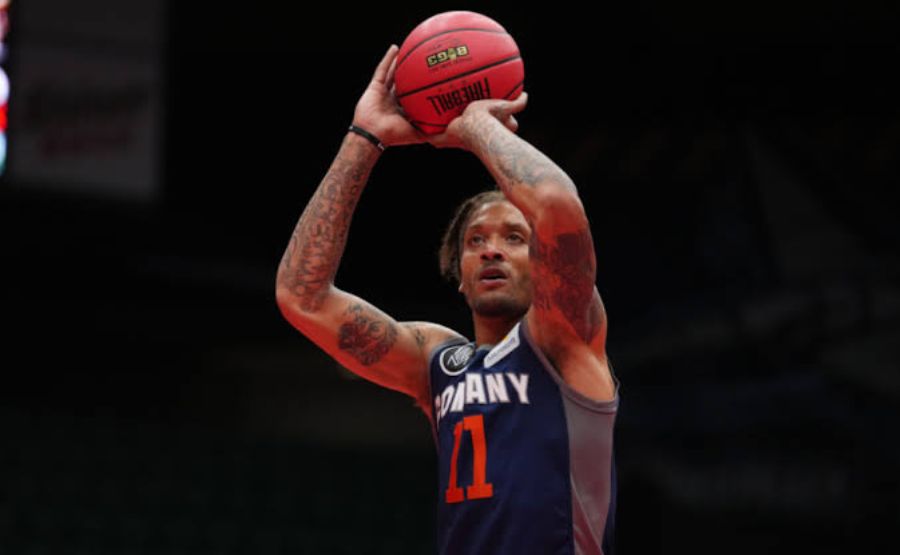
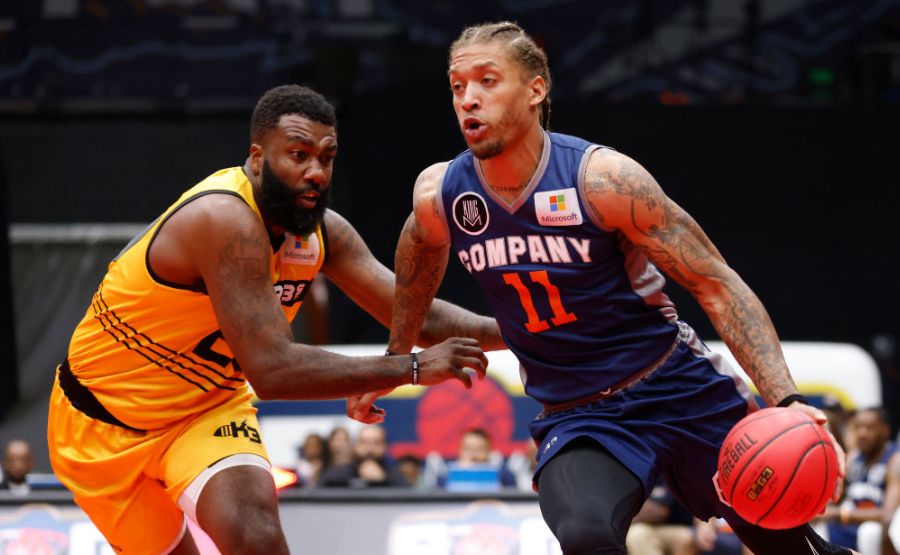
He joined the BIG3 — Ice Cube’s three-on-three league for players the NBA doesn’t want — and immediately dominated it. 2024 BIG3 MVP. Averaged 21.3 points and 6.3 rebounds. Led his team to the championship. Won it again in 2025 with the Miami 305.
But then he sat down and called the league borderline slavery because they only have two trainers for sixty players.
That’s very on-brand Beasley. Win the championship, win the MVP, immediately trash the league that gave you the trophy. He’s not wrong about the trainer thing, by the way. It does sound like a mess. But the delivery. The delivery is always Beasley.
He told reporters he only plays in the BIG3 because it’s “the only thing available.” He still wants an NBA contract. He’s 37 years old. He co-hosts a podcast called “3’s and Ones” with Chris Haynes and Ice Cube. He’s doing the circuit.
He hasn’t fully let go. Which is either inspiring or heartbreaking depending on what kind of mood you’re in when you read this.
The Money Math
Let’s talk actual numbers because this is ostensibly an article about net worth.
NBA career earnings: approximately $33.68 million. That’s a confirmed figure, not a guess. His biggest single contract was the three-year, $18 million deal with Phoenix. Which they voided after the arrest. So he never got all of that.
Overseas earnings are harder to pin down. The 2022 Shanghai deal was reportedly seven figures. China deals across multiple stints probably added another $3–5 million total. BIG3 money exists but it is not NBA money. The league pays, but it doesn’t pay like that.
Net worth estimates in 2025 range from $10 million on the conservative end to $15 million on the optimistic end. I’d trust the $10 million figure more. The $15 million number circulates on sites that also think he produced sports documentaries and invested in tech startups, which… I could not verify that anywhere credible and it reads like SEO fiction someone invented.
One site had his net worth at $245 million. Listed him as an NFL wide receiver. That site had confused him with literally a different person. I mention it because the internet is a garbage fire and if you’re trying to research celebrity finances you deserve to know that.
The real story is someone who earned $33+ million, lived like an NBA player (kids, travel, legal fees, the general friction of a chaotic personal life), and retained roughly 30 cents on the dollar. Which, in fairness, is not that unusual for professional athletes. Most of them don’t end up with half their career earnings. The money in the NBA is real but so are the expenses.
He has nine children. That’s not a typo. Nine. From at least one confirmed relationship. I’m not going to moralize about that but I will note that it factors into any realistic accounting of his finances.
What He Says Now
Beasley has been remarkably honest in recent years. That Pivot podcast interview in 2022 was genuinely raw. He said he’d reached out to people so many times, and felt so unheard, that he needed to “die with some kind of dignity.” That’s a heavy thing to say. He’s been doing mental health advocacy work since, talking to athletes, doing interviews, trying to reframe the conversation around what he went through.
“Every time they said something messed up about me,” he told reporters in 2025, “I was in the gym playing basketball.”
And that’s true. The stats support it. He was never not a scorer. Whatever was happening off the court, the guy put up numbers. That’s the tragedy underneath the comedy of it all — the talent was always there. A guy who averaged 19.6 points per 36 minutes his whole career should not have been a journeyman. The math doesn’t add up, and Beasley knows it, and he’s spent years trying to figure out how to live inside that gap between what he was supposed to be and what happened.
He’s also been pretty direct that race and perception played a role in how his story got written. The Stephen A. Smith quote that circulated a while back — about how a white player with that kind of potential would have been protected and kept around — that quote hit something real. Beasley didn’t dispute it.
Final Words
SuperCoolBeas was supposed to be a dynasty. He became a story instead. A complicated one, shot through with real talent and real pain and real bad decisions and a system that was not built to catch any of it.
The net worth, whatever the real number is — call it $10 to $12 million — is both more and less than it should be. More because plenty of kids from Cheverly never see $10 million. Less because this was a guy who had the tools to build a Hall of Fame career and somewhere between the NBA rookie symposium and the Scottsdale traffic stop it just didn’t come together.
He’s still hooping. Still talking. Still mad. Still asking the NBA for one more shot.
At 37.
You almost have to respect it.
FAQs
1. What is Michael Beasley’s net worth in 2025?
Most credible estimates put it between $10 and $12 million. Some sources claim higher but those figures are not verifiable and seem fabricated for clicks.
2. How much did Beasley earn in the NBA?
Approximately $33.68 million in career NBA salaries across 11 seasons and seven teams.
3. Why did the Phoenix Suns cut him?
He was arrested in 2013 on suspicion of marijuana possession during a traffic stop, which violated terms of his $18 million contract. The Suns terminated the deal.
4. Did Beasley file for bankruptcy?
No confirmed reports or public records suggest this. Given his estimated current net worth, bankruptcy doesn’t appear to be part of his story.
5. How many kids does Michael Beasley have?
Reported as nine children total — a mix of sons and daughters. His two oldest, Mikaiya and Michael III, were born in 2009 and 2010.
6. What is the BIG3 and why is Beasley in it?
BIG3 is a three-on-three basketball league co-founded by Ice Cube, featuring ex-NBA players. Beasley is a two-time MVP and 2025 champion with Miami 305. He’s openly said he plays because it’s the only platform currently available to him in the US.
7. Did Beasley ever win anything meaningful in the NBA?
He made the NBA Finals in 2013 with the Miami Heat alongside LeBron James, though he was a role player on that squad. He won NBA All-Rookie First Team in 2009.
8. What did Beasley average in China?
31.7 points per game in the 2015-16 CBA season with Shandong Golden Stars, earning league MVP. He was legitimately a monster over there.
9. What happened to Beasley’s mother?
His mother, Fatima Smith, died of cancer in December 2018. Beasley missed NBA games to be with her during her final days. He was with the Lakers at the time.
10. Has Beasley publicly discussed his mental health?
Yes, extensively in recent years. A 2022 Pivot podcast interview became widely discussed. He advocates for athletes to seek mental health support before things go wrong, not just during crises.
11. Was Beasley really the top recruit over Derrick Rose and James Harden?
Yes. He was ranked number one in the 2007 recruiting class, ahead of Rose, Harden, and Blake Griffin. That context makes his career arc even more striking.
12. Is Beasley still trying to get back to the NBA?
As of mid-2025, yes. He continues to express interest in an NBA contract while playing in the BIG3. He’s 37. The odds are not favorable, but the man is persistent.
Read beyond the ordinary with The Nexus Magazine.