Albert Ezerzer: The Man Hollywood Forgot Until He Was Gone
Nobody puts a transportation driver on a pedestal. You know this. I know this. The whole industry knows this and doesn’t care. Except one June night in 2014, on the season premiere of Suits, four words appeared on a black screen before the credits rolled — In Memory of Albert Ezerzer — and suddenly a few million people were furiously typing a name they’d never heard into Google. And what they found was almost nothing. Which, when you think about it, is the most honest thing that’s ever happened to Hollywood.
Quick Bio
| Detail | Information |
| Full Name | Albert Ezerzer |
| Born | January 31, 1959, Los Angeles, California |
| Died | May 9, 2014 (aged 55) |
| Cause of Death | Aortic rupture |
| Occupation | Transportation Department crew member |
| First Credit | Family Pictures (1993) |
| Known For | Suits, Interstate 60, Covert One: The Hades Factor |
| Tribute | Suits Season 4, Episode 1 — June 11, 2014 |
The Man No One Photographed
Here’s the weird thing. He worked in Hollywood for over twenty years. Twenty-plus years on sets, around cameras, next to A-listers, inside productions that cost tens of millions of dollars. And there is not one clean, confirmed public photo of the man. Not one.
That’s not an accident. That’s a whole career lived entirely in the service of other people’s visibility.
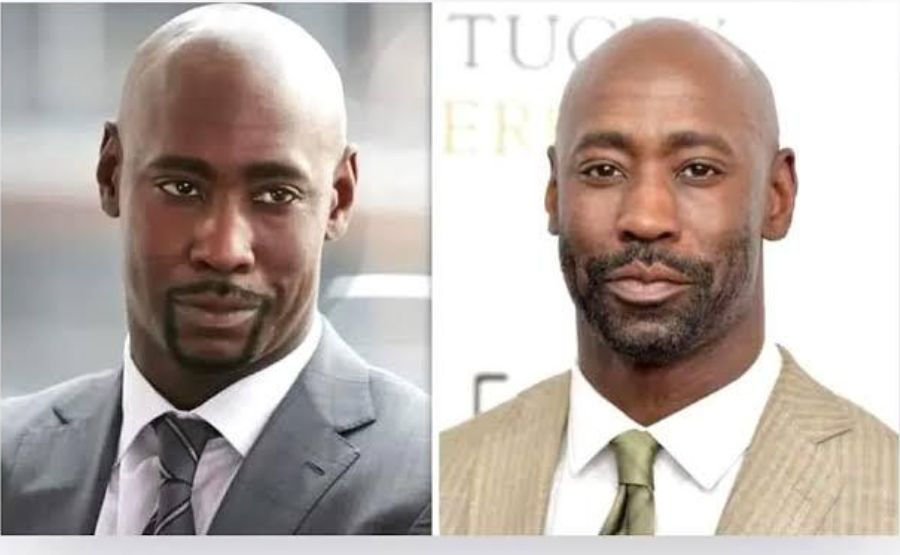
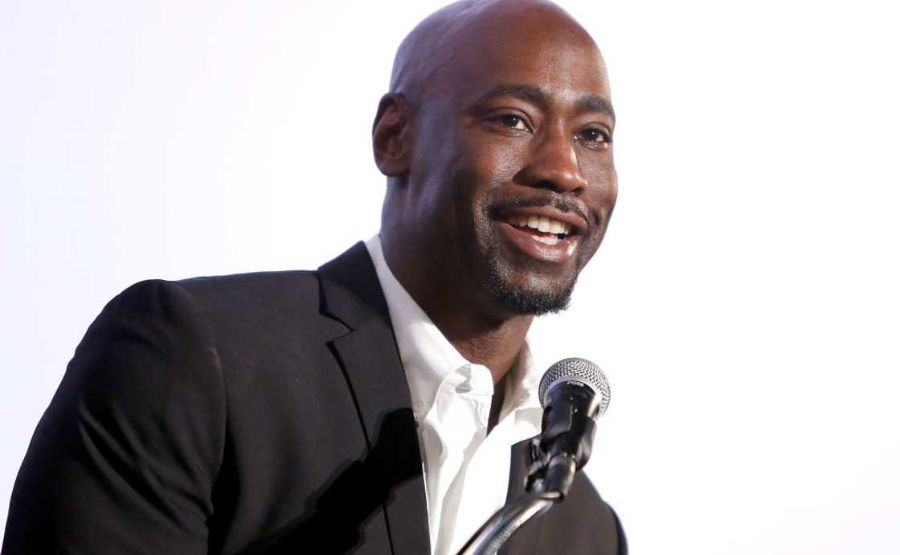
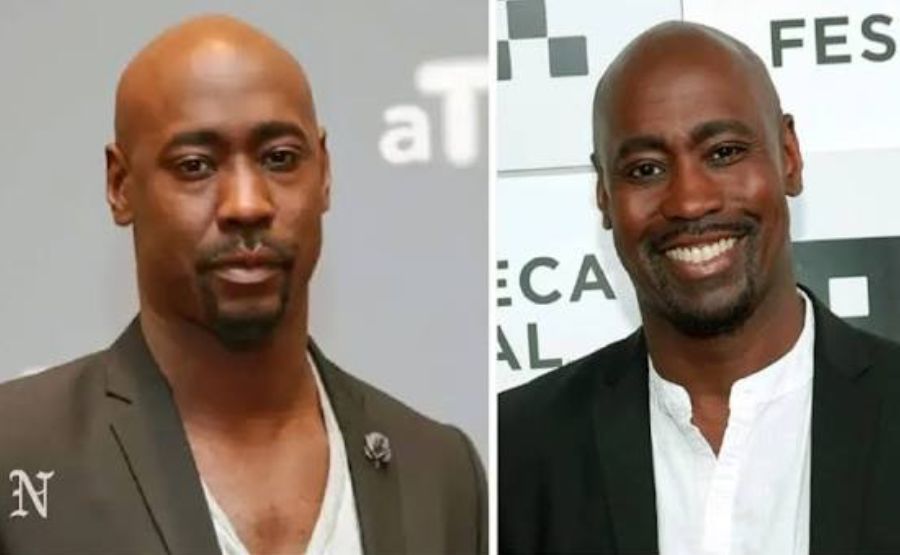
When the Suits tribute aired, people went searching. They wanted a face to put to those four words. What they found instead was D.B. Woodside — the actor, tall, bald, Black, who’d appeared briefly in Suits itself as a character named Jeff Malone. Some accounts say they looked similar. Some accounts say the mix-up was just lazy internet people grabbing the first image that appeared. Either way, Woodside eventually had to get on Twitter in 2023 and say, essentially, guys, these pictures are both of me. Both. A man had to clarify his own existence because the internet had decided he was someone else who was dead.
That’s a special kind of erasure. Albert Ezerzer died and the internet couldn’t even find his face.
See also “Baxter Neal Helson: The Ghost at the Cyrus Family Feast“
Los Angeles Kid, 1959
He was born in L.A. on January 31, 1959. That’s about all anyone’s confirmed. No interviews. No yearbook quotes floating around Reddit. No estranged cousins going on podcasts.
What we know is the outline. An African American kid growing up in postwar Los Angeles, the city that made the movies but wasn’t always kind to the people who looked like him. At some point he found his way to film sets. Not as an actor. Not as a director. As the person who makes sure the actor shows up to the set where the director is waiting.
That’s not nothing. That’s actually everything.
1993: The Unglamorous Beginning
His career starts, on record, with a 1993 drama called Family Pictures. Not a movie you’ve seen. Not a movie anyone talks about. Just a production that needed someone reliable behind the wheel, and Albert Ezerzer was that person.
This is how you start in Hollywood if you’re not someone’s nephew or film school roommate. You show up. You drive. You’re on time. You don’t complain when the shoot runs until 4 AM. The following day, you repeat the process.
Over the following decade he quietly built a reputation. Not a famous one. The kind that lives entirely in the mouths of production coordinators calling each other. Do you need a driver? Call Ezerzer. Guy’s a professional.
Started in 2001. Interstate 60 in 2002. The Hades Factor, a covert film from 2006. These aren’t blockbusters, but they’re real films with real budgets and real pressure, and someone trusted him to move the pieces.
The Celebrities He Drove and Never Talked About
This is the part I find genuinely fascinating. One source lists the names of people Albert drove during his career: Cameron Diaz. Elizabeth Taylor. Melanie Griffith. Dennis Rodman — which must have been an experience and a half. Frank Sinatra, reportedly, when Sinatra was filming in Toronto.
Sinatra. The man drove Frank Sinatra.
And you know what Albert Ezerzer did with that? Nothing publicly. No memoir. No podcast guest spot titled The Stars I Chauffeured. He drove Shirley MacLaine for fifteen episodes of Anne of Green Gables: A New Beginning. He drove Rosie O’Donnell in Riding the Bus with My Sister. He drove Donald Sutherland. He drove Maury Chaykin, Eva LaRue Callahan.
These are stories. Actual stories. And they are gone with him.
That’s the thing that sits with me at 3 AM when I’ve been down this rabbit hole too long. The anecdotes died when he did. Whatever Frank Sinatra said in the back of that car, whatever Rosie O’Donnell complained about, whatever weird hour Elizabeth Taylor wanted picking up — Albert knew all of it and told none of it. That’s a kind of discretion that’s basically extinct in 2024.
Suits: 2011–2014
When Suits started filming in Toronto — and it’s important that it filmed in Toronto, not L.A., which tells you something about budget and tax incentives that we don’t need to get into right now — Albert Ezerzer was part of the transportation team they assembled.
He was there from Season 1. The whole time the show was building its audience, building its reputation, building its story, he was outside. He was in the parking lot at 5 AM. He was the first face an exhausted actor saw on the way to set and the last one they saw on the way home.
Aaron Korsh, the creator of Suits, confirmed it after the tribute aired. His words were simple: Albert worked in our transport department and passed away recently. Beloved member of the Suits family.
Beloved. Not contractually associated with. Not in the credits of. Beloved.
That word comes from somewhere real. You don’t put a full-screen memorial in your season premiere for someone you merely tolerated.
May 9, 2014
He was 55. He was actively working. And then he wasn’t.
An aortic rupture. For those who don’t know — and I didn’t, fully, until I looked it up at 1 AM — that’s when the main artery carrying blood from your heart tears or bursts. It causes massive internal bleeding. It is fast. It is merciless. It gives you basically no time to react, no time for the people around you to react.
He reportedly collapsed while involved with production. There was no long illness. No slow goodbye. No moment where the Suits team could properly process what was about to happen.
One day he was there. Then he wasn’t. And the Season 4 premiere was already locked.
So they put his name on a black screen and the whole country went, who?
The Internet Does What the Internet Does
After that tribute aired June 11, 2014, the searches started. Who is Albert Ezerzer? Albert Ezerzer death. Albert Ezerzer actor. Albert Ezerzer and D.B. Woodside.
The D.B. Woodside thing became its own monster. Because there were no photos of Albert. Because D.B. Woodside is also a Black man who appeared on Suits. Because the internet doesn’t do nuance well, especially at scale. Someone posted Woodside’s photos calling them Ezerzer. It spread. It became the default image result in some corners of the web. And it just… stuck. For years.
D.B. Woodside eventually had to clarify on Twitter, posting something along the lines of: Ummm. This is me. Both pictures.
Think about that. An actor — a real, working, living actor — had to issue a public statement clarifying that he was not a dead man. Because a dead man had no photos. Because a dead man had lived his whole career off-camera, and when the world finally came looking, there was nothing to find.
The internet tried to give Albert Ezerzer a face. It grabbed the wrong one. And the right one doesn’t exist in any searchable database.
What a Transportation Crew Member Actually Does
I want to dwell here for a second because people blow past this.
A missed call time costs a production thousands of dollars per hour. An actor who doesn’t show up on time because their driver was late or got lost or had the wrong address doesn’t just inconvenience one person — it ripples through a crew of fifty, a hundred people standing around waiting. Production companies budget obsessively against this. The transportation coordinator is basically a logistical quarterback.
Albert did this for over two decades. Over thirty productions. He moved equipment, props, and personnel. He knew Toronto like a second skin by the end. He knew what actors needed before they knew they needed it, probably. That’s what twenty years of doing the same thing with full commitment looks like.
The industry estimates transportation crew members at that level earn between $40,000 and $60,000 a year. Not glamorous money. Now I drive Ferraris money. People in Hollywood make a fraction of what the on-screen talent makes, while those same people go home in cars that Albert Ezerzer probably drove.
He was not famous. He was not wealthy. He was trusted.
Why This Matters
Here’s my maybe-unpopular take after weeks of digging on this: the Suits tribute wasn’t charity. It wasn’t a PR move. Aaron Korsh didn’t slap Albert’s name on screen to seem humane.
He did it because on a set, in the actual physical reality of production, the transportation captain is someone you see every single day. More than your co-stars, sometimes. More than your producer. Before your morning coffee. At the end of a fourteen-hour shoot.
Albert Ezerzer was part of people’s daily lives for three years on that show. The cast knew him. The crew knew him. And when he died — suddenly, violently, from the inside out — they were grieving an actual human being who was part of their actual daily texture.
The tribute was the least they could do. It was also the most public acknowledgment anyone in his line of work is ever likely to get.
And the kicker is that even that gesture — even four words on a black screen before the credits — was more than most people who do what Albert did will ever receive. Which says everything about how the industry values the people who hold it together from the bottom.
Final Words
Albert Ezerzer was born in Los Angeles in 1959 and died in Toronto in 2014. He spent twenty-one years ensuring that other people’s creative visions could physically exist in the world. He drove the stars. He moved the equipment. He showed up before anyone else and he left after everyone went home.
He had no verified public photograph. He left no memoir. He gave no interviews.
What he left was a reputation that traveled entirely by word of mouth among people who know how sets actually work. He left a hole in a morning call sheet. He left a name on a black screen that made millions of strangers care, briefly, about someone they’d never heard of.
That’s life. A real, complete, lived one. The kind Hollywood produces thousands of and acknowledges almost never.
FAQs
1. Who exactly was Albert Ezerzer?
A transportation department crew member who worked in Hollywood and Canadian film productions from 1993 until his death in 2014. He was not an actor. He ensured the cast and crew got to set on time.
2. How did Albert Ezerzer die?
He died on May 9, 2014, at age 55 from an aortic rupture — a sudden, catastrophic tear in the main artery from the heart.At the time, he was still working on Suits.
3. Why did Suits give him a tribute?
Because he was genuinely loved by the team. Creator Aaron Korsh called him a “beloved member of the Suits family.” He’d been part of their transportation crew since the show’s first season.
4. Is Albert Ezerzer the same person as D.B. Woodside?
No. Completely different people. D.B. Woodside is a living actor known for Lucifer, 24, and a brief arc on Suits itself. They are not related.Because there were no verified images of Ezerzer, the internet confused them, and Woodside had to personally address this on social media in 2023.
5. Why are there no photos of Albert Ezerzer?
Because he worked entirely behind the scenes for over two decades and was never a public figure. Crew members in the transportation department are not photographed or profiled. He existed in the industry but not in its image archive.
6. What films did Albert Ezerzer work on?
His documented credits include Family Pictures (1993), Tart (2001), Interstate 60 (2002), Covert One: The Hades Factor (2006), Anne of Green Gables: A New Beginning, Riding the Bus with My Sister, and Suits (Seasons 1–3).
7. Which celebrities did he drive?
Reports name Cameron Diaz, Elizabeth Taylor, Melanie Griffith, Shirley MacLaine, Rosie O’Donnell, Donald Sutherland, Maury Chaykin, Dennis Rodman, and Frank Sinatra, among others.
8. When did the Suits tribute air?
June 11, 2014. The first episode of Season 4. The tribute appeared as a full-screen card reading “In Memory of Albert Ezerzer” before the closing credits.
9. What was his salary roughly?
Estimates place transportation crew members at his level earning $40,000–$60,000 annually. Not Hollywood wealth by any measure, despite working alongside some of the industry’s biggest names.
10. Did D.B. Does Woodside actually respond to the confusion?
Yes. In 2023 he posted on social media, clarifying that photos being shared as Albert Ezerzer were actually photos of himself. His response was essentially: These are both pictures of me.
11. Why does Albert Ezerzer still get searched so often?
Because the Suits tribute keeps finding new audiences via streaming. Every new viewer who sees “In Memory of Albert Ezerzer” types his name. And the search results remain thin, which makes people search harder.
12. What’s the real legacy here?
That an industry built on visibility gave its highest recognition — an on-air memorial — to a man it kept almost entirely invisible for over twenty years. Make of that what you will.
Read beyond the ordinary with The Nexus Magazine.