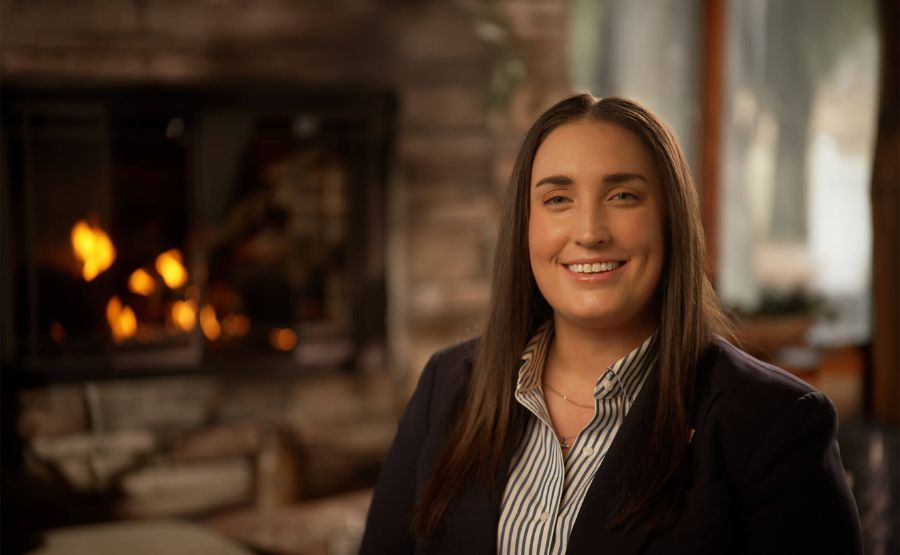
Madison Sheahan: The Fish Cop Who Ran America’s Deportation Machine
She was 28 years old and running the second-largest federal law enforcement agency in the country. Twenty-eight. That’s the age when most people are figuring out if they can afford a two-bedroom apartment. Madison Sheahan was managing a $9 billion budget and 20,000 federal agents conducting the most aggressive immigration crackdown in American history. And before that? She was managing fish.
That’s not a metaphor. That’s the actual timeline.
Quick Bio
| Detail | Info |
| Full Name | Madison D. Sheahan |
| Born | ~February 9, 1997 |
| Hometown | Curtice, Ohio (near Lake Erie) |
| Education | Ohio State University — Public Affairs, Agribusiness; minors in Community & Business Leadership |
| Athletics | Varsity Rowing, Ohio State — multiple Big Ten championships; team captain |
| Known For | Deputy Director of ICE (2025–2026), Noem loyalist, congressional candidate |
| Marital Status | Single. Unmarried. No confirmed partner. |
| Nickname at ICE | “Fish Cop” |
| Primary result | Third place. May 2026. Ouch. |
Ohio Farm Kid
Curtice, Ohio. If you don’t know it, that’s fine. Nobody does, really. It sits near Lake Erie in that flat northwestern corner of the state where the horizon goes forever and your options for fun involve livestock or high school football.
Madison grew up there on a horse farm. Her dad Roger managed the breeding operations, her mom Laura raised the kids and talked to local reporters about how special her daughter was. The kind of family that uses words like “work ethic” un-ironically because they actually mean it.
She joined Future Farmers of America. She became a state officer. She did public speaking competitions where teenagers in blue corduroy jackets debate grain prices and soil health. And she was — reportedly — very, very good at it.
There’s something about FFA kids. Either they run back to the farm or they run hard away from it into some machine of ambition. Sheahan ran.
See also “SHAUN SO: The Quiet Operator Nobody Asked About (But Should Have)“
Ohio State: Rowing and Resume-Building
She got to Ohio State and walked onto the women’s varsity rowing team. Then she became captain. Then they won Big Ten championships. If you’ve never rowed a crew, understand this: it is genuinely one of the most grueling, humbling, team-dependent sports on Earth. There’s no star. There’s no showboating. You either pull in sync or you lose.
She graduated with a degree in public affairs — public management, leadership, policy, agribusiness. That’s not a soft degree. That’s someone who knew exactly what she was building toward before she finished her second year.
And somewhere in those college years, she got connected to Kristi Noem.
This is where the story gets interesting in the way that a lot of American political careers get interesting — which is to say, dependent entirely on one relationship that changes everything.
The Noem Network
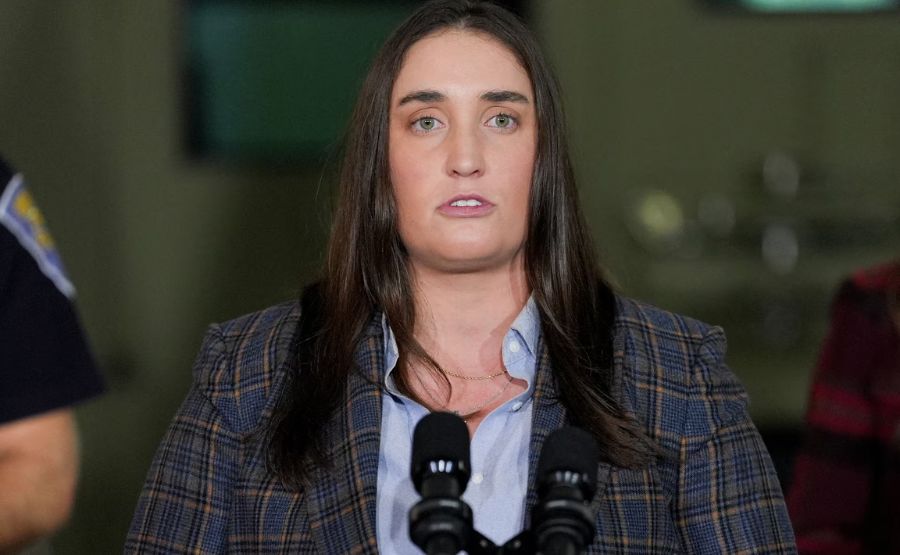
Kristi Noem was governor of South Dakota. Madison Sheahan ended up working for her. What, exactly, is where accounts differ slightly — “political director,” “aide,” “body woman” according to some outlets. The Daily Beast called her Noem’s body woman. HuffPost used that word too. Whatever the exact title, she was close. Close in the way that matters in politics, which is: proximity to the principal, access to the conversations that count, showing up in the frame.
When Noem became Secretary of Homeland Security under Trump’s second administration, she didn’t forget her people.
That’s how Madison Sheahan, former Ohio farm girl and crew team captain, became — at 26 — the Secretary of the Louisiana Department of Wildlife and Fisheries.
Yes, Louisiana. Yes, wildlife. Yes, fish. This matters. Remember it.
The Louisiana Interlude
So here’s what’s actually impressive about this: she ran that department. She managed an $280 million budget and 800-plus employees. She was 26. She created a Special Operations Group within the enforcement division that coordinated with law enforcement for Mardi Gras and the Super Bowl.
She learned how to manage bureaucracies. Real ones. When things went wrong, there were real individuals involved, real consequences, and real media coverage.
She also — and this comes up in criticism — allegedly directed enforcement operations that included homeless sweeps in New Orleans. Make of that what you will.
The broader point: she went to Louisiana knowing nobody, ran a major state agency, didn’t blow it up, and used it as a launching pad to something much, much bigger. That’s not nothing.
But she had no law enforcement background. None. No badge. No cuffs. No arrests. No investigations. Zero years in anything resembling federal immigration enforcement.
This will matter enormously in about six months.
ICE
March 2025. Noem installs her at ICE as Deputy Director. Todd Lyons gets the acting director role — Lyons who spent years inside ICE, who knew the agency’s bones. Sheahan gets the number two spot, oversight of every operational entity in the building.
ICE officials found out. They were not thrilled.
The nickname spread fast: Fish Cop. Whispered in hallways, then in interviews, then in a New York Magazine profile that landed like a grenade on a slow news day.
She knew they were calling her that. She knew exactly what they thought of her. And her response, to the magazine, was possibly the most politically audacious thing she said all year: “I absolutely think I’m qualified for the job. Because at the end of the day, what really makes anybody qualified for any job?”
You can read that two ways. The generous read: she’s pragmatic, she’s confident, she’s right that “qualifications” are socially constructed. The less generous read: she just accidentally admitted she doesn’t think credentials should matter for running the federal agency currently detaining and deporting millions of people.
Both readings are probably a little true.
What She Actually Did at ICE
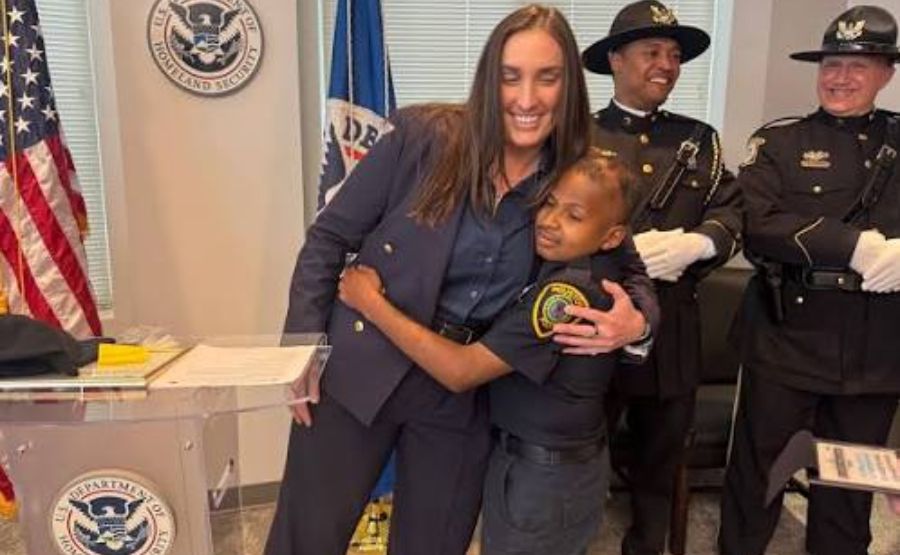
Here’s the thing the critics don’t want to say and the fans overstate: she ran it. She showed up. She wore the tactical vest in Gary, Indiana at Operation Midway Blitz press conferences. She did weekly briefings. She reportedly hired 12,000 agents. She oversaw, according to her own campaign claims, the deportation of 2.5 million immigrants during her tenure.
The legal framework for any of those numbers is contested. The humanitarian toll is contested even more. But the operational reality is that the machine ran, and she was standing at the controls.
Some local law enforcement leaders — even Trump supporters — criticized her for emailing their deputies’ subordinates directly, essentially trying to poach local cops into ICE positions. That’s a territorial violation in law enforcement culture. You don’t recruit out of someone else’s department without going through channels. She did. They complained.
She kept going.
Who Is She When Nobody’s Watching
Single. Very single. Every outlet that dug into her personal life came back empty-handed. No boyfriend confirmed. No husband. No kids. A two-bedroom condo in Navy Yard, D.C. She reportedly kept horses at the family farm back in Ohio. She runs half-marathons. She rows on an erg machine.
She told the New York Magazine reporter that she believes Kristi Noem was “called to serve by God.” Which is either deeply sincere or deeply strategic and the uncomfortable reality is it might be both.
There’s something almost monastic about how she’s structured her life. Everything stripped down to purpose. The Midwest pragmatism, the religion framing, the physical discipline, and the public service. She’s 28 and she seems to have decided that private life is a distraction she can’t afford.
Whether that’s admirable or sad is a question she probably doesn’t spend much time on.
The Campaign
January 2026. Minneapolis is on fire — ICE actions there killed a 37-year-old mother named Renee Good, caught on video, and the protests spread nationwide. Sheahan quietly announces she’s leaving ICE to run for Congress in Ohio’s 9th District.
The timing is extraordinary. She didn’t run when ICE was popular. She ran when it was toxic. She ran toward the controversy.
Or — and this is the more cynical read — she saw the window at ICE closing and decided a congressional seat in her home district was better than waiting to be pushed out of a politically volatile agency.
Her campaign video featured her in a bulletproof vest, deportation rhetoric, Trump conservative branding. She said she’d stopped more illegal immigration in under a year than Marcy Kaptur had in 43 years in Washington.
She never got Trump’s endorsement. Think about that. She was his administration’s face of deportation operations, she called herself a Trump conservative, and Trump didn’t endorse her. That silence is a whole biography in itself.
Third Place
May 6, 2026. Primary night. Ohio’s 9th.
Derek Merrin got 44.1% of the vote. Josh Williams got 24.3%. Madison Sheahan got 20.2%.
Third, Out of a field that also included an Air Force veteran and a healthcare executive. She finished third.
The race wasn’t close. It wasn’t stolen. There was no recount drama, no last-minute reversal. Ohio Republicans looked at the ICE brand, looked at the woman who’d been its public face during one of the most nationally divisive enforcement campaigns in recent memory, and said: pass.
A DHS insider told The Daily Beast, before the campaign even started, that if Sheahan was going to shake a lot of hands, she needed to learn not to crush them. Whoever said that — they weren’t wrong.
What to Make of Her
Madison Sheahan is 29 years old and she has already run a state cabinet agency, commanded a federal enforcement apparatus with a nine-billion-dollar budget, stood at a podium next to Kristi Noem while America argued about deportation, and lost a congressional primary in front of national media.
Most people her age haven’t done one of those things.
She rose fast because of a relationship — Noem gave her everything, basically. That’s true. It’s also true that patronage alone doesn’t keep you in a room full of career law enforcement professionals for ten months without imploding. She stayed. She ran the meetings. She did the operational work.
The critics saying she was unqualified aren’t wrong. The defenders saying she was effective aren’t wrong either. She exists in that uncomfortable space where both things are true simultaneously.
Whether she was a tool of an immigration crackdown that cost people their lives, or a capable young administrator doing a job she was assigned — that’s not a question this article resolves, because it’s not a question that can be resolved without getting into the ethics of the underlying policy. Which is a much longer argument.
What’s clear is this: she believed in what she was doing. She said God called Noem to serve. She told a magazine she was qualified and basically dared them to argue. She drove to Ohio and shook hands and wore red hats and lost anyway.
Final Words
She’s not done. You don’t build a resume like hers at 29 and disappear. She’ll probably resurface — another appointment, another campaign, another role in whatever comes after Trump’s second term reconfigures the Republican Party’s infrastructure.
The Fish Cop thing will follow her. Nicknames always do.
FAQs
1. Is Madison Sheahan married?
No. As of mid-2026, she is single with no publicly confirmed romantic partner. She guards her personal life like it’s classified.
2. What’s the “Fish Cop” nickname about?
ICE officials coined it after learning she’d been running Louisiana’s Department of Wildlife and Fisheries before being installed as ICE deputy director. The implication being: fish warden to immigration enforcement deputy is a weird leap. She didn’t love the nickname. She answered it anyway.
3. Did she actually have law enforcement credentials?
No. Critics noted she didn’t meet the statutory five-year law enforcement experience requirement for the ICE director position. She was deputy director, not director — but the point still stings.
4. How did she get the ICE job?
Through Kristi Noem, full stop. She worked for Noem in South Dakota, Noem recommended her to Louisiana, then installed her at ICE. That’s the chain.
5. What happened at her congressional run?
She finished third in the May 2026 Republican primary with 20.2% of the vote, losing to Derek Merrin who took 44.1%.
6. Did Trump endorse her?
No. She called herself a Trump conservative and leaned hard on her ICE credentials. He stayed silent. That silence said something.
7. What did she actually do at ICE?
Operationally: oversaw all agency entities, was involved in major enforcement campaigns like Operation Midway Blitz, claimed credit for hiring 12,000 agents. She was, by her own account, the administrative backbone of the Trump deportation operation.
8. Why did she leave ICE?
Officially, to run for Congress. More cynically, she left right as ICE faced maximum heat over the Minneapolis killings and nationwide protests. The agency’s public image was collapsing. The congressional seat was an exit ramp.
9. How old is she?
29 as of 2026. She was 28 when she ran ICE. This continues to be the most disorienting thing about her entire biography.
10. Did she grow up wealthy?
No. Horse farm in rural Ohio, both parents working. Midwestern working-class. FFA, not country clubs.
11. What’s her relationship with religion?
She’s publicly faith-forward. She told New York Magazine she believes Noem was “called to serve by God.” She frames her own public service in similar terms — purpose-driven, mission-oriented.
12. What’s next for her?
Unknown. But 29-year-olds who’ve run federal agencies don’t retire. She’s somewhere plotting the next move.
Read beyond the ordinary with The Nexus Magazine.