Brita Ingegerd Olaisson: The Woman Who Became a Song Nobody Asked Her About
She never wanted any of this.The first thing you must comprehend is that. Every article written about Brita Ingegerd Olaisson exists because a man — a very famous, very talented, occasionally very selfish man — sat alone in an empty Toronto house one summer afternoon in 1969 and felt sorry for himself. He picked up a guitar. He wrote a masterpiece. And Brita, the woman he’d driven away through a decade of touring and infidelity, became the unnamed ghost in a folk ballad that 93 million people have since streamed on Spotify.
She didn’t get a writing credit. She rarely got a mention by name. She got child support and a house.
Quick Bio
| Detail | Info |
| Full Name | Brita Ingegerd Olaisson |
| Born | 1935, Sweden |
| Died | June 2005, Scarborough, Ontario |
| Nationality | Swedish (later Canadian resident) |
| Married | Gordon Lightfoot, April 1963 |
| Divorced | 1973 |
| Children | Fred Lightfoot, Ingrid Lightfoot |
| Occupation | Office worker, bookkeeper, financial advisor |
| First Job in Canada | Toronto office of M.P. Hofsetter (Swedish typewriter/office supply firm) |
| Post-divorce residence | Scarborough, Ontario |
| Legacy | Inspiration for “If You Could Read My Mind,” one of the most covered breakup songs in history |
Sweden to Toronto, With a Suitcase and No Fanfare
Born in 1935, Brita Ingegerd Olaisson grew up in Sweden in the postwar quiet that shaped an entire generation of Scandinavians: practical, reserved, not inclined toward drama. She moved to Canada in the early 1960s. Why? To learn English. That’s it. That’s the whole adventure.
She got a job at the Toronto office of a Swedish typewriter company. Unglamorous? Sure. But she was good at it. Sources describe her as having a head for numbers — bookkeeping, accounting, finances. She was the kind of person who actually understood where the money was going. Which, foreshadowing alert, would matter enormously later.
Here’s something nobody dwells on: she moved to a foreign country alone, at a time when that wasn’t common for young women, got herself employed, and built a life from scratch. That takes nerve. Quiet nerve, but nerve.
See also “Yelba Osorio: The Woman Who Walked Away From Hollywood Before Hollywood Could Throw Her Away“
The Meeting, the Marriage, the Whole Mess
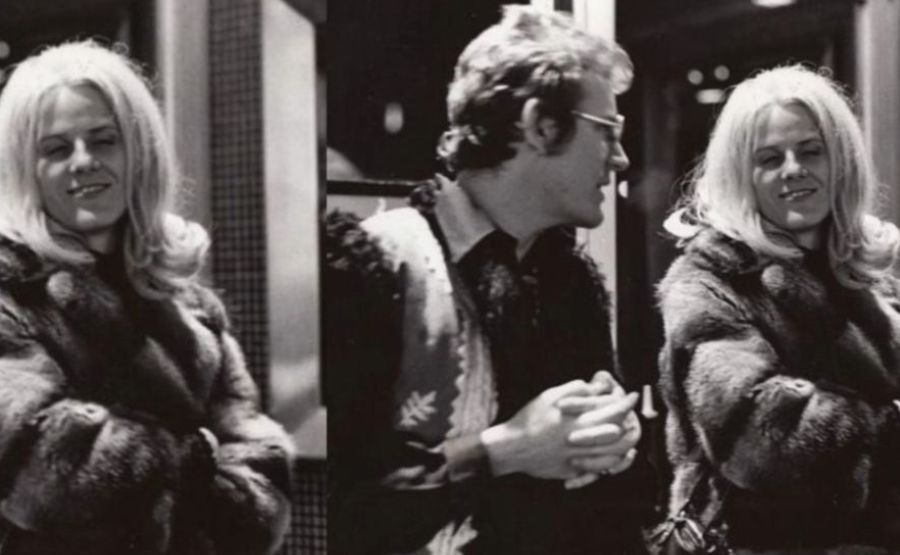
She met Gordon Lightfoot around 1962. He was trying to launch a solo career, she was working downtown Toronto. The details are fuzzy in the way early-60s romance details always are — nobody was writing memoirs yetWe do know that they formerly shared a rooming home in Toronto’s Annex neighborhood, which is regarded as the “romantic geography of the young and poor.”
They married in Stockholm in April 1963. His home turf for the ceremony, her home country for the venue. That symmetry probably felt meaningful then.
They honeymooned through London — where Lightfoot had a stint on a BBC TV show — then Ireland. It sounds idyllic. And for a minute, maybe it was.
Then came Fred. Then Ingrid. Then the touring.
What Living With Gordon Lightfoot Actually Meant
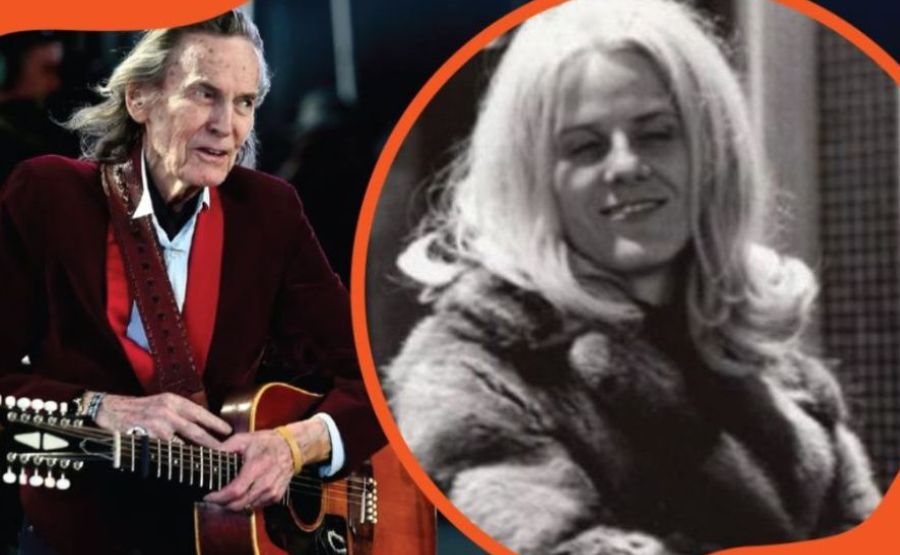
Let’s be honest about what Brita signed up for, or what it became. Lightfoot’s career started accelerating almost immediately after their wedding. “For Lovin’ Me” was picked up by Peter, Paul and Mary in 1965. Suddenly he wasn’t just playing coffee houses in Yorkville. He was going places.
Which meant Brita was staying there.
She managed the household. She raised two kids. She kept the financial books with apparently enough competence that people called her a skilled financial advisor. And Lightfoot — by his own later admission — was out there on the road doing what men in bands have done since the invention of tour buses.
He actually wrote “For Lovin’ Me” while married to Brita. Just sit with that. The song includes the charming lines: I’ve got a hundred more like you / So don’t be blue / I’ll have a thousand before I’m through. He sang this. In public. While his wife was home with their children. In the documentary from 2019, an elderly Lightfoot watches this footage with his third wife Kim and physically recoils. “How do you think Brita felt,” he mutters. Then: “Turn this fucking thing off. I hate this song.”
Decades of guilt compressed into one sentence. Good.
The Slow Unraveling
Nobody describes a single dramatic rupture because there probably wasn’t one. This is the exhausting reality of marriages that die by accumulation — each absence stacking on the last, each phone call that didn’t come, each “the road was rough, I’ll explain later” that never got explained.
At some point in the late 1960s, Brita went back to Sweden. Temporarily. Whether it was a trial separation or just visiting family, the record isn’t clear. But Lightfoot later said something that’s stayed with me since I dug it up: “Brita gave me a sense of security that I lost as soon as she went back to Sweden.”
He realized what he had when it was already halfway out the door. Classic.
That summer of 1969 — he’s alone in their Toronto house that’s up for sale. The marriage is functionally over. He’s sitting there, and the song arrives. If you could read my mind, love / What a tale my thoughts could tell. He’s mining his own wreckage in real time and turning it into art that would outlive both of them.
The divorce was finalized in 1973. Ten years. Two kids. Done.
The Divorce That Made Headlines in Canada
Here’s where it gets less romantic and more courthouse. The divorce hit Canadian newspapers because Lightfoot was, by then, genuinely famous. And during the proceedings, he admitted adultery. On the record. In court.
The settlement: Brita got custody of Fred and Ingrid. She received $4,500 per month in support — serious money in 1973 — plus $150,000 for a house. Lightfoot, to his credit, didn’t fight this. He’d acknowledged what he’d done.
And Brita? She took the settlement, bought the house, and disappeared from the public record. Completely. No tell-all interview. No memoir. No bitter Reddit posts before Reddit existed. She just… went back to being a private person, which is what she’d always wanted to be in the first place.
There’s something almost defiant about that level of quiet.
What Happened After: The Invisible Years
She lived in Scarborough, Ontario. She raised Fred and Ingrid. She apparently enjoyed gardening, cooking, antiquing — the hobbies of someone who has consciously chosen peace over stimulation. She maintained a relationship with her children. There’s no documented drama, no tabloid sightings, no “Lightfoot’s Ex Speaks Out” headlines.
She died in Scarborough in June 2005, at age 70, in Scarborough General Hospital. That’s in the public records. Lightfoot died in 2023.
The math here is quietly devastating: she predeceased him by 18 years. The man who inspired the song that immortalized his guilt over her got to live another nearly two decades. Life is not fair and also not interested in your feelings about that.
The Song. The Daughter. The Changed Lyric.
“If You Could Read My Mind” has been covered hundreds of times. It hit number one on the Canadian charts. It peaked at number five in the US. Stars covered it. It soundtracked breakups for people who’d never heard of Gordon Lightfoot. 93 million streams and counting, which means 93 million times someone has listened to the soundtrack of Brita’s marriage falling apart without knowing her name.
But here’s the detail that gets me: Brita’s daughter, Ingrid, eventually asked her father to change a line in the song when he performed it live. The original line was, “I’m just trying to understand the feeling that you lack.” He was persuaded to sing “the feeling that we lack” by Ingrid instead.
That word. We instead of you. A daughter editing her father’s version of her parents’ breakup in real time, asking him to share the blame he’d been deflecting. And he did it. He actually did it. Changed it whenever he performed it live after that.
There’s a whole family therapy session embedded in that single pronoun shift.
The Financial Advisor Nobody Talks About
One thing that consistently gets buried: Brita wasn’t just a housewife waiting for her husband to come home. Multiple sources mention her skill with money, her work as a bookkeeper and financial advisor. She had a career. She had competence. She was a sounding board for Lightfoot’s business decisions, apparently, and did the math that kept things organized.
Which makes the narrative of “quiet supportive wife” both accurate and slightly insulting. She wasn’t just quietly supportive. She was operationally useful and probably undervalued on both counts.
Also — and I want to stress this — she moved countries at age 26 to improve her English, got a professional job, married a folk singer before he was famous, managed his household finances while raising two children, survived a messy public divorce with composure intact, and then built a second private life from scratch. In the 1970s. Without Instagram. Without a single think-piece written in her defense.
That’s a resume, not a footnote.
What the Mythology Gets Wrong
Every biography-adjacent article about Brita follows the same arc: Sweden, Toronto, met Lightfoot, married, children, divorce, death. Clean. Tidy. Sad.
What they mostly skip: she had interiority. She had opinions. She chose Sweden as the wedding venue. She built professional skills. She negotiated what was — for 1973 Canada — a serious divorce settlement. She didn’t publicly speak about any of this, ever, which in a media culture that rewards grievance with attention is almost incomprehensible. The silence was a choice. An active, sustained choice.
We fill that silence with whatever we need her to be. Long-suffering wife. Hidden muse. Casualty of fame. She was probably all of those things at different moments and none of them entirely.
The honest answer is: we don’t really know who Brita Ingegerd Olaisson was. We know she existed. We know what she lost. We know what got made from that loss by the person who caused it.
The song isn’t hers. It’s his. That’s the whole problem in a single sentence.
Final Words
Brita Ingegerd Olaisson was born in a country with long winters, learned a second language, emigrated, fell in love with a musician who couldn’t stop moving, raised his children while he wasn’t there, got turned into a ghost in a ballad she never asked for, negotiated her worth in a courtroom, moved to Scarborough, grew a garden, died in 2005.
Gordon Lightfoot sat with Kim watching old footage of himself being a jerk to his first wife and finally said “turn this fucking thing off.”
That’s the whole story. It’s not enough. It never is.
FAQs
1. Who was Brita Ingegerd Olaisson?
She was a Swedish-born woman who moved to Canada in the early 1960s, married Canadian folk singer Gordon Lightfoot in 1963, had two children with him, divorced in 1973, and lived a private life in Scarborough, Ontario until her death in 2005.
2. Why is she famous?
Technically, she isn’t — and that’s the point. She’s known primarily as the inspiration for “If You Could Read My Mind,” one of the most covered breakup songs in the history of folk music. Her fame is borrowed from someone else’s guilt.
3. What gave rise to the song “If You Could Read My Mind”?
Gordon Lightfoot wrote it in the summer of 1969 while sitting alone in their Toronto house, which was up for sale. His marriage to Brita was collapsing. He described it as emotional trauma manifesting in song. Thirty seconds of self-pity that produced a masterpiece. The math on that is infuriating.
4. Why did the marriage end?
Lightfoot admitted infidelity during touring. He acknowledged it in the divorce proceedings and again publicly, multiple times, in interviews and documentaries. He also wrote a song literally before their marriage fell apart bragging about having a thousand women. So.
5. What did Brita get in the divorce settlement?
Custody of Fred and Ingrid, $4,500 per month in support, and $150,000 for a home. In 1973. That was real money. She negotiated it, or her lawyers did, and Lightfoot didn’t fight it.
6. Did Brita ever speak publicly about the marriage?
Not that any record shows. She gave no interviews, wrote no memoir, made no public statements. The silence was total and, I’d argue, deliberate.
7. What about their children?
Fred and Ingrid Lightfoot. Ingrid notably asked her father to change a lyric in “If You Could Read My Mind” — from “the feeling that you lack” to “the feeling that we lack” — when he performed it live. He did. That’s the most Brita-adjacent thing that ever made it into the public record.
8. Was Brita really a financial advisor?
Multiple sources describe her as having strong bookkeeping and financial skills, having worked in office administration and having served as a financial sounding board for Lightfoot during their marriage. Whether “financial advisor” is the precise title or generous retrospective framing is unclear.
9. When did Brita die?
June 2005, in Scarborough General Hospital, Scarborough, Ontario. She was 70. Gordon Lightfoot outlived her by 18 years, dying in May 2023.
10. Was Lightfoot remorseful?
Visibly, yes, especially in later years. In the 2019 documentary, watching footage of himself performing “For Lovin’ Me” — the song he wrote while married to Brita about having countless women on the road — he demanded the crew turn it off. He called it an embarrassment to her. Decades late, but at least he got there.
11. Why does Brita matter beyond being “Lightfoot’s wife”?
Because she’s a case study in the women’s history processes as context rather than subject. She had skills, agency, and choices. She negotiated her own terms. She chose silence as self-protection. If Gordon Lightfoot had been the office worker and Brita the touring folk singer, we’d have her biography already. We don’t. That tells you something.
12. Is there any other known music connected to her?
“Can’t Depend on Love” and “You Are What I Am” have also been linked to their relationship. But “If You Could Read My Mind” is the one. It’s always the one. 93 million streams of someone else’s accounting of her marriage. She never monetized a syllable of it.
Read beyond the ordinary with The Nexus Magazine.