Is Charlie Hunnam Gay? The Uncomfortable, Unglamorous, Genuinely Interesting Truth
Nobody actually wants to write this piece at 3 AM. But here we are, browser history full of Reddit threads from 2009, half-dead Queer As Folk fan forums, a Variety interview from last October, some guy on IMDb who definitely has opinions about this, and approximately four listicles with no discernible sources. Close everything. Here’s what burned through.
| Full Name | Charles Matthew Hunnam |
| Born | April 10, 1980 |
| Birthplace | Newcastle upon Tyne, England |
| Ethnicity | English (working-class North) |
| Known For | Sons of Anarchy, Pacific Rim, Queer As Folk |
| Relationship | Morgana McNelis (2005–present) |
| Previously Married | Katharine Towne (1999–2002) |
| Is He Gay? | No. Straight. Consistently, clearly, repeatedly. |
Newcastle, Scrap Metal, and a Shoe Store That Changed Everything
Start where it actually starts. Newcastle upon Tyne. A city with grit under its fingernails, proud of it. Charlie Hunnam’s dad — and there’s a whole complicated saga there — was a scrap-metal merchant. Not symbolic scrap metal. Actual scrap metal. A man who was apparently something like local royalty in that industry, a tough guy who didn’t do feelings or nuance or Channel 4 dramas about gay teenagers.
Charlie’s parents split. He moved with his mum at 12 to a small town in Cumbria. Quiet, nobody knew him, he got into fights and probably stared at too many skies. Classic backstory for a guy who’ll spend decades playing men who are barely holding themselves together.
Then Christmas Eve at a JD Sports shoe shop. He’s messing around, being a teenager, not thinking about anything. A production manager for Byker Grove — a British kid’s show, very BBC, very earnest — spots him. Offers him three episodes. He was 17. That’s it. That’s the whole origin story. Pure dumb luck and a shoe shopping trip.
He studied acting at Cumbria College. Landed a role in Microsoap. Microsoap led to someone noticing him for something bigger. And that something bigger was Queer As Folk.
See also “GWAR Band Members: The Scumdogs Were Real, And That Was the Problem“
The Role That Follows Him Everywhere
Queer As Folk was made for Channel 4 in 1999 by Russell T. Davies, who would go on to revive Doctor Who and become perhaps the most influential creative force in British television. It was explicit. It was unapologetic. It showed gay men in Manchester living actual lives with actual sex and actual complexity. For 1999 Britain, this was a kind of cultural detonation.
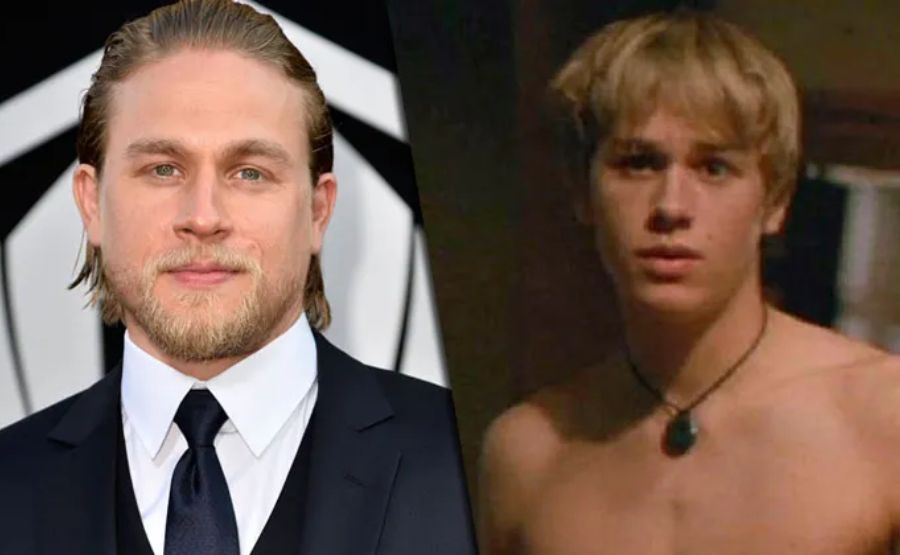
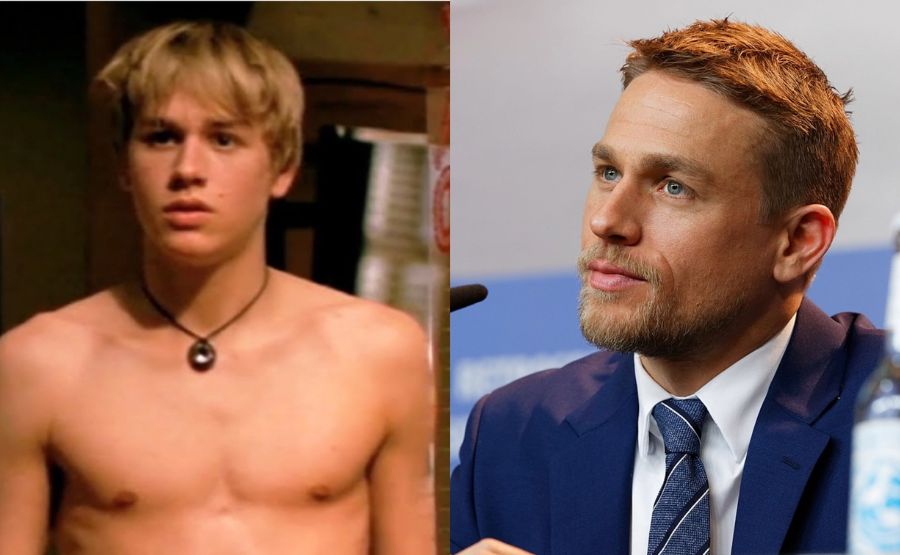
Hunnam plays Nathan Maloney. 15-year-old schoolboy. Curious, wide-eyed, then increasingly knowing. His relationship with Stuart — played by Aidan Gillen, who you’ll know as Littlefinger from Game of Thrones, which keeps getting weirder the more you think about it — is the engine of the show’s first episodes.
He was 18 playing a 15-year-old in some of the most frank, sexually explicit scenes British television had produced. There were graphic sex scenes. There was a moment — apparently the first of its kind on mainstream British TV — that the Jake News piece about his career trajectory describes in terms that probably got that article a content warning.
Furthermore, Hunnam has never once expressed regret for accepting that position. Not the fake, performative no-regrets that actors do in press junkets. He genuinely seems to think it was the right move. “A baptism of fire in terms of sexuality on camera,” he told one interviewer. Fine, okay. He’s not wrong. That’s one way to describe it.
The consequences were immediate and personal. He got hassled in public. There was an altercation at Preston station that, by his own account in his Variety interview last October, looked like it was going to turn violent. Someone in the street saw this face from that show and had feelings about it.
And then there was his dad.
The Father Question
This is the part that actually stays with you. After seeing his son on Queer As Folk, his father, the “incredibly tough” scrap-metal magnate of Newcastle, called him up with a single question.
“Are you gay? Is this representative of the life I am living?”
That’s the dad of a kid who just played a gay teenager in some of the most explicit scenes on British TV at the time. Of course he asked. Hunnam’s response, as he told it: “No, Dad, I’m not — but if I was, would it really matter?”
That’s a 19-year-old kid holding his own with a tough northern father. That’s actually impressive. His father “eventually came around,” according to Hunnam. Which is the kind of diplomatically vague phrase that covers a lot of ground — months? Years? What did coming around even look like for a Newcastle scrap-metal merchant in 1999?
Hunnam’s relationship with his father is one of those threads in his life that keeps appearing and never fully resolves. His dad died before they could make the biographical film about him that Hunnam has been talking about for years — a “biographical family drama about love and conflict In 2017, he referred to it as “between ambition and family.” He wanted to star as his father. He still might. But some things can’t be fixed by making a movie, even if you write the screenplay yourself.
America, The Long Struggle, and Jax Teller
I moved to Los Angeles around 2000. He’s British, beautiful, has played a gay teenager on controversial TV — the resume is unusual. Early American work is patchy. Young Americans on The WB. Undeclared with Judd Apatow, which people remember slightly more fondly than it deserves to be remembered. A Dickens adaptation. He was doing fine, not great.
The Queer As Folk typecasting problem was real, apparently. You could find references — not in mainstream outlets but in the kind of entertainment industry gossip that lives in old forum posts and trade blinds — to him struggling to shake the “gay actor” label that has nothing to do with his actual sexuality and everything to do with how shallow casting decisions can be.
Green Street Hooligans in 2005 helped. A football hooligan movie where he plays a football hooligan. Very different energy. Kurt Sutter saw something in that performance and cast him as Jax Teller in Sons of Anarchy for FX. Seven seasons. 2008 to 2014. Peak TV, peak Hunnam.
Jax Teller is the kind of character that, if you watch the first season without knowing anything, you’d think is heading somewhere profound. He’s reading a manuscript his dead father wrote, riding through California, wrestling with whether to leave the motorcycle club that’s consuming him. The program begins with a contemplation of masculine heritage, legacy, and cycles of violence.Then it becomes increasingly chaotic, over-plotted, grief-stricken in ways the writing can barely contain.
Hunnam cried for weeks when it ended, he said. Real tears, not actor-interview tears. Something about Jax was load-bearing for him. Figuring out why would probably require more than one journalist and one very long night.
The Fifty Shades Disaster-That-Wasn’t
You cannot write about Charlie Hunnam without writing about Fifty Shades of Grey. Not because of what happened — what happened was basically nothing — but because of how it revealed something about how celebrity PR machinery works.
September 2013: Universal announces Hunnam as Christian Grey. The internet has a full, complete meltdown. Fans of E.L. James’s novels — and there are a lot of them, they are passionate, they have opinions about jaw structure and eye color that I cannot begin to engage with seriously — petition against the casting. Hunnam is “not the right look.” Hunnam is “wrong for it.” The backlash is overwhelming.
One month later: Hunnam drops out. Scheduling conflict with Sons of Anarchy.
Immediately: every theory emerges. He was pushed out by angry fans. The script was terrible (confirmed by sources, reportedly). He didn’t want the Robert Pattinson level of fame it would bring (also reportedly). He had chemistry with Dakota Johnson, chemistry that clicked, and walking away killed him a little.
The actual reason, as he explained in VMan Magazine in 2015: he gave Guillermo del Toro his word, over a year prior, that he’d do Crimson Peak right after Sons of Anarchy. Sons wrapped late. He couldn’t physically be in two productions at once. He kept his promise to del Toro. “I’ve done a film with him, I gave him my word,” he said.
The real story is kind of admirable? He chose loyalty to a director friend over a guaranteed franchise. He later told TMZ, joking, that his one regret was being “not nearly as rich” as he would’ve been. Which, fair.
He also once described leaving Fifty Shades as “the worst professional experience of my life” and said he had a nervous breakdown over it. So the actual truth seems to be: he kept his word AND it destroyed him emotionally AND the money haunts him AND he’d probably do it again. People are complicated.
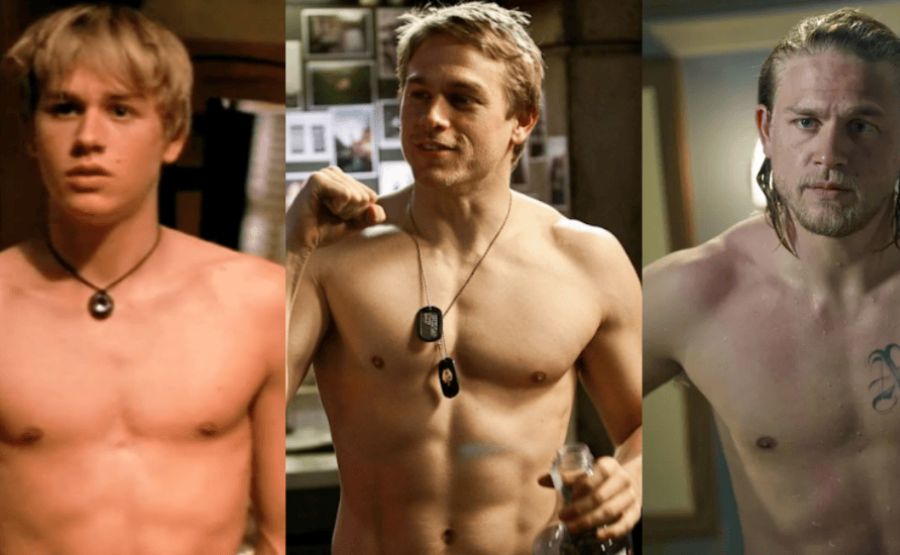
The Gay Question, Finally, Directly
Here’s what’s actually happening with all the “is Charlie Hunnam gay” speculation and why it has persisted.
Queer As Folk is the origin of it. Of course it is. He played a gay teenager so convincingly in such explicit content that the role was imprinted. Add to that: he’s talked openly about valuing emotional and physical closeness between men, about finding Western masculinity’s cold-shoulder approach to male tenderness culturally impoverished. He’s said things in GQ profiles and Details interviews — because of course he has, it’s Charlie Hunnam, he says thoughtful things in magazines — about how he values intimacy between men in non-sexual ways.
People took those quotes and did what people do: built a narrative around them that matched what they already wanted to believe.
And then there’s the anonymous forum ecosystem. This is where a lot of it lives. Not credible outlets, not sourced journalism. Reddit threads from 2012. Fan forums. A blind item from some gossip site that has since changed ownership three times. The kind of “evidence” that is just vibes plus confirmation bias plus someone somewhere who really needs Charlie Hunnam to be gay for reasons that are probably about that person’s own journey more than his.
He has never identified as gay. He has never identified as bisexual. He was married to actress Katharine Towne from 1999 to 2002 — which is, incidentally, the same year Queer As Folk ended, which nobody makes enough of as biographical timing. He has been with jewelry designer Morgana McNelis since 2005. Over twenty years. They’ve chosen not to marry — something he’s addressed publicly, apparently it’s intentional, apparently they’ve thought about it and decided their commitment doesn’t require a ceremony — and they remain together.
The answer to “is Charlie Hunnam gay” is no. He is straight. He has said so. His father asked the same question in 1999 and got the same answer. The question keeps circulating because he played a gay character brilliantly, because he talks about men with emotional intelligence, and because the internet needs its mysteries even when there isn’t one.
Ed Gein, the Monster, and Where He Is Now
Last October, Ryan Murphy’s Monster anthology on Netflix came to its third season. Charlie Hunnam plays Ed Gein — the Wisconsin serial killer who inspired Psycho, The Texas Chainsaw Massacre, and more cultural nightmares than one man should be responsible for. From the first televised depiction of gay teen sex to the inspiration for half of horror cinema. The range is something.
He’s talked in interviews about sitting with Gein, about finding the human beneath the monster, about what it means to inhabit someone whose psychology is genuinely beyond comprehension. It’s the kind of acting challenge that sounds like PR until you remember this is the guy who cried for weeks over a fictional biker and has been trying to write a movie about his dead father for years. He’s not performing emotional investment. He seems to actually feel these things.
He mentioned the Queer As Folk role in the same Variety interview as his Ed Gein work. “Being on that show came with some consequences.” He said it without bitterness, without recasting himself as a victim or pioneer. Just: this happened, it cost something, here we are.
That’s actually the Charlie Hunnam thing. He keeps showing up. The career has had its flops — King Arthur: Legend of the Sword (2017) was a box office disaster despite Guy Ritchie directing and Charlie looking impossibly good in medieval armor. The Gentlemen worked better. The Lost City of Z was underseen and genuinely excellent. He picks interesting things and occasionally they don’t connect commercially, and he doesn’t seem to spiral about it.
There’s a version of his career that looks like missed opportunities. Fifty Shades. King Arthur bombing. The years between Sons ending and finding the next thing. But there’s another version that looks like a guy who has quietly refused to become exactly what the industry wanted him to be — franchise hero, erotic idol, safe leading man — and has instead kept doing work that interests him.
Which, for a kid who walked out of a Newcastle shoe shop on Christmas Eve and accidentally became an actor, seems about right.
Final Words
Hunnam is 46 now. The accent — that beautiful, flexible accent that goes full Newcastle when he lets it — is something he has to consciously maintain because years in Los Angeles do things to a voice. He trains hard, he’s talked about physical fitness as something close to religion for him. He reads. He has thoughts about literature. He seems, by most accounts from people who’ve worked with him, like someone who is genuinely, quietly strange in all the best ways.
The gay question will follow him, probably forever, because Queer As Folk doesn’t go away. The show was important. His performance was important. And the internet has a long, strange memory for the things it decides to wonder about.
But the actual story is more interesting than the rumor. It’s a scrap-metal kid from Newcastle who got spotted in a shoe shop, played a gay teenager in the most explicit show on British TV at 18, had a near-violent confrontation at a train station because of it, watched his father struggle to understand it, survived the typecasting, became Jax Teller, nearly became Christian Grey, chose loyalty over a franchise, cried over a fictional character for weeks, tried to write a movie about his dead dad, and is now playing Ed Gein for Ryan Murphy.
That’s life. That’s actually interesting. You don’t need a rumor.
FAQs
1. Is Charlie Hunnam gay?
No. He has been identified as straight throughout his career. Has done so consistently, directly, and without apparent anxiety about it.
2. Why do people keep asking if he’s gay?
Because he played a gay teenager in Queer As Folk with such genuine intensity that it stuck. Add in some thoughtful quotes about male intimacy — taken wildly out of context — and the internet machinery did the rest.
3. Was playing Nathan Maloney in Queer As Folk actually difficult for him?
Apparently less about sexuality and more about the consequences afterward. Getting hassled in public, the near-violent encounter at Preston station, his father’s questions. He’s described it without regret but also without glossing over what it cost.
4. How did his dad actually react to Queer As Folk?
He asked Charlie directly if he was gay. Charlie said no, added “but if I was, would it matter?” His dad “eventually came around.” The timeline of that coming around is unspecified and probably interesting.
5. Why did he really drop out of Fifty Shades of Grey?
Loyalty to Guillermo del Toro, to whom he’d already committed Crimson Peak. Sons of Anarchy ran late. He couldn’t be in two places. He apparently had something close to a breakdown over it and called it the worst professional experience of his life.
6. Does he regret it?
Financially, obviously. He joked about not being “nearly as rich” as he would’ve been. Otherwise, it seems to have processed it.
7. Who has he been with romantically?
Katharine Towne from 1999 to 2002 (married). Morgana McNelis from 2005 to present (long-term partner, not married by choice).
8. What’s the deal with the movie about his father?
He’s been talking about it since at least 2017 — a biographical drama about his dad’s life, in which he’d star. His father died. The project hasn’t materialized yet. It feels like one of those things that’ll either become his most personal work or stay permanently in development as grief that can’t quite be shaped into a film.
9. Is King Arthur really that bad?
It’s not bad. It’s chaotic and overstuffed and bombed completely. He looks incredible in it. Guy Ritchie made some choices. It’s a fascinating failure more than an embarrassing one.
10. What should someone watch if they want to understand Charlie Hunnam as an actor?
Queer As Folk (UK original, 1999) and The Lost City of Z (2016). The first shows the raw beginning. The second shows what he’s actually capable of when the material matches his seriousness.
11. Is he actually as physically intense in real life as his roles suggest?
He trains like it’s a calling, he’s talked about martial arts and discipline, and multiple directors have noted he brings a physical presence to sets that doesn’t feel performed. So, probably yes.
12. Will the gay rumors ever stop?
No. But they also don’t seem to bother him much. He answered his dad’s version of the question with grace when he was 19. He’s had a lot of practice.
Read beyond the ordinary with The Nexus Magazine.