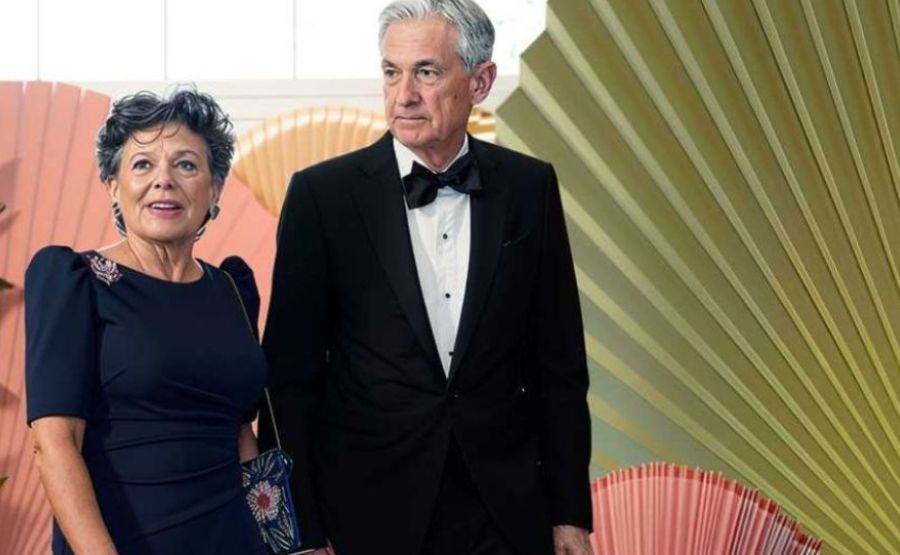
Elissa Leonard: The Woman Who Ran the Fed’s Household and a Dog Park Into the Ground
She held the Bible while her husband was sworn in as one of the most powerful men in American finance. Then she went home to Chevy Chase and got into a screaming match with her neighbors over a dog park.
That is Elissa Leonard in two sentences. And honestly? I think that tells you more about who she actually is than any puff piece ever could.
Quick Bio
| Detail | Info |
| Full Name | Elissa Ann Leonard |
| Born | May 20, 1957 — Rockville, Maryland |
| Education | Harvard College, magna cum laude, 1979 (Visual & Environmental Studies + Government) |
| Career | TV producer, documentary filmmaker, writer, municipal board chair |
| Key Work | Sally Pacholok (2015), Innovation (PBS, two NY Emmy Awards), Ladies in Black (exec producer) |
| Married | Jerome Powell, September 14, 1985 — Washington National Cathedral |
| Kids | Three: Samuel, Lucy, Susie |
| Lives | Chevy Chase Village, Maryland — the wealthiest municipality in Maryland by per capita income |
| Civic Role | Chair, Board of Managers, Chevy Chase Village |
A Maryland Kid Who Had No Business Being Mediocre
Let’s start with the family because it matters.
Her father George Hill Leonard wasn’t just “in public service.” The man was a World War II veteran, a Harvard graduate himself, and a heart disease control administrator for the U.S. Public Health Service. That’s the kind of pedigree where dinner conversations about policy aren’t unusual — they’re dinner.
Her mother Phyllis graduated from both Boston University and Radcliffe College. The middle child of three kids. Two brothers, Jeffrey and Jonathan. Montgomery County Public Schools, same as tens of thousands of Maryland kids every year.
Except most of them didn’t walk out of Harvard magna cum laude at 22.
Elissa graduated in 1979 with a joint major in Visual and Environmental Studies and Government. That is not a degree you pick because you can’t figure out what you want to do. That’s a degree you pick when you already know you want to make things and understand the systems those things exist in. Pretentious? A little. Also impressive. Both can be true.
She kept her name professionally her entire career, by the way. Even after marrying the man who would eventually chair the Federal Reserve. Even when “Elissa Powell” would have opened every single door in Washington DC without a single phone call.
She didn’t want those doors.
See also “Letesha Marrow: The Woman Who Survived Being Ice-T’s Daughter“
The PBS Years: Real Work, Real Emmys, Zero Glamour
People keep calling Elissa a “filmmaker” like she showed up one day and shot an indie drama on a whim.
She started in the trenches. Her early career was at WNET-TV Channel 13 in New York, producing and writing for Innovation — a weekly PBS science series. Not exactly the stuff of cocktail party legend. Public broadcasting. Science education. Weekly deadlines. She won two New York Emmy Awards for that work, which is the kind of thing that gets left off her Wikipedia-less profile because the internet is much more interested in “Jerome Powell’s wife.”
Then came National Geographic Television’s Explorer series, where she was Senior Story Editor. That’s not glamorous either. That’s sitting in a room deciding what stories get told about the world and which ones die quietly on someone’s pitch sheet.
She also produced at The Educational Film Center on their Powerhouse and Give and Take series. There’s a through-line in all of it: she was consistently drawn to work that was trying to do something. Educate, reveal, change minds. You can debate whether that’s noble or self-righteous. I’m not here to settle that.
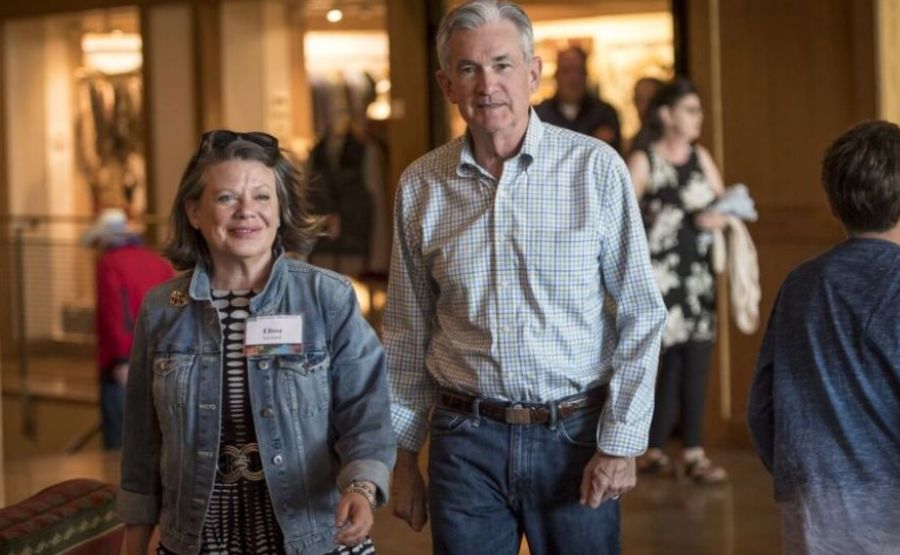
Sally Pacholok: The One That Actually Got Made
This is the big one. Or the biggest one she’s made so far, anyway.
In 2012, Elissa bought the life story rights to Sally Pacholok — a real ER nurse in Michigan who spent years fighting the medical establishment over a widespread misdiagnosis of vitamin B12 deficiency. People getting diagnosed with MS. Parkinson’s. Dementia. When actually, they just needed B12. The real Sally wrote a book about it called Could It Be B12? and it became a cult hit in certain medical corners of the internet.
Elissa saw the story and apparently thought: this is my Erin Brockovich moment.
She co-wrote the screenplay with Patrick Prentice. I spent three years on it. Directed it herself. Her debut as a feature director, which is not a small thing when you’re pushing 60 and the film industry is brutal even to people with money and connections.
Sally Pacholok premiered at the DC Independent Film Festival in February 2015. It won Best Feature.
Then came the critics.
One review — and I’m summarizing here, not quoting — essentially said the film had the energy of a Lifetime Network movie stretched to feature length, full of medical jargon the actors couldn’t make believable, and more resembling a dramatized infomercial than a proper drama. The critic acknowledged Leonard could frame a shot. But noted there was no drama. No imagination. Annet Mahendru, who played Sally and is genuinely great in The Americans, was reportedly given a character with all the complexity of a shrieking spokesperson.
Meanwhile, on IMDB, regular people rated it 8.4/10 and called it life-changing. One person said it was better than Erin Brockovich for policy impact.
So. There you have it. The exact same film. Two completely different realities coexisting peacefully on the internet.
Most likely, the reality lies in the middle. It was a passion project made on a shoestring — apparently around $625,000 — by a first-time director who cared deeply about the subject matter. Those movies often feel more like advocacy than cinema. They move the people who already believe and annoy the people who came looking for craft.
The real Sally Pacholok and her husband Jeff Stuart are both in the film as extras, which is either incredibly charming or slightly bizarre depending on your tolerance for that kind of thing.
Ladies in Black: The Australian Phase
After Sally Pacholok, Elissa attached herself as executive producer to Ladies in Black (2018) — an Australian film directed by Bruce Beresford (Breaker Morant, Driving Miss Daisy), based on the novel The Women in Black by Madeleine St. John.
This is a very different beast from B12 deficiency dramatics. A period comedy set in a Sydney department store in the 1950s. Julia Ormond, Rachael Taylor, Angourie Rice. An actual ensemble. An actual budget. An actual director with a track record.
Her role as executive producer means she helped get the thing made and presumably guided some creative decisions from a distance. It’s not a vanity credit — getting a film this size financed requires real work. But it’s also not “directed by Elissa Leonard” in the credits.
She also co-produced Summer in 2017, a short film by Mikhaela Mahony. These smaller credits matter. They show someone still actively working, still saying yes to projects, not retiring quietly into the spouse-of-powerful-person life.
The Fed Swearing-In and the Bible Moment
February 2018. The Federal Reserve’s headquarters in Washington, DC.
Jerome Powell is being sworn in as the 16th Chair of the Federal Reserve. Vice Chairman Randal Quarles administers the oath. And there is Elissa Leonard, holding the Bible.
She’s been in Washington power circles long enough to know exactly what this moment is. She’s been married to this man for 33 years at this point. She watched him work at Dillon, Read & Co., work at the Treasury under George H.W. Bush, survive Carlyle Group, and then spend six years as a Federal Reserve Governor before getting this chair.
And at the Rose Garden nomination ceremony the previous November, Powell looked over at her and said: “I want to thank my wife Elissa for her love, support and wise counsel. Without her, quite honestly I would not be standing here.”
That’s not a throwaway line. The man was speaking in front of the President of the United States and a room full of press. He said his wife was the reason he could stand there.
There’s a version of Elissa Leonard who quietly seethed about the line — because she has two Emmy Awards and a feature film to her name and she doesn’t need credit for his accomplishments. And there’s a version who just smiled because she knows exactly what she gave up and what she chose, and she made peace with that trade a long time ago.
I genuinely don’t know which version is true. Probably both, on different days.
Chevy Chase Village: Where Power Goes to Argue About Dogs
Okay. We need to talk about the dog park.
Elissa joined the Chevy Chase Village Board of Managers in 2013. She’s lived in the village for over 25 years. The village itself is not subtle about what it is — the wealthiest municipality in Maryland by per capita income, median household income approaching $500,000, home values north of $1.8 million. The Chevy Chase Club has an initiation fee of over $50,000. Speed limit enforcement generates 24% of annual village revenue, which tells you everything about the priorities.
In this environment, Elissa has been doing the most unglamorous form of civic governance possible: managing trees, parks, buildings, environment committees. The boring stuff. The stuff that actually affects daily life.
And then came 2019.
The village spent $134,000 to turn a piece of land into an off-leash dog park. Fifteen thousand square feet. A fenced enclosure. Seemed fine.
It was not fine.
The barking. Oh, the barking. Police were receiving calls nearly every day. One neighbor whose house backed up to the park was apparently losing his mind. Signs appeared in the dog park ordering “No Excessive Barking,” which — and I cannot stress this enough — the dogs could not read. The village paid $1,300 for a study of dog behavior in the park. With taxpayer money. In the wealthiest municipality in Maryland.
By September 2019, over 100 people showed up to a public hearing. Dog owners wearing white “Save the Chevy Chase Dog Park” hats distributed by a woman named Janet Conroy who had made 50 of them by hand. There was a French bulldog named Louie who was apparently considered the unofficial mayor of the park. Real estate developers were threatening legal action. Former Maryland attorney generals were joking that complainers should be jailed.
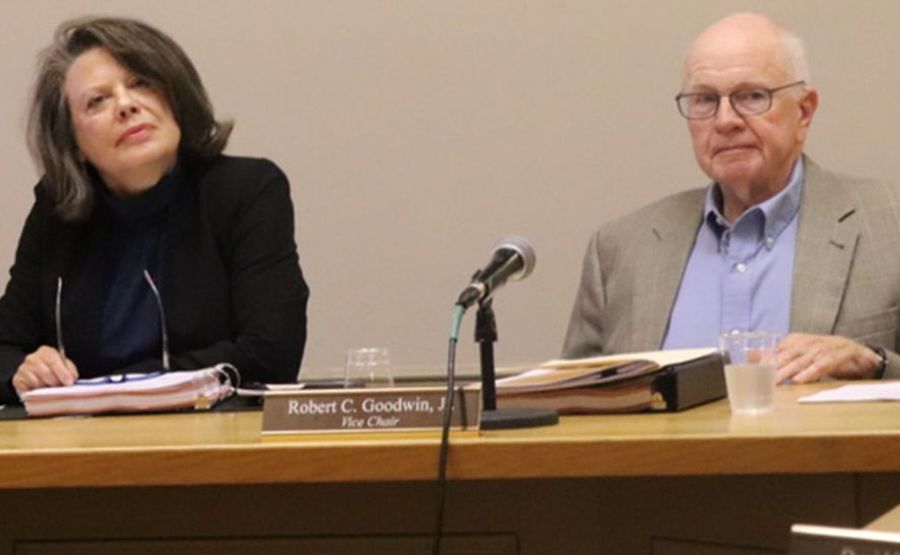
Elissa, in a “no-nonsense black blazer and elegant navy turtleneck,” called the meeting to order.
The board voted 5 to 2 to disestablish the dog park. The fence would come down.
“The size and location of this off-leash area is not meeting standards,” Elissa said, carefully and officially, before the crowd completely lost it.
“You should be ashamed of yourselves!” someone screamed. People booed. They walked out en masse, clutching their dogs and their hats. Louie the French bulldog’s owner said she didn’t know how she was going to break the news to him.
Elissa, composed, told the remaining crowd: “We have to move on to the next item on our agenda.”
I’ve read about Fed chairs and Senate hearings and film festivals. I’m telling you right now, the Chevy Chase dog park saga is the most genuinely Shakespearean thing Elissa Leonard has ever been involved in. Her husband was simultaneously being called incompetent by the President of the United States over interest rates. She was getting booed by French bulldog owners.
Neither one of them blinked.
The Invisible Partnership
Here’s what nobody talks about: she met Jerome through his sister.
Early 1980s. Powell’s sister was Leonard’s housemate. A friendship before a romance. They married in 1985 at the Bethlehem Chapel of the Washington National Cathedral — a beautiful venue, understated by DC standards. Three kids. Sam, Lucy, Susie. Forty-plus years of marriage as of now, which in Washington political circles is practically mythological.
There’s no record of a public fight. No tabloid drama. No anonymous sources saying the marriage is in trouble. No appearance of the kind of quiet desperation you sometimes see in spouses of powerful people — the faraway look at official events, the smile that doesn’t reach the eyes.
Either they have genuinely figured out how to do this, or they’re extraordinarily good at not telling anyone anything. Both are impressive skills, frankly.
The Name Thing (One More Time)
She is Elissa Leonard professionally. Not Elissa Powell. Not Mrs. Jerome Powell, Fed Chair.
Her bio on the Chevy Chase Village website — an actual official government website — lists her as Elissa Leonard. Her film credits are Elissa Leonard. When her husband was nominated to be the most powerful central banker in America, she stayed with Elissa Leonard.
In Washington DC, where people change their LinkedIn titles the second their spouses get a promotion, this is a genuinely unusual choice.
It’s also the choice of someone who was building something before the marriage started and intended to keep building it regardless of what the marriage became. That’s either quietly feminist or just stubbornly independent or both.
I’m going with both.
What She Actually Is
Harvard magna cum laude. Two Emmy Awards. A feature film that divided audiences cleanly between “life-changing” and “Lifetime movie.” An executive producer credit on a respected Australian period piece. A municipal board chair who governed through a dog park apocalypse with a navy turtleneck and iron composure. A woman who held a Bible for her husband while he swore to steward the American economy, and then went home to deal with noise complaints.
She is not a footnote in his story. She’s a person with her own career, her own aesthetic, her own civic commitments, and her own enemies (predominantly: Louie the French bulldog’s owner).
“Who is Jerome Powell’s wife?” is a common question on the internet.” like she’s a background character. She’s not.
She’s just not performing for you. And in 2026, that’s the rarest thing I can think of.
Final Words
There’s a version of this story where Elissa Leonard had an extraordinary career interrupted by proximity to power. There’s another version where she built exactly the life she wanted, on her terms, and the Harvard degree and the Emmys and the film are proof. I honestly can’t tell which is true from the outside — and I’ve read every source that exists, which says something about how carefully she has managed the gap between “what she’s done” and “what the world knows.”
She made a film about a woman who took on the medical establishment. She ran a municipal government through what the local press called its “most contentious and emotionally charged issue in community history.” She married a man who got yelled at by two different presidents from two different parties — Trump for being too hawkish, Democrats for being too easy on Wall Street — and she just… kept working.
That’s not nothing. That’s actually quite a lot.
FAQs
1. Is Elissa Leonard famous in her own right, or just because of her husband?
Both. She had two Emmy Awards and produced a feature film before “Jerome Powell, Fed Chair” was a sentence anyone said. The husband amplified her public profile; he didn’t create her career.
2. Why does she keep her maiden name professionally?
She never explained it publicly, and she’s not obligated to. The practical effect is that her credits belong entirely to her. In Washington DC, that’s a principled choice.
3. What exactly did she win Emmys for?
Her work as a producer and writer on Innovation, the WNET/PBS weekly science series. Two New York Emmy Awards, which is a legitimate credential in TV journalism/documentary work.
4. Was Sally Pacholok actually good?
Depends on who you ask. Critics found it preachy and stagey. Audiences — especially people with personal connections to B12 deficiency — rated it 8.4/10 on IMDB and called it revelatory. This happens a lot with issue-driven films. Best to watch it yourself.
5. Did she direct anything else besides Sally Pacholok?
Not as director. She’s been a producer and writer across multiple projects. Ladies in Black (2018) is the highest-profile thing she’s been attached to since, and her role there was executive producer under Bruce Beresford’s direction.
6. What does being Chair of Chevy Chase Village actually mean?
She runs the municipal government of a small but extraordinarily wealthy enclave just outside DC. Zoning, parks, trees, environmental committees, board meetings. Real governance, small scale. And apparently, dog parks.
7. The dog park thing — was that actually a big deal?
The Washington Post covered it. The Washington Examiner covered it. The Baltimore Sun covered it. A former Maryland attorney general showed up. 100+ residents attended the public hearing. For a village of 2,049 people, yes, it was a very big deal.
8. Is she on social media?
No. Not meaningfully. For someone who has spent decades making media, she has essentially zero media footprint of her own. Depending on your perspective, this is either extremely unjust or extremely deliberate.
9. What’s her approximate net worth?
Her own net worth is unknown. Her husband’s is estimated around $50 million, accumulated through investment banking and private equity work before his Fed career. They’re wealthy. The $1.8 million median home value in Chevy Chase Village should give you context.
10. Was it true that Jerome Powell stated he wouldn’t be the Fed Chair without her?
Yes. At his Rose Garden nomination ceremony in November 2017, in front of the President and press, he said: “I want to thank my wife Elissa for her love, support and wise counsel. Without her, quite honestly I would not be standing here.” That’s a direct statement, not PR boilerplate.
11. Why isn’t she on Wikipedia?
Unclear. The criteria are supposedly about “notability,” but she has Emmy Awards and a produced feature film. The more likely explanation is that Wikipedia’s volunteer editor base is more interested in the powerful men than the accomplished women adjacent to them. This is a known problem.
12. What’s she doing now in 2026?
Her husband’s second term as Fed Chair ended in May 2026. Which means the entire context of her civic life — as the spouse of the most scrutinized economic official in America — has shifted. What she chooses to do next, without that spotlight, will tell us more about who she actually is than anything I’ve written here.
Read beyond the ordinary with The Nexus Magazine.