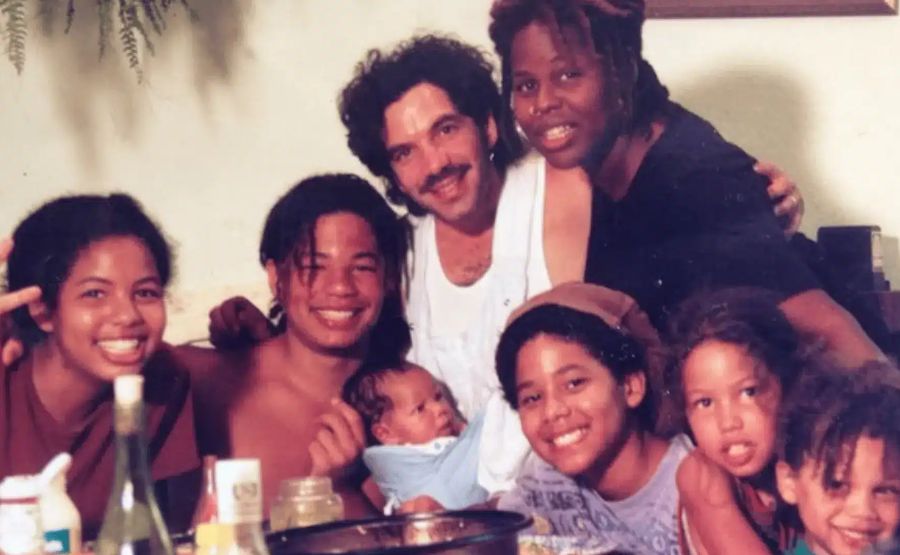
Joel Smollett: The Man Who Built a Dynasty Nobody Talks About
Nobody ever wrote the real story. That’s the thing that kept bothering me at hour three of falling down this particular rabbit hole — that Joel Smollett, a man who basically conjured one of the most recognizable entertainment families in Black Hollywood out of nothing but will and cable wire and civil rights conviction, doesn’t even have a Wikipedia page.
Let that sit for a second.
Six kids. All actors. All with careers. All with their own credits, their own fan bases, their own scandals even. And the guy who made all of it happen — Russian-Jewish immigrant, Bay Area activist, blue-collar cable splicer — gets maybe three paragraphs on some celebrity-adjacent gossip blog before the algorithm pivots to “Jussie Smollett net worth 2024.” It’s maddening. And a little bit perfect, actually. Because Joel Smollett seems like exactly the kind of man who would’ve been fine with that.
Quick Bio
| Detail | Info |
| Full Name | Joel Smollett |
| Born | October 8, 1956, Russia |
| Heritage | Russian-Polish Jewish |
| Occupation | Cable splicer, civil rights activist |
| Married | Janet Smollett (née Harris), late 1970s |
| Children | Six: Jojo, Jazz, Jussie, Jurnee, Jake, Jocqui |
| Died | January 7, 2015 (age 58) |
| Cause | Cancer (type never disclosed) |
| Known For | Being the patriarch nobody remembers |
The Immigrant Who Came From Nowhere and Built Something Real
Joel Smollett was born in Russia in 1956. His grandparents — David Smollett and Dawley Levy — came from Eastern European Jewish stock, the kind of people who scattered across continents because they had to. Peter Smollett, his father, was a Polish Jew who worked as a film editor before becoming a union organizer.So there’s already a weird circularity there. Film editing. Union work. A son who would one day raise six kids who perform for a living. The apple doesn’t fall far, it just changes species.
Joel spent some of his early years in Poland before the family made the jump to America. When they got there, he was in his late teens. Imagine that — coming to the United States as a teenager, not knowing exactly where you land, and eventually ending up in the San Francisco Bay Area in the 1970s, which, if you know anything about the Bay Area in the 1970s, was basically the most politically electric patch of earth on the continent.
He became a cable splicer. Physically demanding work. Hands-on, underpaid, the kind of job where you show up and you do your part and you go home to your family. Not glamorous. Not designed to make you famous. Just solid. Just real.
See also “Terrence Duckett Net Worth: The Man Who Got Out of Jasmine Guy’s Shadow“
The Bay Area, The Movement, The Woman He’d Marry
Here’s where it gets interesting. Joel didn’t just clock in and clock out. He got involved in civil rights work — genuinely, bone-deep involved. The Bay Area in the late ’70s was still vibrating from the Black Panther Party, from the fights that Huey Newton and Bobby Seale had started, from the ongoing grind of trying to make America live up to its own promises.
And somewhere in that organizing, in that marching and meeting and refusing-to-shut-up energy, Joel Smollett met Janet Harris.
Janet was African-American, from New Orleans, sharp as a tack and just as committed to the cause. She had studied under Julian Bond. She moved in the same circles as the Panthers. This wasn’t two people who met at a bar. This was two people who found each other while trying to fix something broken.
They married in their late twenties. A white Jewish immigrant from Russia and a Black woman from New Orleans standing together in the Bay Area saying essentially: yeah, we know what people will think, and we don’t care. That takes something. That takes a specific kind of stubborn belief that how you live is itself a political act.
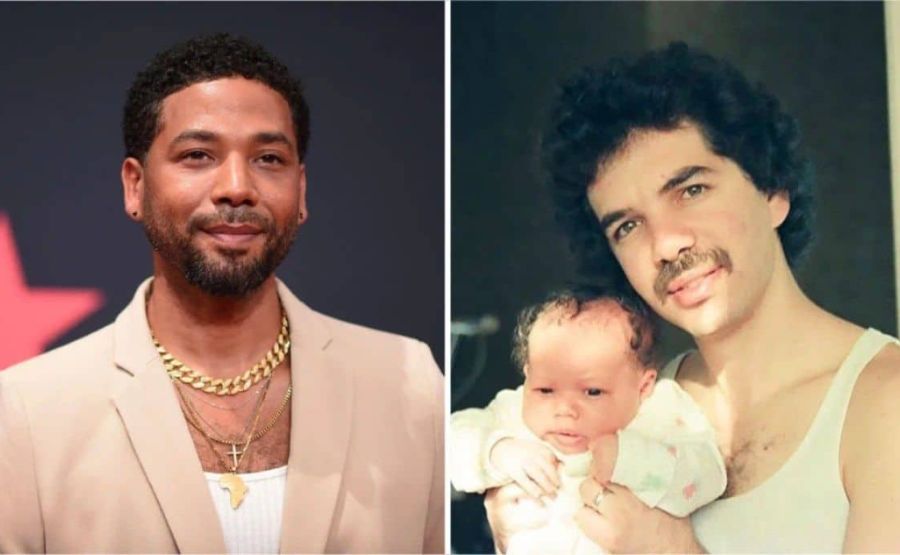
Six Kids, All Starting With J, No Exceptions
Between 1977 and 1993 they had six children. Every single one starting with J — Jojo, Jazz, Jussie, Jurnee, Jake, Jocqui. This is either an incredible coincidence of personal preference or one of the most committed acts of alphabetical branding in entertainment history. I’m going with the latter.
The family moved around. A lot. Following the work, following the kids’ auditions, following whatever needed following. They were nomadic in that specific way that performing-arts families become nomadic — not wandering aimlessly but chasing something, always chasing something.
Jurnee was the first one to really break through. She landed on Full House at age four. Four years old on a major network sitcom. The Smollett parents were clearly not people who kept their children bubble-wrapped and away from professional life. They pushed. Or maybe they didn’t even have to push — they just opened the door and six kids sprinted through it.
On Our Own: The Most Audacious ABC Pitch You’ve Never Heard Of
This is the part of the Joel Smollett story that floors me every time I think about it. After Jurnee’s success on Full House, ABC came to Janet with a proposition: spin-off show for Jurnee. And Janet’s response — reported by Jurnee herself to The Hollywood Reporter — was essentially: I’ve got more kids.
Which is one of the greatest sentences ever spoken to a network executive.
Before you know it, all six Smollett siblings are in front of a room full of ABC suits, auditioning. And what did they perform? Public Enemy’s “Shut ‘Em Down.” A rap song about burning down institutions that benefit from Black suffering. among a group of network executives. Who sat completely still while six children of a Russian-Jewish civil rights activist and a Black Panther-adjacent organizer from New Orleans rapped at them.
And then those executives bought the show.
On Our Own premiered on ABC in September 1994. All six Smollett kids play orphaned siblings. The irony of real siblings — the children of two deeply committed parents — playing orphans is almost too much. The program ended in April 1995 after a single season of twenty episodes. But here’s what Jurnee said about it: “It was like heaven.” They were together. They were working. They were eating hot links and bagels for breakfast in the same school trailer. “Very Black and Jewish of us,” she said.
That line is Joel Smollett in two sentences.
What Joel Actually Did For A Living While All This Happened
Cable splicer. This is important, which is why I keep returning to it. Joel Smollett was not managing his children’s careers in some slick Hollywood-dad capacity. He was doing physical, blue-collar labor. Splicing cable. While his wife ran point on the kids’ entertainment work and her own activism, Joel kept the economic engine running the hard way.
His estimated net worth at the time of his death was somewhere between $300,000 and $500,000. For a man who raised six professional entertainers in America, that number tells a story. It says: this was not wealth. This was enough. This was doing the math every month and making it work by working.
There’s something almost stubbornly dignified about that. He could have become a manager, a promoter, a producer who attached his name to his kids’ projects. He didn’t. He spliced cable. He went to work. He let his children be the story.
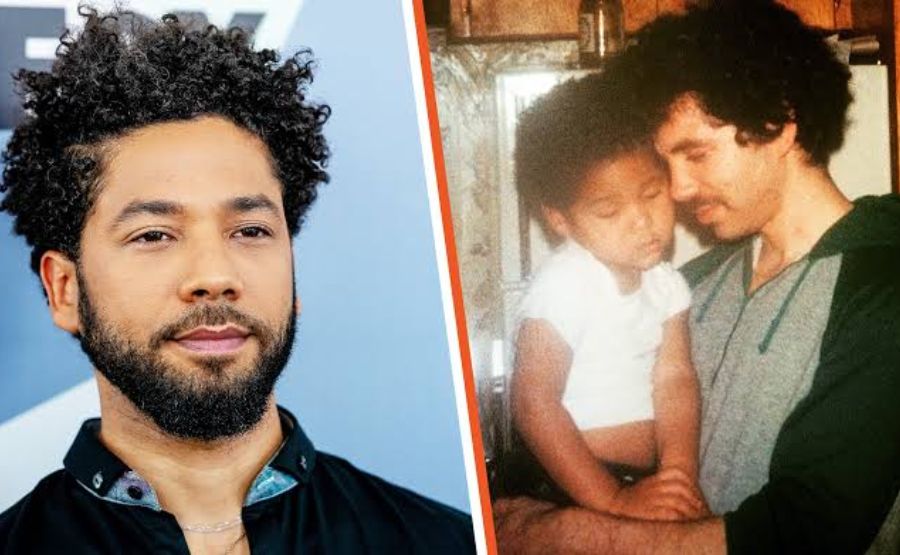
The Shadow of Jussie
I’d be lying if I didn’t address this. You cannot write about Joel Smollett in 2025 without acknowledging that the most famous of his six children became famous for two things: playing a groundbreaking gay Black musician on Empire, and then the January 2019 incident.
Jussie said a hate crime had been committed against him.Police later determined the attack was staged. He was convicted of five felony counts of disorderly conduct in 2021. He served some time before appeals complicated everything.
Joel died in January 2015. Four years before any of this. He never saw his son on the Empire. He never saw the triumph or the collapse. In some ways that’s a mercy. In other ways it feels like the cruelest kind of absence — the man whose values saturated his household, who marched for civil rights and built a bi-racial family as an act of political faith, never got to see how complicated his children’s public lives would become.
What would he have thought? Genuinely. A man who rejected conflict, who raised kids to “reject conflict,” according to JoJo in that 1994 LA Times interview — would he have known what to do with all of it? I don’t know. Nobody does. That’s the thing about dying before the third act.
Cancer, Quietly
At some point in the early 2010s, Joel received a cancer diagnosis. The family never disclosed what kind. This, again, feels very Joel — private, controlled, refusing to make his suffering a public spectacle in a world where suffering has become content.
His children were with him. They provided care. They were present.
He died January 7, 2015. I am fifty-eight years old. His son Jussie announced it on Instagram. The family grieved, and they grieved together, which is probably the most Joel Smollett thing that could have happened. Six kids from a household where they were raised to reject conflict, sitting together with their grief, choosing each other over and over.
Legacy, Which Is A Word I Hate But Which Fits Here
The Smollett family released a cookbook in 2018: The Family Table: Recipes and Moments from a Nomadic Life. They also did Smollett Eats on Food Network in 2016. Six adults — some of them with serious dramatic careers, some with culinary brands, some with both — still cooking together, still moving as a unit, still being the family their parents made them.
Joel Smollett never appeared in a major film. He never gave an interview to Variety. His IMDb page is essentially a stub. One credit: a 2018 episode of Empire, playing a character named Karl Binyan. One episode. One credit. In his son’s show. The show he died four years before seeing premiere.
That credit was probably an act of love by the writers’ room. Or by Jussie. Or by both.
Jurnee Smollett went on to Underground, Birds of Prey, The Order. Critically praised. Consistently working. Jojo became a director. Jazz became an actress and producer. Jake did The Middleman, Eve’s Bayou, a Food Network show. Jocqui produced Underground. Jussie — well, Jussie became a story unto himself.
None of them would exist, professionally or personally, without the cable splicer and the civil rights organizer who found each other in the Bay Area and decided to build something together in spite of every societal force telling them not to.
That’s the biography. That’s the real one. Not the version that starts with “father of Jussie Smollett.” The version that starts with: a Russian-Jewish immigrant came to America, got his hands dirty, found a woman worth fighting Together, they created six human beings and taught them to reject strife and accept one another.
In 2025 that sounds almost impossibly naive. And yet here are six adults who, through careers and scandals and grief and legal nightmares and everything else, still make cookbooks together. Still show up.
Joel Smollett did that.
Final Words
There’s no clean ending to this story. There never is when the person at the center of it died at 58 without much fanfare, without a Wikipedia page, without a documentary in development. Joel Smollett was a man who believed that how you lived was the statement. He lived quietly, worked hard, loved loudly at home, and produced an entire generation of people who could not be quiet about the things that mattered.
The world didn’t really notice him. He probably preferred it that way.
FAQs
1. What did Joel Smollett do for a living?
He worked as a cable splicer — physical, blue-collar telecommunications work — while also being an active civil rights advocate in the San Francisco Bay Area. He was the economic backbone of the family while Janet ran point on the kids’ entertainment careers.
2. Was Joel Smollett actually an actor?
Barely, and probably posthumously as a tribute. He has one credited role: a 2018 episode of Empire as a character named Karl Binyan. That’s it. One episode of his son’s show, three years after his death. The IMDB page is more a memorial footnote than a career summary.
3. How did Joel and Janet Smollett meet?
Civil rights activism in the San Francisco Bay Area in the late 1970s. Both were committed to the movement — Janet had studied under Julian Bond and had connections to the Black Panther Party. Joel was a Jewish immigrant who believed in the cause. They found each other at work.
4. Why did the Smollett family keep Joel’s cancer type private?
They never said. Which is their right. But for a family that is, by profession and personality, deeply expressive and public, the decision to keep this specific thing private suggests it was Joel’s wish. He was a private man. He kept his suffering his own.
5. Did Joel live to see his children’s biggest successes?
Mostly no. He died in January 2015. Empire premiered in January 2015 — the same month he died, possibly the same week. Jurnee’s most acclaimed adult work came years later. He saw the beginning. He didn’t see what his children became.
6. What’s the significance of all six kids’ names starting with J?
It’s a continuity — Joel, Janet, and then six J children. Whether it was intentional from day one or became a thing to maintain, it’s become part of the family mythology. Also extremely helpful for journalists trying to remember all of them.
7. Why does Joel Smollett have no Wikipedia page?
Because Wikipedia’s notability guidelines are applied by humans with limited time and attention, and “father of famous people” rarely clears the bar on its own. It’s a gap in the record. A man with a genuinely interesting life story falls through because he didn’t accumulate screen credits or controversy himself.
8. How did the On Our Own ABC show come about?
Jurnee was doing Full House. ABC wanted to build a show around her. Janet said she had more kids. They all auditioned by rapping Public Enemy’s “Shut ‘Em Down” in front of executives who had no idea what to do with them. The executives bought it anyway. That’s the entertainment industry in one story.
9. What was Joel Smollett’s heritage?
Russian-Polish Jewish. His grandparents came from Eastern Europe, his father was a Polish Jew, he was born in Russia and spent formative years in Poland before immigrating to the US as a teenager. He raised his children in a bi-racial, bi-cultural, bi-religious environment.
10. How did Joel’s death affect the Smollett family publicly?
Jussie announced it on Instagram. The family grieved together. And then, four years later, Jussie’s legal scandal exploded — which means the most public reckoning the family has faced came after Joel was already gone. What his presence might have changed, nobody knows.
11. Did Joel Smollett ever become a Hollywood manager or producer?
No. And this is important. He stayed working class. He let Janet and the children navigate the entertainment world. He did not attach his name to their careers or try to monetize the family brand. He just worked and provided.
12. What’s the most underrated thing about Joel Smollett’s story?
That a Russian-Jewish immigrant who worked with his hands and a Black civil rights activist from New Orleans built a family in 1970s America — specifically, intentionally, against the grain — and that family became one of the most consistent multi-generation entertainment dynasties in recent memory. Nobody writes about that as a feat. They should.
Read beyond the ordinary with The Nexus Magazine.