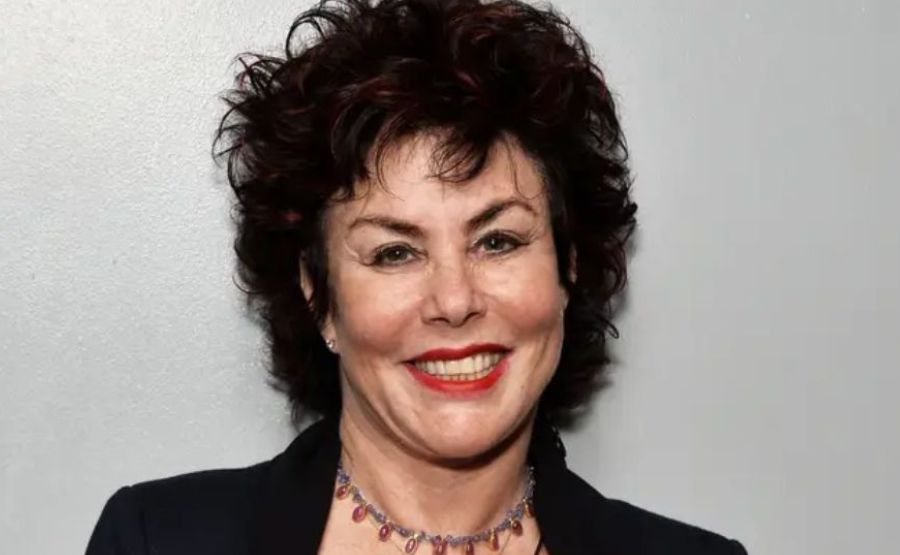
How Old is Ruby Wax? The Loudest Woman in the Room Finally Stopped Screaming
She interviewed a man who probably stabbed his wife to death — and he pulled out a banana and mimed killing her with it. She got kicked off Donald Trump‘s private jet for laughing too hard. She sat across from Madonna while secretly wearing her underwear on her head. And the whole time — the whole entire time — she was checking herself into psychiatric clinics, answering emails between therapy sessions, and holding herself together with medication and grim Yorkshire stubbornness that no American from Evanston, Illinois should reasonably possess.
This is not a redemption arc. This is something messier and more honest than that.
Quick Bio
| Detail | Information |
| Born | April 19, 1953 — Evanston, Illinois, USA |
| Real name | Ruby Wachs |
| Age | 73 (as of 2026) |
| Education | UC Berkeley (dropped out), Royal Scottish Academy of Music and Drama, Regent’s College London (MSc Psychotherapy), Kellogg College Oxford (MSt Mindfulness) |
| Married | Ed Bye (1988–present); previously Andrew Porter (1976–80), Trevor Walton (1981–div.) |
| Kids | Max (b.1988), Madeleine (b.1990), Marina (b.1993) |
| Known for | BBC interviewer, Girls on Top, The Full Wax, Ruby Wax Meets…, mental health advocacy, OBE |
| Currently | Author, speaker, still impossible to ignore |
The House That Broke Her First
Before we get to the famous stuff — OJ, Madonna, Trump, the Priory — we need to talk about a Chicago house where the furniture was wrapped in plastic.
Her parents fled Vienna in 1938 as the Nazis rose. They made it to America. Her father, Edward, built a fortune in sausages. Her mother, Berta, spoke eight languages and apparently spent most of her time cleaning things that were already clean. Every surface in the house was covered in plastic sheeting. The fridge was full of mayonnaise and cigars. Normal stuff.
Ruby was their only child, which meant she absorbed everything. Full blast, no dilution.
Her father played mind games. He’d take little Ruby to the bank, rattle some papers, and tell her she was incredibly rich. She wasn’t. She believed him anyway and stayed trapped in that house well into her late thirties because of it. Her mother would arrive in Europe for a trip with nothing but the dress she was wearing — she’d been chasing a dust ball instead of packing. When the screaming got too loud, her father would simply turn the opera up on the radio.
She kept a notebook. Every time something vicious happened — and she’s said clearly it could get violent — she’d write down an imaginary debt her father owed her. A price for each incident. “If there was a beating, I would charge a lot”.
That’s dark. That’s also — and I say this as someone who’s read a lot of celebrity memoirs — one of the most quietly devastating sentences I’ve come across in all of this research.
She said that her teeth “were in another time zone” and that she had undetected dyslexia. She was assigned to the sluggish class. She figured out early on that humor was armor. “I knew the only way out of there was to get a sense of humour. That was my safety gauge.”
She was right. It worked. And it cost her.
See also “Ben Shephard Wife Illness: The Real Story Nobody Bothered to Actually Tell“
The Blood in the Genes
Here’s the thing that makes all of this even more vertigo-inducing.
In 2017, she went on Who Do You Think You Are? — the BBC genealogy show where celebrities discover they had a great-great-uncle who was a pirate or something. Ruby’s episode was a bit different. She discovered her great-grandmother, Bertha, had been committed to an insane asylum in Brno in the 1880s. Institutionalized most of her adult life. The official diagnosis: incurably “agitated.” Her great-aunt too, locked away in Vienna.
I remember Ruby saying, “You know it in every cell in your body: it’s only because I have a sense of humour that I’m not in this place,” as we stood in the Moravian Land Archive and read their names on lists of prisoners.
She wasn’t being dramatic. That’s the terrifying part.
Her mother had it. Her great-grandmother had it. She has it. Three generations of women deemed too loud, too uncontrollable, too much — one by psychiatric institutions, one by a household of plastic-covered furniture, one by British television executives who eventually decided she was past her shelf life.
The difference was Ruby got jokes. And then eventually, Oxford University. But we’re getting ahead of ourselves.
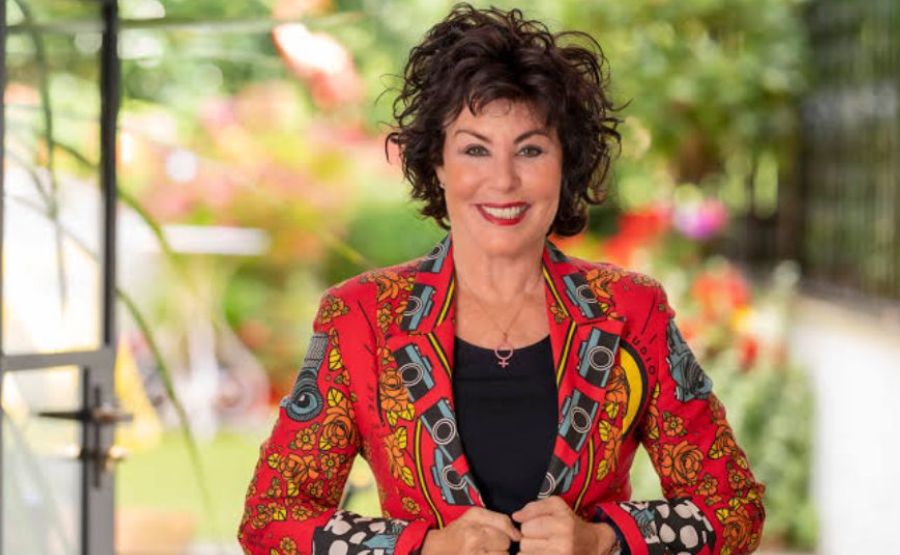
RSC, Rickman, and the Reinvention That Wasn’t Planned
She dropped out of UC Berkeley after a year. I majored in psychology before she left, which feels either ironic or inevitable depending on your mood. Then she crossed the Atlantic, studied drama in Glasgow, joined the Royal Shakespeare Company in 1978.
She was a straight actress. A real one. She did Measure for Measure and Love’s Labour’s Lost and she was, by most accounts, fine. Not transcendent. Fine.
Then Alan Rickman — pre-Snape, pre-Hans Gruber, just a brilliant and slightly imperious theatre actor — told her the truth. “Alan Rickman pointed out that I was not a good actress.” He said it gently, apparently. Sweetened it. He told her her stories were hilarious, her delivery was something else entirely, and she should do comedy instead.
They shared a flat in early-80s London. He directed her stage shows later. She loved him in a way that she’s still, a decade after his death, struggling to put into sentences. “He was the first person who ever truly listened to me,” she stated. And you believe her completely. Given her childhood, that sentence hits differently.
She cancelled tour dates when Rickman died in 2016. She didn’t perform. She mourned. That’s not a small thing for someone who has built an entire identity around never stopping.
The BBC Years: Famous, Chaotic, Secretly Falling Apart
The 1990s were her decade. The Full Wax, Ruby Wax Meets…, the persona of the brash American abroad — red hair, blood-red lipstick, questions nobody else would ask. She was a script editor on Absolutely Fabulous, which means she has Edina Monsoon in her DNA somehow.
She interviewed everyone. And I mean everyone in a way that was genuinely innovative — she wasn’t doing the cosy chat-show thing. She was doing something chaotic and unpredictable and sometimes uncomfortable.
Madonna let Ruby put her underwear on her head. Then Madonna walked in. Ruby called it “mortifying” afterwards. She was surrounded by minders and the whole thing became tense and strange. She came out of it rattled.
OJ Simpson mimed stabbing her with a banana after 17 hours of filming. He called her the next day and said “Hi, it’s OJ. I did it.” Then said “April Fool’s” and hung up. She’s since said she believes he was guilty and that “he wanted to get caught; he couldn’t live with the guilt.”
Trump threw her off his jet. When he expressed his desire to become president someday, she laughed. He told her she was “the most obnoxious person I’ve ever met.” She calls it the worst interview of her career. She says she “knows what his brain is like” — “total insanity and anger and arrogance.” She interviewed him in 1999. She laughed. Prophecy is funny sometimes.
All of this looked like triumph from the outside. Inside she was checking into the Priory — one of those expensive London psychiatric hospitals that celebrities go to and civilians read about in tabloids — and then leaving during the day to go film interviews. The irony being: some of those interviews were with people who had mental illness. She was the TV presenter asking about their pain and then going back to her room to live inside her own.
The Crash
Celebrity Shark Bait happened in the early 2000s. Ruby and Richard E. Grant lowered into a cage among actual sharks off Cape Town. It bombed. Spectacularly. And after that, the BBC decided they needed a younger version of her.
She saw it well enough: “My television career was pulled out like a rug from under me and I was replaced by a younger, but not as funny, version of me.”
She has also, separately, admitted that when Louis Theroux started getting praised for his immersive, slightly eccentric documentary style — the very territory she’d been working in — hearing his name made her want to “throw up.” She felt he’d stolen her career. She’s since met him and found him kind and generous. But the resentment was real and she’s not ashamed to say so. That kind of honesty is either brave or reckless and Ruby seems congenitally incapable of sorting out which.
Depression proper hit hard after the birth of her youngest daughter, Marina, in 1993. The breakdowns continued. The Priory, multiple times. Medication that worked, then didn’t, then worked again. Her brain chemistry turned against her in ways that no amount of wit could fully outrun.
She’s described being on a “rollercoaster of depression for most of her adult life.” There’s a specific kind of exhaustion in that sentence. Not dramatic. Just — tired. Chronically, structurally tired.
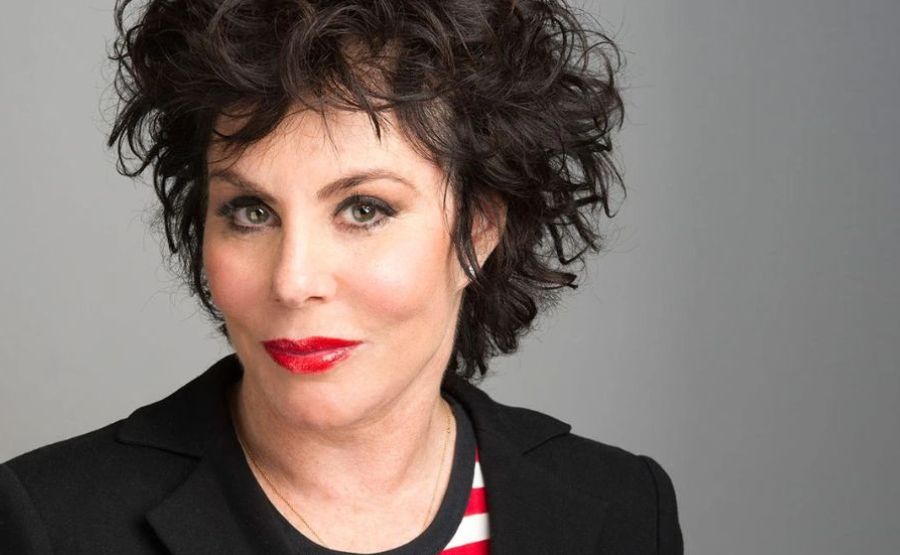
The Second Life: Oxford, OBE, and Becoming the Nation’s Therapist
Here’s where most biopics would do triumphant music. Ruby being Ruby, she did it sideways.
She trained in psychotherapy at Regent’s College in London. Then she went to Oxford. To Kellogg College. Did a Master’s in Mindfulness-Based Cognitive Therapy. I graduated in 2013, aged 60. She was already famous. She was already damaged. She went and got a postgraduate degree anyway, because she needed to understand — literally, neurologically — what her brain had been doing to her all these years.
Sane New World came out in 2013. Hit number one on the Sunday Times bestseller list. She’d done a TED Talk in 2012 that went everywhere. She became what she half-jokingly called “the poster girl for mental health” — which started with a Comic Relief campaign slogan: “One in four people have mental illness. One in five have dandruff. I have both.”
That’s still one of the best one-liners ever deployed in the service of public health.
The OBE came in 2015. For services to mental health. She said it was “the happiest day of my life.” You hope she meant it. You suspect she did.
She became Chancellor of the University of Southampton in 2019. She started Frazzled Cafes with Marks & Spencer — actual physical spaces where people could go and talk about being, in her phrase, “frazzled.” Not just mentally ill. Just — overwhelmed. Like everyone is. Like she’s always been.
The Jungle at 72
In November 2025 she went into I’m A Celebrity… Get Me Out of Here! Oldest contestant that year at 72. She got in there and told the whole OJ banana story to a bunch of younger people who’d never heard of her, and suddenly she was viral again.
She’s written about menopause. About grief for Rickman, for Carrie Fisher — another great lost friendship she’s mentioned only in fragments, which always feels like the truest kind of grief. She married Ed Bye in 1988 — a television director, and she proposed to him — and they’ve been together ever since, which is, frankly, remarkable given everything.
She asked him to marry her because she figured no one else would bother.
That’s the bit I keep coming back to.
All that talent, all that visibility, all those years on television being brash and American and unforgettable — and underneath it all was a kid from a Chicago house with plastic on the furniture who kept a notebook full of imaginary debts, who never quite believed she was worth the trouble.
Her great-grandmother sat in an asylum in Brno being called “agitated” for most of her life.
Ruby Wax got out. Got across an ocean. Got to the RSC, the BBC, Oxford, the OBE. Got famous, got broken, got back up, changed directions entirely.
She’s 73 now. Still touring. Still talking.
Still charging a lot.
Final Words
Ruby Wax at 73 is the logical endpoint of a life that probably shouldn’t have worked out this well. A trauma inheritance stretching back to 19th-century European asylums. Parents who brought the war to the kitchen. An industry that discarded her. A brain that turned against her, repeatedly. And out of all that: a Master’s from Oxford, a bestselling career, and the specific, stubborn dignity of someone who’s been counted out too many times to find it particularly interesting anymore.
She’s not a feel-good story. She’s a true story, which is better.
FAQs
1. How old is Ruby Wax in 2026?
She turned 73 on April 19, 2026. Born 1953, still going, and apparently willing to eat bugs on television to prove it.
2. Where was Ruby Wax born?
Evanston, Illinois, USA — though she’s lived in the UK since 1977 and holds dual citizenship.
3. What is Ruby Wax’s real surname?
Wachs. Her Austrian-Jewish family anglicized it to Wax when they settled in Chicago.
4. Why did Ruby Wax go to Oxford University?
She completed a Master’s in Mindfulness-Based Cognitive Therapy at Kellogg College, Oxford in 2013 — driven by a need to understand the neuroscience behind her own depression and bipolar disorder. She was 60. She just did it.
5. Was Ruby Wax really in the Royal Shakespeare Company?
Yes. Five years, proper classical theatre. Alan Rickman eventually told her, gently but firmly, that comedy was her actual calling.
6. Why did Donald Trump kick Ruby Wax off his plane?
She laughed when he told her he wanted to be president one day. In 1999. She’s said it was the worst interview of her career and that she knows exactly what his brain is like.
7. What happened with the OJ Simpson interview?
She spent 17 hours with him in Los Angeles in 1998. He later called her and said “Hi, it’s OJ. I did it.” Then said “April Fool’s” and hung up. She believes he was guilty and was compulsively “teasing” about the murders.
8. Did Ruby Wax know she had bipolar disorder before it became public?
She’s described living with depression most of her adult life, including multiple stays at the Priory psychiatric clinic. A diagnosis of bipolar disorder came later. She’s said she was answering work emails from the clinic — the kind of detail that tells you everything.
9. What is the Frazzled Cafe?
A project she launched with Marks & Spencer — physical spaces where ordinary people could meet and talk about being overwhelmed, not necessarily mentally ill, just frazzled. It’s surprisingly practical for someone with her background.
10. Who was Ruby Wax’s famous best friend?
Multiple. Alan Rickman, who directed her stage shows and first told her to do comedy, and who she’s described as the first person who ever truly listened to her. Also Carrie Fisher, whose loss she rarely discusses in full — which probably tells you how much it hurt.
11. Why did Ruby Wax resent Louis Theroux?
She felt he’d moved into documentary interviewing territory that she’d pioneered, and that his career rose as hers was dismantled by the BBC. She’s said his name used to make her want to throw up. She’s also said she met him and found him kind. Life is complicated.
12. What did Ruby Wax discover on Who Do You Think You Are?
In 2017 she traced her family history back to mental asylums in Brno and Vienna — her great-grandmother and great-aunt had been institutionalized in the 19th century for being “agitated.” She stood in an archive and said she knew it in every cell of her body that only her sense of humor had kept her out of a similar fate. One of the most quietly devastating moments in the show’s history.
Read beyond the ordinary with The Nexus Magazine.