Mona Vaynerchuk: The Pharmacist Who Burned Her Lab Coat and Married the Internet
She was supposed to fill prescriptions. That was the deal. Six years of pharmaceutical school, a doctorate, immigrant parents who fled a revolution so their daughter could have a steady, respectable, safe career. And she did it. She showed up. Dispensed the pills, wore the white coat, smiled at the patients. Then — maybe three weeks in, maybe a month, accounts vary slightly depending on who you ask — she looked around the pharmacy and thought, this is not it. Just walked away. Quietly. No drama, no press release. Just gone. That private act of professional self-destruction, and the decade of grinding that followed it, is the actual Mona Vaynerchuk story. Not the Gary part. Although we’ll get there. We always get there.
Quick Bio
| Detail | info |
| Full Name | Mona Vaynerchuk (née Mona Vand) |
| Born | March 10, 1985, Los Angeles, CA |
| Heritage | Iranian-American (parents fled post-revolution Iran) |
| Education | Massachusetts College of Pharmacy & Health Sciences, PharmD, 2009 |
| Siblings | Brother: Nema Vand (Shahs of Sunset); Sister: Sarah Vand |
| Career | Pharmacist → Wellness influencer, podcaster, entrepreneur |
| Married | Gary Vaynerchuk, June 14, 2025 |
| Est. Net Worth | ~$4 million (pre-marriage) |
| Platforms | TikTok (14.1M likes), Instagram (1.1M), YouTube (642K+) |
| Podcasts | Monavated Pod, Mona’s Clean Dinners, Core Self (with Chloe Flower) |
The Revolution That Made Her Possible
Her parents didn’t leave Iran because they wanted adventure. They left because the revolution made staying a gamble with their lives. They landed in Los Angeles with the specific ferocity of people who’ve seen what happens when safety disappears overnight. Her mother, Mojgan Afsahi, became a microbiologist and senior clinical analyst. Not a hobby. A career, built deliberately, from scratch, in a country that wasn’t hers yet.
That’s the energy Mona grew up inside. Achievement wasn’t optional. That was the point.
The Iranian immigrant parent playbook — and she’s talked about this openly, laughingly, because what else do you do — was basically: doctor, lawyer, engineer. Pick one. No negotiation. She picked a pharmacist, which is adjacent to the doctor , enough that everyone could exhale. Six years. Massachusetts. A doctorate.
Here’s what doesn’t get said enough though. Her brother Nema ended up on Shahs of Sunset, a Bravo reality show about wealthy Persian-Americans in LA being dramatic. Their parents deliberately raised them away from Persian culture — didn’t emphasize the language, the customs — because they were trying to shield their kids from the anti-Iranian sentiment that spiked in America after the revolution. Mona grew up speaking Farsi, lost it, and later said publicly she wanted to relearn it. That’s a specific kind of quiet grief. Identity shelved for safety, rediscovered when the threat passes.
See also “Is DeBraca Denise Still Alive? The Woman Who Inherited Redd Foxx’s Chaos and Survived It“
Six Years of School, Six Weeks of Actually Caring
Here’s the math that still cracks me up: six years of pharmaceutical education, then approximately six weeks behind the counter before she knew it was wrong.
She’s been honest about this in interviews. Not even conflicted — honest. She sat in that pharmacy and felt nothing aligned. She believed in food, in prevention, in the body as something you maintain rather than medicate after it breaks. The pharmaceutical model — here is your prescription, here is your insurance copay, next patient — felt like it was solving the wrong problem.
A news anchor friend saw her on camera once and said, basically: you’re telegenic, come be our wellness expert. That’s it. That’s the seed. Mona’s response was not sure, why not. Her response was to sit with the idea until her brain started spinning with possibilities. That’s a different kind of person.
She went back to the pharmacy while she built the side hustle. Paid the bills, clocked in, kept her eyes on something else. That part — the years of doing the thing you’ve already emotionally quit, just for the money — deserves more credit than it gets.
The Brand Launch That Almost Killed the Brand
Here’s where it gets messy and real.
She launched the wellness brand. Got excited. Someone offered her a marketing agency deal that sounded like a shortcut to scale. She signed it. And within three to four weeks — weeks — she knew it was a catastrophic mistake. The agency essentially claimed partial rights to her brand. Her name, her image, her audience, her whole thing.
She got out. Hard conversations, probably expensive ones, but she got out. And the lesson she took from it — not everyone who’s successful has the right advice for what you’re doing, it’s all contextual — is actually one of the better pieces of business wisdom you’ll hear from any influencer, ever. Most people would have either stayed trapped or been publicly bitter about it. She just extracted the lesson and kept moving.
Then she had to go back to pharmacy work while she rebuilt. Let that sink in. She’d already quit emotionally, burned the bridge in her head, told herself a new story — and then had to put the coat back on and act like everything was fine while she was trying, again, on nights and weekends, to build something that was actually hers.
That kind of resilience isn’t glamorous. Nobody posts about it. But it’s the thing that separates people who actually build something from people who talk about building something.
Building the Machine (Three Podcasts, One YouTube Channel, One Burnout Wall)
Eventually she got out. For good this time. And then she built, and built, and built.
Dr. Mona Vand: The Modern Pharmacist — a web series, which her brother Nema actually helped produce in the early seasons. Family enterprise. Iranian-American sibling teams making health content before that was really a thing anyone had a template for.
The blog launched in 2015. She went vegan the same year. The YouTube channel went from zero to 200,000 subscribers in a year — which sounds like a fluke but was really the result of her having something most wellness creators didn’t: an actual credential. She wasn’t a woman who’d read some books and called herself a nutritionist. She had a doctorate. She understood pharmacology. She could talk about why a supplement did what it claimed, or didn’t. That specificity was catnip for an audience drowning in vague wellness content.
TikTok eventually handed her 14 million likes. NBC. The Doctors. The Telegraph. Yahoo Finance. She appeared in all of it.
Three podcasts simultaneously. Monavated, Mona’s Clean Dinners, and Core Self with Chloe Flower — a wild combination, a pianist and activist, and they talked about everything from immigrant parents to plastic surgery. That one is underrated and worth going back for.
She also hit a wall. She said so. Perfectionism. The kind that isn’t a humble brag — the kind that actually breaks you. Managing content across YouTube, TikTok, Instagram, and three podcasts simultaneously, while your standards are calibrated to perfection, means you’re running a system that’s always one bad week away from collapse. She took a full year off from social media at some point. A year. In influencer terms, that’s professional suicide. She came back. So it wasn’t.
The Gary Post and Everything That Followed
February 21, 2022. Gary Vaynerchuk — internet’s foremost hype evangelist, VaynerMedia CEO, guy who has more energy before 7 AM than most people have in a week — posted a photo with Mona. Caption: “You make me so deeply happy, monavand.”
She mirrored it.
The problem — and it was a problem — was that Gary had been married to Lizzie Vaynerchuk since 2004. Two kids. A daughter, Misha, born 2009. A son, Xander, born 2012. And Gary had built an entire brand on being a devoted family man, a private family man, a guy who never posted his wife because he respected the family unit too much for public consumption.
And then, suddenly: here’s a new woman, public, matching Instagram posts, relationship confirmed.
His separation from Lizzie had apparently happened, but there had been no announcement. No official statement. The relationship reveal and the implicit divorce reveal happened simultaneously, on Instagram, in matching captions. The internet, predictably, had thoughts. Fans who’d followed Gary for a decade felt something like whiplash. The “family first” guy had a new family situation and had decided to announce it via synchronized social media posts rather than, say, a quiet acknowledgement.
Nema Vand — Mona’s brother — commented approvingly on the post. So at least the families were fine with it.
The connection between them likely ran through Nema, who had professional ties to Gary’s companies. The wellness entrepreneur and the hustle-culture overlord didn’t exactly move in the same circles on their own. Her brother was the bridge.
Mona, for her part, handled the public response the way she handles most things. She didn’t perform distress or over-explain herself. She was just… present. Living her life, posting her content, letting the noise be noise.
They appeared at events together. The Pencils of Promise Gala in 2024. The Fanatics Super Bowl Party in New Orleans in 2025. By the time whispers of an engagement surfaced — someone spotted a pear-shaped diamond ring during a Canada trip in late 2022 — it was clear this was permanent.
The Wedding They Kept Quiet (Until They Didn’t)
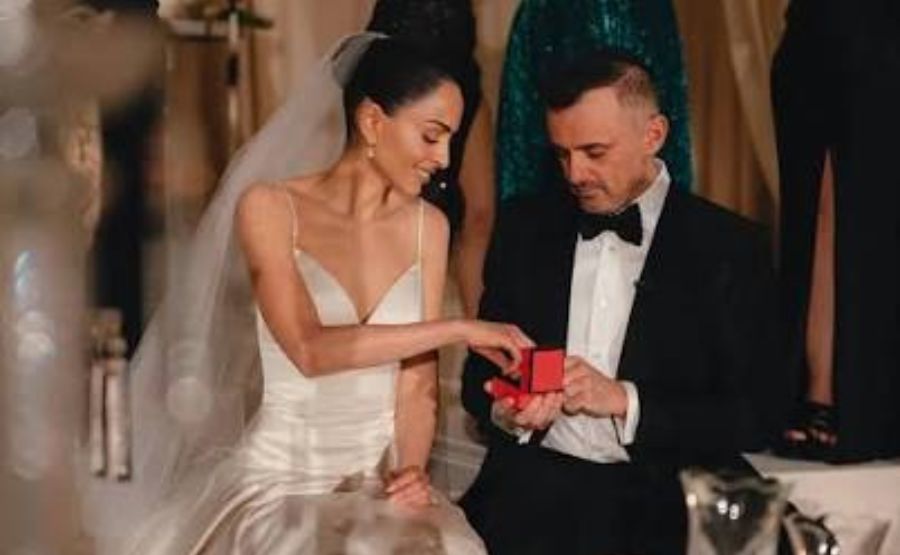
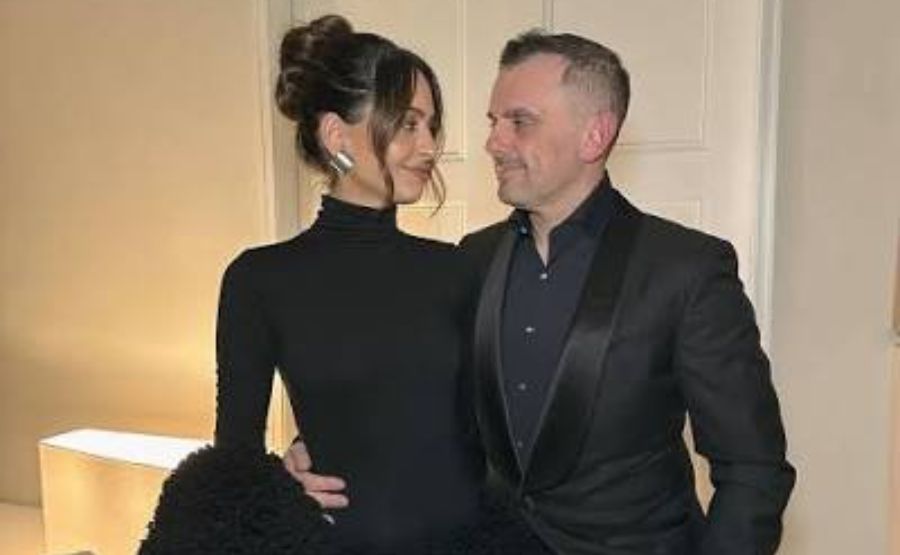
June 14, 2025. They got married.
Gary posted the photos on Instagram a month later — July 19. Caption: “Mr. & Mrs. Vaynerchuk 6•14•25.” Small ceremony. Close family. The whole thing was kept private in a way that felt deliberate, especially given Gary’s 10+ million Instagram followers and his documented compulsion to share everything.
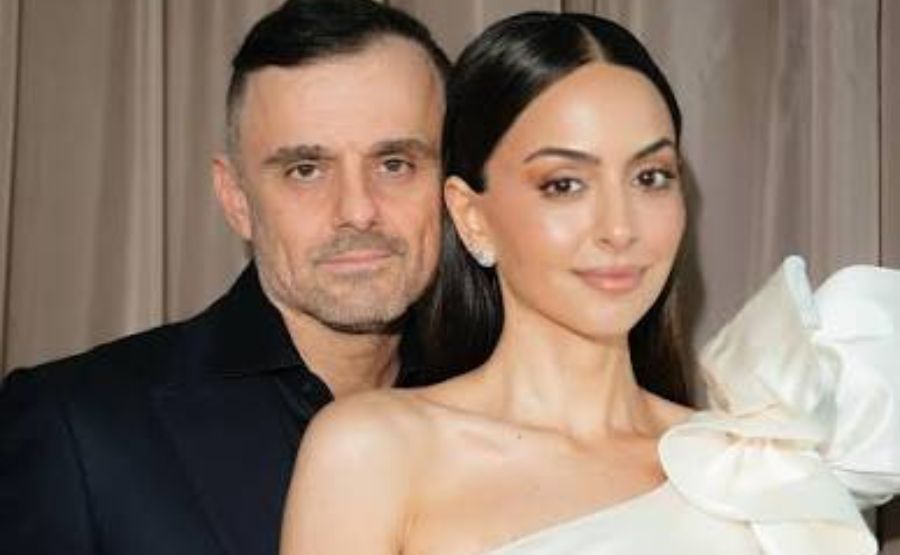
Mona changed her Instagram handle to @monavaynerchuk. She was 40 years old. He was 49. She is now, by any external measure, part of one of the more high-profile entrepreneurial couples on the internet.
The question the internet asks — and it’s not an unfair question — is whether Mona Vaynerchuk gets flattened by the Gary Vaynerchuk gravitational field. He is very large, professionally. He is everywhere, all the time, aggressively. She has real credentials, real reach, a real story that predates him by a decade. But the internet is not great at holding two things at once.
She seems to know this. She keeps her own lane. Her own podcasts, her own content, her own audience. The name changed. The lane didn’t.
What the Skeptics Say (And They’re Not Wrong to Say It)
Let’s be honest about the wellness influencer industrial complex for a second.
The “pharmacist who teaches you not to take pharmaceuticals” brand is genuinely interesting. It’s a real tension. The credential gives her authority. The anti-pharmaceutical stance gives her a wellness audience. But those two things are in conversation with each other in ways that don’t always resolve cleanly. A pharmacist who pivots to plant-based holistic content is still operating in a space full of people making health claims that range from scientifically solid to deeply questionable.
Mona has been careful. She’s not selling snake oil. But she exists in an ecosystem that does, and the line between credentialed wellness advice and lifestyle influencing is genuinely blurry.
The perfectionism she’s described also cuts both ways. It produced a rigorous content standard. It also probably produced content that, at its edges, pushed toward the aspirational wellness aesthetic that makes regular people feel bad about their bodies, their routines, their pantries.
None of this is a scandal. It’s just the honest friction that lives inside the wellness influencer category, and Mona isn’t exempt from it just because she has a doctorate.
Final Words
Here’s what actually got me about Mona Vaynerchuk after weeks of sitting with all of this.
She did the hard thing first. She didn’t get famous and then pivoted. She pivoted, failed, went back, failed, came back, failed again with the agency thing, went back again, built slowly, and then got famous. That order matters. A lot of people in her position would have a cleaner story by now. She seems to have resisted the urge to sand it down.
The Gary thing will follow her, probably forever. That’s just how the internet works. But the decade she built before he showed up is the actual spine of who she is. A pharmacist who couldn’t stand to just hand people pills. An immigrant’s daughter who broke the deal and made a new one. A woman who took a full year off the internet, which is approximately as hard as it sounds, and came back anyway.
Forty years old and newly married to one of the loudest voices on the internet. Whether she keeps her own voice clear through that — that’s the story still being written.
FAQs
1. Who is Mona Vaynerchuk?
She’s a Doctor of Pharmacy turned wellness entrepreneur, podcaster, and content creator. She married Gary Vaynerchuk in June 2025. Formerly known as Mona Vand, she built a multi-platform wellness brand over more than a decade before becoming publicly associated with Gary.
2. Is Mona Vaynerchuk actually a real doctor?
She has a PharmD — a Doctor of Pharmacy — from the Massachusetts College of Pharmacy and Health Sciences. That’s a real clinical doctorate. It’s not a medical degree, but it’s not nothing. She knows pharmacology. That’s the credential she built her brand on.
3. How did Mona and Gary Vaynerchuk meet?
The most credible theory is through her brother Nema Vand, who had professional ties to Gary’s companies including VaynerProductions. They reportedly first met around 2019, before going public in February 2022.
4. What happened to Gary Vee’s first wife, Lizzie Vaynerchuk?
Gary and Lizzie were married from 2004 and share two children — Misha and Xander. The separation appears to have happened around 2021-2022, though no official public statement was made. Gary’s relationship reveal with Mona and the implicit divorce acknowledgment happened simultaneously via Instagram posts.
5. What is Mona’s background as an Iranian-American?
Following the 1979 revolution, her parents left Iran and relocated to Los Angeles. Her mother is a microbiologist. Mona grew up in LA, spoke Farsi as a child, lost the language, and has publicly expressed wanting to relearn it.
6. What happened with her brother on Shahs of Sunset?
Her brother Nema Vand appeared on Bravo’s Shahs of Sunset, a reality show about wealthy Iranian-Americans in Beverly Hills. He worked in branding and digital media. He also served as line producer on some of Mona’s early web content.
7. Did Mona really quit her pharmacy career after just weeks?
By multiple accounts, yes. She completed a six-year PharmD, began clinical pharmacy work in LA, and recognized within weeks that it wasn’t aligned with how she thought about health. She returned periodically when her influencer venture hit setbacks, but her heart was never in the dispensing side.
8. What was the agency deal disaster?
Early in her brand-building phase, she signed with a marketing agency that effectively claimed partial ownership of her brand identity. She caught it within three to four weeks and got out via some difficult conversations. She’s cited it as her biggest early business mistake.
9. How many followers does Mona Vaynerchuk have?
As of 2026, she has around 1.1 million Instagram followers and 14.1 million TikTok likes. Her YouTube channel has over 642,000 subscribers. Combined, she’s a significant content presence independent of Gary’s much larger audience.
10. What podcasts does Mona host?
She runs Monavated Pod (mindset, nutrition, wellness), Mona’s Clean Dinners (food and hosting), and co-hosted Core Self with artist Chloe Flower, which covered identity, immigrant parents, mental health, and personal transformation.
11. Is Mona Vaynerchuk a full-time content creator now?
Yes. She left active pharmacy practice to run her brand full-time. She still leverages her pharmaceutical credential as an authority base but her revenue and focus are in content, partnerships, podcasting, and entrepreneurship.
12. Why did she take a year off social media?
She’s described deep perfectionism that made the constant production demands of multi-platform content creation genuinely unsustainable. The break was reportedly restorative. She came back with a clearer, more systematized approach.
Read beyond the ordinary with The Nexus Magazine.