Aaron Pierre Parents: The Croydon Kids Who Made a Lion King
They were nineteen and twenty years old. No money. Government housing in West Croydon — the kind of place people zoom past on the train and don’t think about twice. And Lesley Eaton is pregnant.
That’s where this story actually starts. Not in Hollywood. Not at some Disney premiere with cameras flashing. In a council flat in South London, two young Caribbean-heritage kids holding a baby named Aaron Stone Pierre, figuring it out.
And somehow — somehow — that baby ends up voicing Mufasa.
Quick Bio
| Detail | Info |
| Aaron Pierre’s Father | Sean Pierre |
| Aaron Pierre’s Mother | Lesley Eaton |
| Sean’s Heritage | Trinidadian-Tobagonian; roots in Curaçao & Sierra Leone |
| Lesley’s Heritage | British-Jamaican |
| Sean’s Profession | Actor, drama teacher, life coach |
| Lesley’s Profession | Nurse (later project manager) |
| Where Aaron Grew Up | West Croydon, South London (council estate) |
| Siblings | Anais Pierre (haircare entrepreneur), Amias Pierre (screenwriter) |
| Aaron Born | June 7, 1994, Brixton, London |
Two Teenagers, One Baby, Zero Blueprint
Here’s the thing about Sean Pierre that nobody really stops to examine: the man was in school when Aaron was born. Twenty years old, still a student, and he’s carrying his newborn son into class to introduce him to his classmates. Just — doing that. Like it’s normal. Like saying “hi everyone, this is my kid, anyway, back to the lesson.”
That detail is wild to me. It’s not a tragic story. It’s not an After School Special about teen parenthood. It’s just… a young man refusing to be embarrassed about his life. Showing up to school with his baby because what else are you gonna do? Hide?
That confidence, that refusal to shrink — Aaron inherited every molecule of it.
Lesley was nineteen. A Jamaican-British girl from London, working-class family, presumably absolutely terrified and not showing it. She becomes a nurse. Think about that for a second. She has a baby at nineteen in government housing and then decides: I’m going to spend my career keeping other people alive. That’s not a small thing. That’s a personality.
These two did not have a safety net. They had each other and whatever grit they’d already built by the time they were barely adults.
See also “DWAYNE KUKLINSKI: Son of the Iceman, Survivor of the Freeze“
Sean Pierre: The Father Who Handed His Son a Mirror
Let’s talk about Sean properly, because the internet makes him dirty. Half the sites can’t even agree on what his job is — some say drama teacher, some say actor, some say life coach, one wildly off-base article calls him an engineer (no, that’s just wrong, someone clearly made that up). The consensus from Aaron’s own words: his father is an actor and drama teacher.
And that matters enormously.
Sean Pierre didn’t just tell his kid “you can be anything you want” like some inspirational poster. He lived the thing. He performed. He stood in front of people and told stories for a living. When Aaron was still a child, he watched his father do that, absorb that, feel that. The lesson wasn’t spoken — it was demonstrated.
Aaron has called his father “my hero” in interviews. Not in a casual, PR-friendly way. In the way where you can tell the person actually means it and is slightly emotional saying it out loud. There’s a realness to it that’s hard to fake.
Here’s what Sean also did: when Aaron, this tall, athletic, South London kid decided he wanted to pursue acting seriously — Sean moved. The whole family uprooted to Toronto for a year so Aaron could study classical literature there. Think about what that costs. Financially, logistically, emotionally. Two adults with careers and a life in London, and they just… go. Because their son has a dream.
Nobody writes about that sacrifice enough. Everyone talks about Aaron’s talent, his LAMDA training, his breakout in The Underground Railroad. And those things are real and earned. But behind every LAMDA audition is a family that made it possible to even try.
Sean’s cultural roots are a whole map: Trinidad & Tobago by birth, with ancestry in Curaçao and Sierra Leone. That West African thread, that Caribbean thread, that blend — it runs straight through Aaron’s identity. In an interview with BBC Radio 1Xtra, Aaron said plainly: “My father is of West African and Caribbean heritage — Sierra Leone and Curaçao.” He says it like a person who knows exactly who they are. That clarity didn’t happen by accident. Someone taught him to hold his heritage without apology.
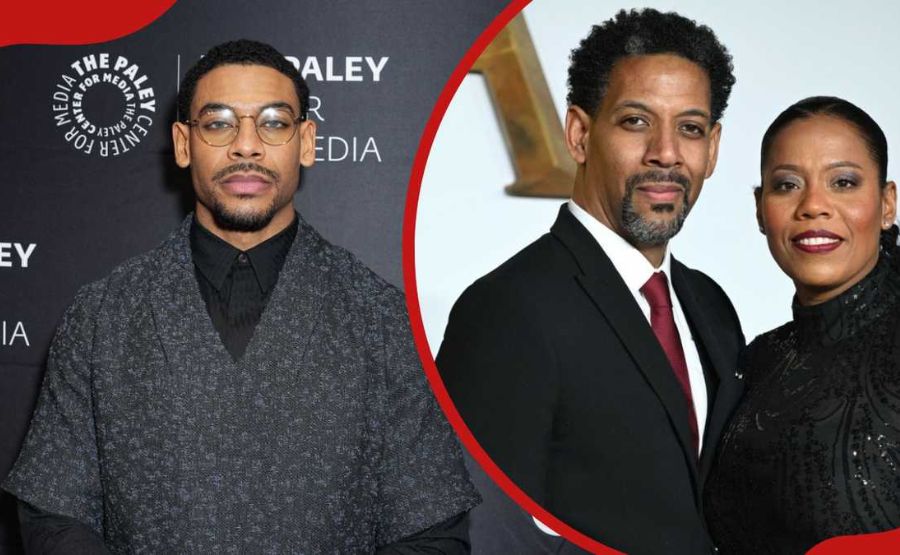
Lesley Eaton: The Nurse Who Answers the Phone at Work
There’s a quote from Aaron about his mother that I keep coming back to because it’s so unexpectedly tender. He’s talking to AP News, he’s 30 years old, 6’3″, just played Terry Richmond in Rebel Ridge, and he says:
“I feel secure whenever I talk to her or spend time with her.I feel reassured, I feel rejuvenated. I definitely call her phone a lot and she’ll answer even if she’s at work. Yes, I’m Terry Richmond in “Rebel Ridge” and I’m thirty years old and six feet three inches tall.However, I still consider myself to be her baby and little boy.
A grown man, a rising movie star, a person whose face is now on Disney merchandise — and he calls his mom at her nursing job when he needs to feel okay about the world. I don’t care how many red carpets you’ve walked. That’s just a kid who was raised by someone solid.
Lesley Eaton is described in some places as a nurse, in others as a project manager. Probably both at different points. What stays consistent is Aaron’s characterisation of her as his emotional ground zero. Not just a supportive mom in the vague, abstract Hollywood-interview sense. Specifically: the person he calls. The person who picks up.
She was nineteen when she had him. She raised three children in council housing in South London. She presumably dealt with everything that comes with that — the money stress, the neighbourhood, the worry — and still became the kind of mother her son calls “safety.”
That’s not luck. That’s work. That’s a choice made a thousand times a day to show up.
Her Jamaican heritage feeds directly into the cultural mix Aaron carries. He’s mentioned it specifically, proudly. He knows where his mother’s people are from and he holds it. That’s Lesley’s doing.
West Croydon: The Third Parent Nobody Talks About
You can’t write about Sean and Lesley without writing about the place they raised their kids, because in a very real sense the estate was doing its own parenting too.
West Croydon council housing. Government estate. The kind of place that in British media gets described as “deprived” or “rough” or whatever coded language journalists use. Aaron describes it completely differently: “It’s my favourite place in the world.” He said that in America, on American television, without irony.
He credits it with giving him a multicultural education that money can’t buy. Brixton, Croydon — these are places where Jamaica and Sierra Leone and Curaçao and the Caribbean and West Africa all end up on the same block, arguing about football and making food and going to the same schools. Aaron grew up surrounded by that tapestry. Which, incidentally, perfectly prepared him to play Ceasar in The Underground Railroad, to voice Mufasa, to embody Malcolm X. He knows complexity. He grew up in it.
Sean and Lesley chose to stay there when they could have maybe moved. Or they didn’t have the option. Either way: their kids were shaped by it. And none of them apparently resent it. Anais built a natural haircare company with Curaçao-sourced ingredients. Amias is at Raindance Film School doing a master’s in screenwriting. Aaron is Mufasa.
Three kids from a West Croydon council flat. All of them are building something.
The School Play Pivot That Changed Everything
Aaron wanted to be a sprinter. Seriously — he idolized Maurice Greene, the American Olympic gold medalist, and thought he was “the coolest guy in the world.” He trained, he ran, he was into it.
Then the diet required for elite sprinting became unappealing to a teenager (I mean, fair), and his school put on a production of Moby Dick. The school didn’t even have a drama department — they did a play every three years. Aaron narrated it.
That was it. That was the moment.
He was thirteen. He joined a theatre group in Croydon called CRYPT — Croydon Young People’s Theatre. It was, by his own description, a “run-down warehouse.” They improvised. They devised their own plays. They performed them for “whoever could be bothered to turn up,” which was often almost nobody.
And Sean Pierre, the drama teacher, the actor, the father — had been quietly preparing his son for exactly this moment for years. Not by forcing it. By being it. By bringing his baby to class. By existing as proof that performance was a real thing a real person could do.
The Toronto Chapter: When Parents Move for Their Kid’s Dream
This part gets skipped over constantly and it drives me a little crazy.
After his time at Lewisham College, Aaron wanted to study classical drama at George Brown Theatre School in Toronto. He went. And his parents went with him. For a year.
Sean and Lesley uprooted their lives from South London and followed their son to Canada so he could pursue acting training. Two people who are not famous, not wealthy, not operating in the entertainment industry in any big public way — they just went.
Aaron later told Curzon magazine that his parents, grandparents, and community shaped “a strength, an elegance, an emotional intelligence — a way of navigating the world.” That quote is doing a lot. It’s a 31-year-old man crediting his upbringing not just for his values, but for the specific qualities that make him extraordinary on screen. That stillness. That presence. That weight.
You can’t teach that at LAMDA. You absorb it. Over the years. From people who embody it.
The Siblings: A Family That Creates Things
Anais Pierre owns a natural haircare company — chemical-free products sourced from Curaçao and London. She’s building something rooted in her family’s Caribbean heritage, in their grandmother’s island, in something real.
Amias Pierre is at Raindance Film School getting a master’s in screenwriting. He’s a director too.
Aaron, the eldest, said nobody put the duty on him to be an example — but he always felt it. He took that big-sibling responsibility seriously. And look at them: all three making things, all three following their father’s creative ethos and their mother’s steady discipline.
Sean and Lesley didn’t produce one talented kid. They produced a creative household. That doesn’t happen by accident. That’s culture. That’s what a family decides it values.
What Fame Did (and Didn’t) Change)
Here’s something that seems genuinely true about Aaron Pierre and, by extension, his parents: fame hasn’t made him weird about where he’s from. He will tell you about West Croydon. He will tell you about the council estate. He will tell you his mother still answers the phone at work when he calls.
That groundedness has Sean and Lesley’s fingerprints all over it. They didn’t raise a kid who would be embarrassed about the housing estate. They didn’t raise a kid who would airbrush out the Curaçao and Sierra Leone from his bio when Hollywood came calling. They raised someone who says “my father is my hero” and means it at thirty-one.
After Mufasa dropped — the film where Aaron voices the Lion King’s father, ironically — he acknowledged his actual father in the way you’d expect. Quietly. Gratefully. Without making a spectacle of it.
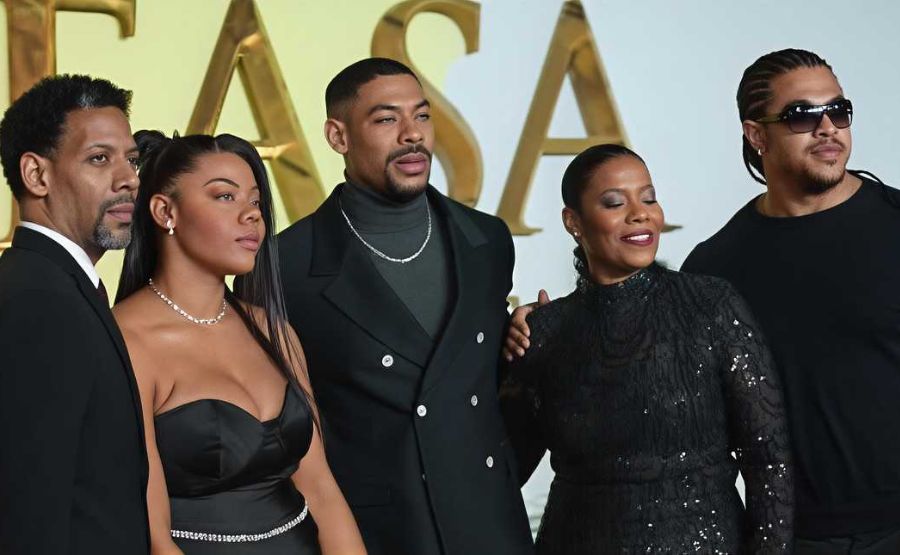
The family showed up to the Mufasa premiere together. A nurse, a drama teacher, three kids from a West Croydon council estate. Standing in the lights.
If Sean Pierre had wilted when his student peers saw him carrying his newborn into class, none of this would happen. If Lesley Eaton had let nineteen make her small, none of this would happen. They were just — stubbornly, unspectacularly — themselves. And that was the whole thing.
Final Words
There’s a version of this story where two teen parents in South London become a cautionary tale. The version that actually happened is so much stranger and better: a drama teacher and a nurse raise three children on a government estate, one of whom becomes the voice of a Disney king.
Sean Pierre and Lesley Eaton didn’t engineer Aaron’s career. They just didn’t get in its way. They showed up. They moved countries. They answered the phone. They brought the baby to class.
That’s the whole biography. Everything else is just noise.
FAQs
1. Who are Aaron Pierre’s parents?
His father is Sean Pierre — actor, drama teacher, life coach — with roots in Trinidad & Tobago, Curaçao, and Sierra Leone. His mother is Lesley Eaton, a British-Jamaican nurse. Both were teenagers when Aaron was born.
2. How old were Sean and Lesley when Aaron was born?
Lesley was 19. Sean was 20 and still a student. He famously brought baby Aaron into class to meet his classmates.
3. Did Sean Pierre actually influence Aaron’s acting career?
Directly and profoundly. He’s an actor and drama teacher himself. Aaron calls him “my hero” and specifically credits his father as the person who inspired him to pursue performing.
4. What does Aaron Pierre’s mother do?
Lesley Eaton has been described as both a nurse and a project manager at different stages. Aaron consistently describes her as his emotional anchor — the person he still calls for reassurance.
5. Where did Aaron Pierre grow up exactly?
West Croydon, South London. Council estate — government housing. He describes it as “my favourite place in the world” and credits it with shaping his multicultural worldview.
6. Did Sean and Lesley support Aaron moving abroad to study?
Yes — and they didn’t just support it from London. They uprooted and moved with Aaron to Toronto for a year while he studied classical drama at George Brown Theatre School.
7. What is Aaron Pierre’s cultural heritage through his parents?
Through Sean: Sierra Leonean and Curaçaoan. Through Lesley: Jamaican. He’s British-born but holds all three threads consciously and publicly.
8. Does Aaron Pierre have siblings?
Two younger siblings. Anais Pierre runs a natural haircare company using Curaçao-sourced ingredients. Amias Pierre is a screenwriter and director currently at Raindance Film School.
9. Are Sean and Lesley still together?
Not publicly confirmed either way. Their current relationship status is private — Aaron rarely shares personal details about their lives beyond professional descriptions and general warmth.
10. Why does Aaron Pierre credit his parents so heavily in interviews?
Because by all available evidence, they actually earned it. Moved countries for him. Raised him in a creative household. Staying present. He doesn’t seem like someone who says things for optics.
11. Did growing up on a council estate shape Aaron’s acting?
He says yes, explicitly. The multicultural texture of Croydon — Caribbean, West African, South Asian, everything mixed — gave him an emotional range and cultural fluency that direct schooling couldn’t replicate.
12. What’s the most underrated thing about Aaron Pierre’s parents?
That they were kids themselves. Nineteen and twenty. And instead of that being a disaster, they just… built something. Quietly. Without anyone writing about it until their son became famous.
Read beyond the ordinary with The Nexus Magazine.