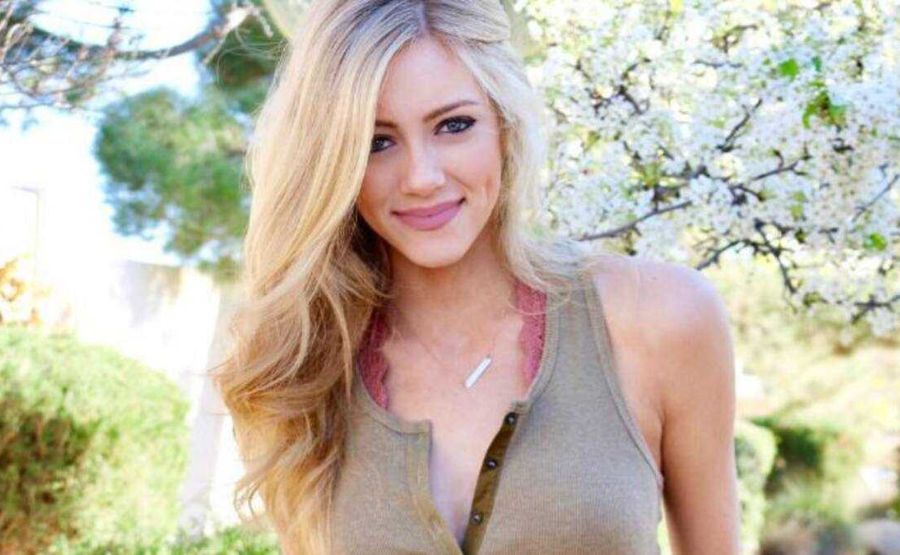
Abby Hornacek Eye Injury: The Ball That Changed Everything (And the Woman Who Refused to Let It)
Here’s a thing that nobody really talks about when they cover Abby Hornacek: she was supposed to be famous for something completely different. Not Fox Nation. Not PARK’D. Not bungee-jumping off bridges while her dad drives the RV. She was supposed to be playing. Setting balls, six feet of athletic reach, three consecutive state championships at a Catholic prep school in Phoenix — this woman had a trajectory. And then volleyball got in the way. Literally.
Quick Bio
| Detail | Info |
| Full Name | Abigail Marie Hornacek |
| Born | April 25, 1994 |
| Birthplace | Paradise Valley, Arizona |
| Dad | Jeff Hornacek (NBA player, Suns/Jazz/76ers, later head coach of the Knicks) |
| Education | Xavier College Preparatory (Phoenix); USC Annenberg School of Journalism — graduated cum laude, departmental honors, one of 14 selected |
| Injury | Retinal detachment, right eye — volleyball impact — two failed surgeries — prosthetic eye |
| Career | Fox Nation host (PARK’D, Ride to Work, American Arenas); prior ESPN contributor, Fox Sports sideline reporter |
| Relationship status | Private. Consistently. Almost aggressively so. |
| Net worth | Estimated $1–1.5 million (2026) |
Born Into a Gym
Let’s be real about something. When your dad is Jeff Hornacek — shooting guard, three-time All-Star conversation, the guy Utah Jazz fans still get weirdly emotional about — you don’t exactly grow up indifferent to competition.
Abby grew up in Paradise Valley, which sounds like a suburban fever dream, and it kind of is. Comfortable. Sporty. The kind of place where kids have actual coaches before they hit middle school. She had two older brothers, Tyler and Ryan, and by all accounts they were a loud, athletic, deeply bonded family unit. Jeff and Stacy Hornacek apparently did something right because all three kids seem functional and close, which honestly is rarer than people admit in NBA families.
Abby didn’t pick basketball. Which, honestly, respect. She could’ve coasted on the name. Instead she went hard for volleyball. Setter. Six feet tall. Xavier College Prep — powerhouse program, Phoenix’s version of serious.
She won three state titles. Three. Back to back to back. This isn’t participation ribbon stuff.
See also “Lemuel Plummer Net Worth: The Preacher’s Kid Who Built a Billion-Dollar Gutter Empire“
The Setup
By senior year, 2011–2012, Abby Hornacek was producing numbers that make volleyball nerds take notice. Something like 376 kills, 286 digs, 85 aces in her senior season. She was also on the sand volleyball squad that took the state title that spring. USC offered her a spot on the beach volleyball program.
Let me repeat that: the University of Southern California. Division I. She was going in as an athlete, not as Jeff Hornacek’s daughter borrowing his connections.
That matters. It matters because what happened next could be framed as tragedy, or it could be framed as something more complicated — a brutal fork in the road that an 18-year-old couldn’t have prepared for.
The Moment Itself
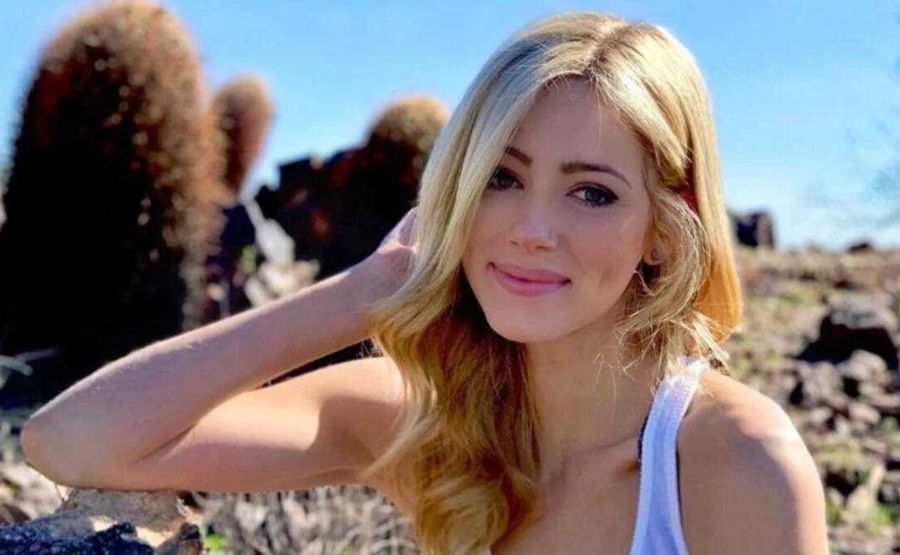
Spring 2012. Volleyball practice. A ball deflects off a block — weird angle, the kind that happens a hundred times a session and usually means nothing. This time it catches her directly in the right eye. Impact immediate. Vision went dark on one side.
The medical term is retinal detachment. The retina — that delicate sheet of light-sensitive tissue stuck to the back of the eyeball — gets sheared away from where it should be. It’s a medical emergency. You don’t walk it off. You don’t ice it and come back next week.
Two surgeries. Both failed. The right eye was done.
She was 18. Think about that for a second.
No dramatic press release. No ESPN story. Just a teenager in a recovery room being told that the vision in her right eye was gone permanently, and she was going to need a prosthetic.
Two Surgeries and a Prosthetic Eye Nobody Talked About
Here’s what kills me about the media coverage — or the lack of it: Abby Hornacek has been on national television for years, with a prosthetic glass eye, and most viewers had no idea. The machinery that makes television smooth was working overtime. A green-tinted lens to match her remaining eye color. Good lighting. And frankly, good makeup, which her mom has reportedly served as unofficial provider of on road trips.
Viewers started noticing anyway. They always do. Forums. Reddit threads. “Is something different about her eye?” “What happened to Abby Hornacek’s right eye?Because of its nature, the internet dug deeper. Some of the speculation got weird. Most of it was just curious.
She never issued a statement. Never turned it into a press tour moment. There was no sit-down with a sympathetic anchor going “tell us about your struggle.” She just showed up. Wore the lens. Did the job.
That restraint is either deeply private or deeply strategic. Probably both. Athletes turned media people tend to be allergic to the victimhood narrative.
The Foot. Because It Wasn’t Just the Eye.
This part gets glossed over constantly, and I find that fascinating. The eye injury is the story everyone latches onto because it’s dramatic and visual and fits a clean arc. But it actually wasn’t the only thing that ended her volleyball career at USC.
She also had a significant foot injury. Two more surgeries for that. The foot damage knocked her out of the USC women’s NCAA volleyball program entirely — not for a season, but for the duration.
So she got hit with both barrels. Right eye, then right foot. The eye injury is what launched a thousand curiosity Google searches. The foot injury is what technically finished the athletic chapter. But you’ll barely find five words about it in most coverage because it’s less cinematic.
Reality is messier than the redemption arc people want to sell you.
The Pivot That Actually Made Sense
Here’s where most bios go sugary and useless: “She turned adversity into triumph!” Yeah yeah. But how?
She was already at USC Annenberg — one of the better journalism schools in the country. She wasn’t just auditing classes. She was on Trojan Vision Television, the student-run station that reaches nearly 30,000 people on campus. She anchored. She reported. She also apparently entered the Miss Arizona pageant circuit, which — and this is where you either roll your eyes or admit it’s a calculated career move — she placed third runner-up for Miss Arizona in 2014.
The Miss Arizona thing is interesting. She’s not exactly the pageant type in the obvious sense. She’s six feet tall, grew up in gyms, and had just spent years getting surgically patched back together. But pageants teach presence. Composure under weird pressure. How to exist in front of cameras that aren’t pointed at you because of anything you’ve done but because of how you appear.
It’s an uncomfortable truth about television: looking good matters. She used every available system.
Graduated cum laude in 2016. One of 14 students from Annenberg to get departmental honors. The volleyball scholarship turned into a journalism credential with actual weight.
Fox Nation, Dad, and the RV
ESPN contributor first. Then Fox Sports sideline reporter. She hosted something called “San Diego Prep Insider” on Fox Sports San Diego — the kind of regional gig that’s either a launching pad or a dead end, depending on who’s watching.
Fox News was watching. In 2018/2019, Fox Nation launched its streaming platform and Abby Hornacek came with it.
PARK’D is the flagship. She takes a camera crew to America’s national parks and does adrenaline stuff — bungee jumping, leading llamas through wilderness, whatever the park offers. It sounds like a travel show until you watch it and realize she’s doing things that require actual physical courage. The woman with one functioning eye is bungee-jumping off bridges on camera.
She called herself “painfully shy” in an interview once. Nobody watching PARK’D would ever believe that. Which is either great television or great personal evolution, and I suspect it’s both.
The Jeff Hornacek cameo situation is genuinely sweet, and I say that as someone deeply suspicious of manufactured family content. He drives the RV on a 12-day road trip through Arizona, Utah, and Colorado. Her mom Stacy comes along and does her makeup. This is not a PR stunt — or if it is, it’s an extremely convincing one. They genuinely seem to like each other, which in celebrity family dynamics is notable enough to mention.
She also runs “Ride to Work” — drives Fox News personalities to work while interviewing them. It’s charming. Light. Designed for people who want Fox content without wanting to feel like they’re watching the news.
“American Arenas” is where the sports kid in her shows really shows: she tours legendary American sports venues. Runs around the places her dad was part of. That one feels personal in a way the show probably doesn’t fully acknowledge.
The Eye, On Camera, Every Day
Let’s come back to this because it deserves more than a sidebar.
The green-tinted lens. If you watch her enough, you notice a slight asymmetry. The eyes don’t quite match in a way that’s hard to articulate unless you’re looking for it. Modern prosthetic technology is genuinely impressive — these aren’t the glass eyes of 1940s film noirs. They’re custom acrylic shells, fitted precisely, tinted to approximate the natural eye.
She wears a green protective lens. Some reports suggest it’s over the prosthetic itself; others say it’s a precautionary lens worn over her remaining functional left eye, which — when you have monocular vision (one working eye) — is actually standard medical advice. Protect what you have left.
Depth perception is gone when you lose an eye. Your brain has to relearn how to judge distance using other cues: object size, shadows, peripheral movement. She navigates national park terrain on camera. She does physically demanding things. She has never, publicly, made this into a pity narrative.
That takes something. I’m not sure what to call it exactly — stubbornness, maybe. Or a very specific kind of pride.
What’s Missing From This Story
I’ll be honest about what I couldn’t find, because being honest about gaps is what separates journalism from content.
Nobody has a solid interview where Abby Hornacek sits down and really talks about the moment of impact. She doesn’t give those. The quotes that circulate are vague and inspirational. “Sometimes the detours lead you where you’re meant to be.” Fine. True. Also: extremely press-coached.
Her dating life is a genuine black hole. Single as of 2026 — confirmed by absence rather than statement. There’s speculation online (there’s always speculation), but nothing sourced, nothing she’s confirmed or denied. She guards that space aggressively.
The Miss Arizona pageant chapter — she competed in 2014, third runner-up, then judged Miss USA in 2020 — feels underexplored by everyone who covers her. There’s a version of Abby Hornacek between “injured volleyball player” and “Fox Nation host” that nobody’s really told.
And the Fox Nation angle invites an obvious question that nobody in mainstream coverage asks: what does it mean, personally, for a twenty-something woman who graduated from a serious journalism school to land at a streaming platform that’s ideologically… specific? She doesn’t cover politics, but parks and arenas. But the institutional affiliation exists. I don’t think it defines her. I do think it’s worth noting that she’s never been asked to answer for it publicly in any meaningful way.
The Actual Legacy (If She Has One Yet)
She’s 32. That’s not a legacy age. That’s a mid-career checkpoint.
But what she’s built is real: a sustained on-air presence across three shows, a recognizable face, a brand that’s specifically hers — not her father’s, not Fox’s, but hers. She’s the national parks lady. The adventure host. The woman with the prosthetic eye who bungee-jumps.
She advocates for sports safety now. Talks at volleyball clinics. That part of the story — the teenager who got hit in the eye and then went back to tell teenagers to wear protective goggles — that part lands.
Jeff Hornacek’s daughter became her own person. It took a volleyball to the face to accelerate the timeline, and that’s grim enough that I feel weird typing it, but it seems to be true.
Final Words
Abby Hornacek lost her right eye in a volleyball practice, went through two surgeries that couldn’t save it, then went back to school and built a television career on camera — in high definition, with a prosthetic — while never once making her injury the center of her public identity. Make of that what you will.
FAQs
1. What exactly happened to Abby Hornacek’s eye?
A volleyball hit her in the right side of the head/face during practice, causing a retinal detachment — the retina peeled away from the back of the eye. Two surgeries failed to restore vision. Permanent loss of sight in the right eye.
2. Does she actually have a glass eye?
Sort of. “Glass eye” is an old term. She has a modern acrylic prosthetic fitted in her right eye socket. She also wears a green-tinted protective lens on camera — either over the prosthetic or over her remaining left eye as a protective measure.
3. Was it high school or college when the injury happened?
This is genuinely murky and different sources say different things. The most credible accounts suggest it happened at or around the transition — either late high school or early in her time at USC. She was approximately 18.
4. Did the eye injury end her volleyball career?
Not alone. She also suffered a significant foot injury that required two separate surgeries. It was the combination that knocked her out of the USC women’s program entirely.
5. Why doesn’t she talk about it more?
Unclear. Could be deeply private. Could be a strategic brand decision — victim narratives are limiting, especially on a platform where you want to project physical capability. Probably both.
6. Can she still do physically demanding things with one eye?
Apparently yes, very much so. She bungee-jumps. She hikes national park terrain. She leads llamas. Monocular vision is challenging — depth perception has to be relearned — but it’s not incapacitating.
7. Is the green lens always visible on camera?
Not always. Most viewers don’t notice it. Some do. It’s generated years of online speculation, which she has never formally addressed.
8. Did her dad’s NBA fame help her career?
Of course it did, in the sense that all connections help. But she graduated cum laude from USC Annenberg with departmental honors, worked regional gigs, and built upward. She didn’t waltz in through a side door.
9. Is she political?
She works for Fox Nation. She covers parks and arenas, not partisan topics. She’s never staked out a public political identity. Draw your own conclusions about the institutional context.
10. Is she married?
No confirmed relationship as of 2026. Keeps romantic life entirely offline. This makes the internet very frustrated, which she seems completely fine with.
11. What’s her best show?
PARK’D. Genuinely good television. America’s national parks are underrated as content subject matter, and she brings enough physical energy to make you actually care.
12. What’s the most underreported part of her story?
The foot injury. Everyone leads with the eye. The foot was equally career-ending, and it gets maybe one line in most coverage. That gap in the narrative says something about how we tell sports injury stories — we want the single dramatic moment, not the accumulation.
Read beyond the ordinary with The Nexus Magazine.