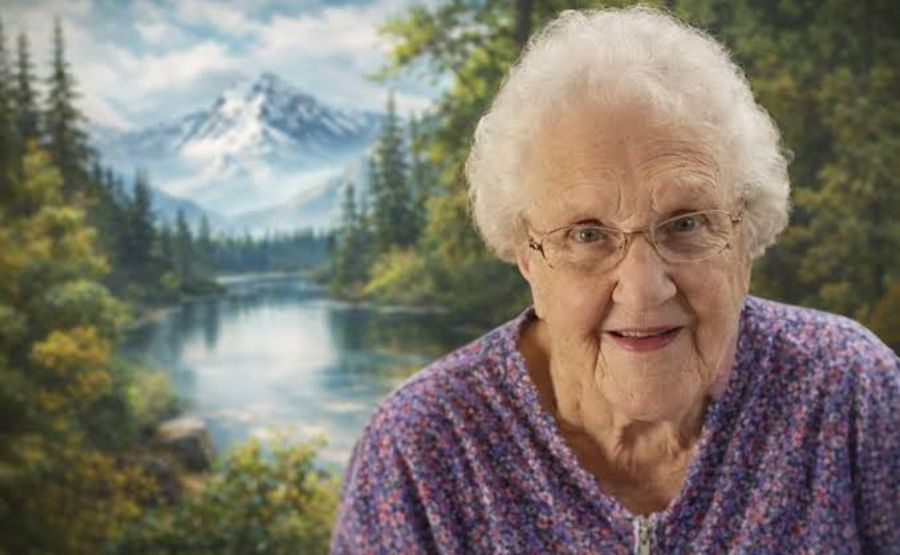
Vivian Ridge: The Woman Bob Ross Erased Before the Camera Ever Turned On
She never got a TV show. Never got a permed wig. No “happy little tree” was ever named in her honor. And yet without Vivian Ridge, there is no Bob Ross. Not the one the internet loves, anyway.
Here’s what nobody tells you: the guy painting serene mountains and whispering about joy on PBS? He spent the early years of his life being a drill sergeant. Screaming at recruits. And when he came home from Alaska with Alaskan snow in his bones and a brush in his hand — Vivian was already there. Patient. Artistic. Already an artist herself. She didn’t discover Bob Ross. She held Bob Ross together while he figured out who he was going to be.
And then he cheated on her.
Quick Bio
| Field | Details |
| Full Name | Vivian Ridge Ross |
| Born | ~July 1946, North Carolina, USA |
| Died | ~2018 (exact date not publicly confirmed) |
| Nationality | American |
| Known For | First wife of Bob Ross; artist; mother of Steve Ross |
| Education | Art History, Wake Forest University |
| Married | Bob Ross, 1965 |
| Divorced | 1977 |
| Children | Robert Stephen “Steve” Ross (b. August 1, 1966) |
| Post-divorce | Private life in North Carolina |
North Carolina Quiet
Vivian Ridge grew up in North Carolina in the late 1940s. Small-town values, Southern summers, probably church on Sundays and the kind of childhood where you notice the color of light through pine trees because there’s not much else to notice.
She started painting at twelve. Twelve. That matters. This wasn’t a woman who drifted into art through a husband. She was already there.
She went to Wake Forest University for art history. A real academic. She wanted to understand not just how to make art but why it existed, what it meant, where it came from. She was the kind of person who reads the placard at a museum instead of just walking past.
And somewhere in there she met Bob.
See also “Yessica Kumala: The Woman Who Saved Her Husband’s Number as “Sunset 4”
Meeting the Drill Sergeant
Bob Ross in 1965 was not Bob Ross. He was a 22-year-old Air Force serviceman — flat-footed, six foot two, assigned to Eielson Air Force Base outside Fairbanks, Alaska because he couldn’t be a pilot. He was stationed in the frozen dark and he was, by his own later admission, a mean son of a bitch to his subordinates. A drill sergeant type. He yelled. He made advantage of his strength.
He hated it. Said he never wanted to be the kind of person who made other people feel small. Make a note of that. It matters later.
He had discovered painting while in Alaska; he enrolled in a class at a USO club in Anchorage and began offering tourists little landscape paintings on gold-panning tins. Bartending on the side to make extra cash. The Alaskan mountains were burning themselves into his visual memory. He was becoming something, slowly.
When he met Vivian, she already was something.
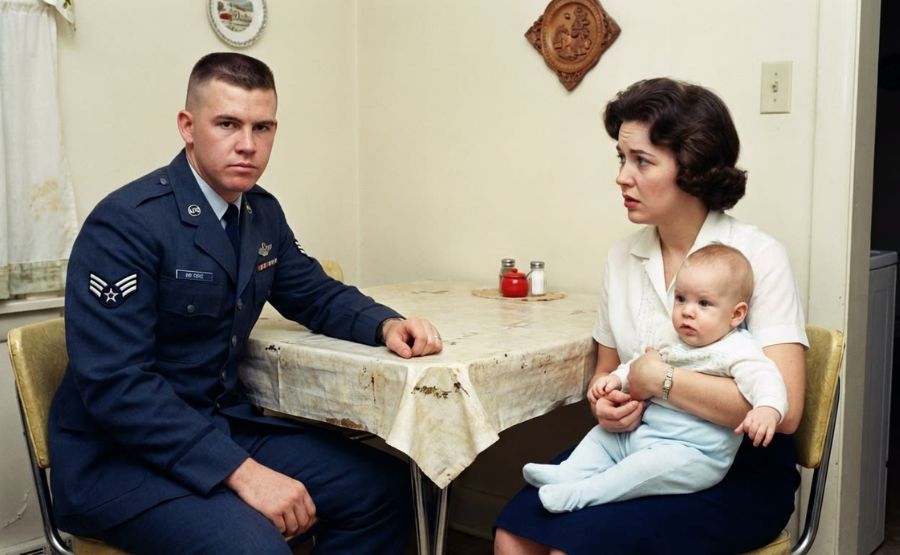
They married in 1965. She had the degree. He had the mountains in his head and twenty years of military service still ahead of him. It was not an equal starting position and to her credit, she didn’t seem to care.
The Marriage Nobody Talks About
Twelve years. Twelve years of military wife life, which — if you know anything about what that actually entails — is basically a second full-time job with no pay, no credit, and a spouse who’s physically or emotionally absent by institutional design.
They had Steve in 1966. One year into the marriage, she was a mother. Bob was still active duty. She was raising a kid in that ecosystem.
Here’s what I keep thinking about: Bob Ross spent twenty years in the Air Force. He retired in 1981. They divorced in 1977. Do the math. She left before the dream even fully materialized. She was there for the work — the grinding years, the Alaska postings, the bartending, the slow construction of a craft — and not for the payoff.
She got it before. Jane got the after.
The Art She Brought
This is the part that gets buried under the Bob Ross mythology. Vivian wasn’t just “supportive.” She had a genuine art history education. She was studying painting before Bob ever touched a brush. Her academic background — the kind that teaches you about Rembrandt’s layering techniques, about how light behaves in Impressionism, about the history of landscape as a genre — that brain was in that house.
Bob’s early style was still raw. Figurative but unrefined. Vivian’s intellectual framework gave him context he wouldn’t have found in Alaska. She was the one who could explain why certain compositions worked. Bob eventually found Bill Alexander and the wet-on-wet technique. But the visual literacy he brought to that encounter? He didn’t develop that alone.
She also passed it to Steve. After the divorce, Vivian raised their son and introduced him to color theory, art history, and the emotional logic of painting. Steve Ross became a certified wet-on-wet instructor and appeared on The Joy of Painting itself. Both his parents made him an artist. Only one of them got credit.
The Divorce, and the Part That’s Murky
Official cause: irreconcilable differences. Right. That covers a multitude of sins.
The story that circulates — and it comes from multiple sources, none of them directly from Vivian’s mouth, which tells you something — is that Bob’s growing investment in art, and specifically his increasing time away, created distance. And then allegedly there was infidelity.
Nobody confirmed it publicly. Not Bob. Not Vivian. Not once.
Which is honestly remarkable. Bob Ross became one of the most beloved public figures in American media history. A man of serenity, kindness, and happiness. And his first wife — who had every reason to sell that story to a tabloid, who could have made real money in the 1990s doing exactly that — chose to say absolutely nothing.
That’s not passivity. That’s an active choice. That’s discipline. That is a woman who decided her dignity was worth more than anyone’s curiosity. Including mine, sitting here at 3 AM with seventeen browser tabs open.
She was gone before The Joy of Painting launched in 1983. Fully gone. No appearance on the show. No cameo. No acknowledgment. Bob moved on to Jane within months of the divorce — married her in 1977, the same year, which is a detail that tends to make people raise an eyebrow.
Life After Bob
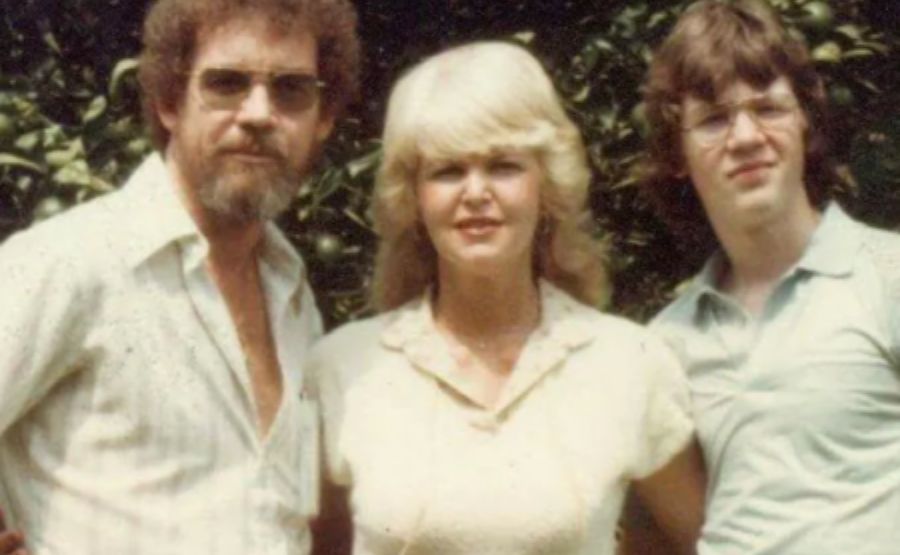
Here’s what we know: She went back to North Carolina. She raised Steve. She painted. She gardened. She did not do interviews.
She died around 2018. The exact date isn’t in any reliable public record. Which is, in itself, a final act of privacy. A woman who spent a lifetime not feeding the machine left it in the same condition she maintained it throughout.
When Vivian died, Steve — who had by then lost his father in 1995 and watched the Bob Ross brand get contested in ugly legal battles — lost his mother quietly. No press release. No death notice in a major paper. Just gone.
Think about that. Bob Ross died and it was a news story. Vivian Ridge died and it was barely a footnote. And she chose that. You have to respect it, even if it also makes this article significantly harder to write.
The Bob Ross Brand Mess She Had Nothing To Do With
After Bob died in 1995, a legal and corporate war erupted over the Bob Ross name, the Bob Ross likeness, the Bob Ross perm. The Kowalski family — who had helped build Bob Ross Inc. — and Steve Ross ended up in sustained, bitter conflict over who controlled the brand.
Vivian wasn’t alive to see most of it. But this is the machine that consumed her ex-husband’s legacy. The legal warfare, the licensing deals, the Netflix documentary that cracked open questions about who Bob Ross really was — a man described by colleagues as sometimes manipulative behind the scenes, controlling about the business, not quite the gentle saint he projected on television.
Vivian knew him before the persona fully calcified. She knew the drill sergeant. She knew the man who may or may not have cheated. She knew Bob before he became “Bob Ross.” And she kept her mouth shut about all of it.
I’d give a lot to know what she actually thought.
The Part That Stays With You
There’s a version of this story where Vivian Ridge is pathetic. The discarded first wife. The woman was replaced. The one who didn’t get the credit.
I don’t buy it. Here’s my read after soaking in everything I could find: Vivian Ridge got out. She exited a situation that was — by all accounts — increasingly uncomfortable, and she built a quiet life that was entirely her own. She was raised as an artist. She kept her art practice. She died without becoming defined by someone else’s celebrity.
Meanwhile the Bob Ross brand fought over itself in court for years. His chosen business partners and his son couldn’t agree on anything. The man’s image got slapped on merchandise he probably would have hated. The gentle persona became a marketing machine.
Vivian watched none of it. Probably by design.
She was an artist, a mother, and a woman who understood the value of privacy in an era when privacy was becoming increasingly rare. That’s not a consolation prize. That’s actually a kind of win.
Final Words
She never got to tell her story. Or maybe more accurately: she chose not to. In a media landscape that rewards oversharing and punishes silence, Vivian Ridge was a radical act of refusal. She’s a footnote in the Bob Ross story, which is the Bob Ross story’s problem, not hers.
She painted before him. She taught their son. She left without drama. She died without fanfare.
That’s life. A real one. Not the kind that generates content — the kind that generates actual human meaning.
Not bad for someone history nearly forgot.
FAQs
1. Was Vivian Ridge an artist before she met Bob Ross?
Yes — and this gets glossed over constantly. She started painting at twelve, studied art history at Wake Forest University, and had a genuine academic foundation in art long before Bob touched a brush in Alaska.
2. When did Bob Ross and Vivian Ridge tie the knot?
1965. Bob was still an active Air Force, stationed partly in Alaska. They built the early years of their marriage around military life, which is its own kind of grind.
3. Why did they divorce?
Official reason: irreconcilable differences. Widely speculated reason: Bob’s alleged infidelity and increasing emotional absence as his artistic ambitions grew. Neither of them ever confirmed specifics publicly.
4. Did Bob Ross leave Vivian for Jane?
He married Jane in 1977, the same year he divorced Vivian. Make of that what you will.
5. What happened to Vivian after the divorce?
She returned to North Carolina, raised Steve, continued painting and gardening, and lived entirely outside public life. No interviews. No media appearances. No Bob Ross adjacent projects.
6. Did Vivian contribute to Bob Ross’s career?
More than credit suggests. Her art history background gave the household an intellectual framework for visual art that Bob didn’t have independently. She also shaped Steve’s early artistic development.
7. What was her relationship with Steve Ross like?
From all accounts, close and central. He lived with her after the divorce. She was his primary artistic influence alongside his father. When she died, he lost the quieter half of his artistic inheritance.
8. Did Vivian ever appear on The Joy of Painting?
Never. Not once. The show launched in 1983, six years after the divorce. She had no presence in Bob’s television life whatsoever.
9. When did Vivian Ridge die?
Around 2018, according to multiple biographical sources. No confirmed date, cause of death, or public death notice exists. Up till the very end, she kept her privacy.
10. Why don’t we know more about her?
Because she didn’t want us to. In an era that treats privacy as suspicious, Vivian Ridge simply refused to participate in the spectacle. No one could force her. And so we’re left with the outline of a woman who was clearly more interesting than the outline suggests.
11. Did Vivian Ridge ever speak publicly about Bob Ross’s fame?
Not once. He became one of the most beloved TV personalities in American history, and she said absolutely nothing about him. That’s genuinely extraordinary.
12. What was her actual legacy?
Steve Ross. And whatever paintings she made that no one catalogued, in a house in North Carolina, that no one photographed, for an audience of none. That’s a legacy that belongs entirely to her.
Read beyond the ordinary with The Nexus Magazine.