DWAYNE KUKLINSKI: Son of the Iceman, Survivor of the Freeze
You want to talk about luck? Try being born the son of a man who froze people’s corpses to hide the time of death. Try growing up in a split-level house in suburban New Jersey — pool in the back, Disney trips in the summer — while your father was quietly, methodically murdering somewhere between a dozen and two hundred people, depending on whether you believe him or the cops. Nobody believed much of anything about Richard Kuklinski until they had to. Dwayne Kuklinski had a bat by his bedroom door and a hatchet beside his bed. He was a kid. He slept like that.
Quick Bio
| Detail | Info |
| Full Name | Dwayne Kuklinski |
| Born | January 13, 1969 |
| Birthplace | New Jersey, USA |
| Father | Richard “The Iceman” Kuklinski |
| Mother | Barbara Pedrici Kuklinski |
| Siblings | Merrick, Christin (full sisters); Richard Jr., David (half-brothers) |
| Father’s Crimes | Convicted of 5 murders, 1988; claimed 200+ |
| Father’s Death | March 5, 2006, prison, heart disease |
| Dwayne Now | Construction worker; 57; father |
The House That Dread Built
Richard Kuklinski was a 6’4″, 250-pound man with orange-tinted sunglasses and eyes that forensic psychiatrists would later describe as essentially unreadable. He married Barbara Pedrici in 1961. By the time they said their vows, he’d already killed 65 people. She didn’t know that. She was not very knowledgeable. She knew “Good Richie” and “Bad Richie,” the dual personality she described in every interview she ever gave — the doting dad who took kids to Disneyland, and the screaming furnace of a man who smashed furniture, stabbed her in the back during an argument, broke her nose more times than she kept count of.
Dwayne was the youngest of their three kids. Merrick and Christin were his older sisters. His half-brothers Richard Jr. and David were from the first wife, Linda, who Richard apparently just… had when he met Barbara. Then abandoned. Because that’s the kind of man he was.
The neighborhood thought they were an all-American family. Pool parties. Nice car. Private schools. It is, honestly, remarkable what a clean exterior twenty years of contract killing can buy you in Bergen County.
Inside, Dwayne kept weapons in his room. Just in case. That’s the detail that burns. Not the famous freezer. Not the cyanide burgers. Just a teenage kid, lying in the dark, with a hatchet within arm’s reach, listening for his father’s footsteps.
The Boy Who Stashed a Hatchet
Merrick, his eldest sister, called home three times a day from school payphones. Just to make sure their mother was still alive. Consider that a ritual from childhood. Not checking if mom made lunch. Checking if mom was breathing.
Dwayne told Rolling Stone — speaking to a journalist for the first time, forty years after his father’s arrest — that they “tried to get me out of the house as much as possible.” His words. The casual acceptance in them is almost worse than anger would be.
“You didn’t want to drive in a car with him.” He actually said that. Because Richard Kuklinski had road rage so severe that his daughter Merrick, riding shotgun, would grip the door handle in terror every time another driver so much as drifted into their lane. The man who allegedly murdered dozens of people was also, somehow, also a road rage threat on top of it all.
The family never went to a baseball game. Not once. With this crushing flatness, Dwayne said that they didn’t “really do a lot together.” Like he’d already processed it to its bones years ago and what’s left is just the dry fact of it.
Dwayne witnessed his father slapping his mother when he was sixteen. He’d watched it before, probably. But this time something shifted in him. He stepped forward. Richard grabbed his arms, looked at his teenage son — a son who, we now know, slept with a hatchet beside him — and said, “I knew this day would come.”
Then he left. Then he got arrested. Dwayne told the reporter: “Tell [Agent Polifrone] thank you.” That’s the whole emotional arc of his childhood, right there, in five words about a cop he’d never met.
Arrested, Gone, Mythologized
December 17, 1986. ATF Special Agent Dominick Polifrone, who’d spent 18 months undercover as mob-connected dealer “Dominic Provenzano,” had gotten Richard Kuklinski on tape confessing to five murders — the freezing, the cyanide, the stranglings, all of it — at the Vince Lombardi Service Station off the New Jersey Turnpike. They arrested Richard in his car, right outside the house. Barbara was in the passenger seat.
The family felt “relief and disbelief.” Both at once. Because of course they did. It’s the precise emotional cocktail that only makes sense if you’ve spent years terrified of someone you also had to call Dad.
Richard got four consecutive life sentences in 1988. He died in Trenton prison in 2006, age 70, of heart disease. And then came the real second nightmare: the mythology.
The HBO documentaries. Three of them. 1992, 2001, 2003. Richard, in prison orange, performing for cameras like a man who’d rehearsed his villain arc. Crime writer Phillip Carlo’s book. Michael Shannon in the 2012 film, Winona Ryder as a sanitized, gauzy Barbara that real-Merrick found insulting enough to walk up to Ryder after a screening and say, essentially, that’s not my mother. The Weird New Jersey magazine piece — which Richard, somehow, got hold of in prison, signed, and mailed back to the publisher. Because he loved the attention. He craved it. Park Dietz, the forensic psychiatrist who interviewed him for HBO, said Richard couldn’t be taken at his word about anything. He told stories about killing a carful of people in a Georgia road rage incident. State police found no record of it.
Real cops think he killed maybe 10 to 15 people. Not 200. Not 100. Somewhere between ten and fifteen actual human beings, which is already an incomprehensible horror, but isn’t the movie-villain number Richard built his prison reputation on.
Dwayne’s Lost Years
Here’s where the biography of the son diverges from the biography of the father. Richard became a legend. Dwayne became… a person.
He calls his twenties his “lost years.” Got arrested at 27. Doesn’t elaborate much. You get the sense he made some bad choices and owns them without making excuses. He specifically doesn’t blame his father for them — which is either remarkably healthy or the result of having processed so much darkness that there’s no outrage left to spend. To what extent do you accept accountability for your own behavior?” he asked the Rolling Stone reporter, rhetorically. That’s not denial. That’s someone who’s done the hard work.
He went into construction. Physical work. Building things. The symbolic interpretation writes itself, but I won’t do it because Dwayne doesn’t seem like a man who enjoys being turned into a metaphor.
The Son, and Then the Father
Twelve years ago, Dwayne had a son.
He held the baby for the first time and — this is his language, not mine — said it was “the first time in my whole life that something was more significant to me than myself.” He regretted his actions. He acknowledged his biggest failure would be if his son feared him. Because he feared his father. And he would never want that.
That’s it. That’s the whole arc. A man who slept with a hatchet next to his bed, holding his own infant son, decided to tell a different story.
I don’t know if he’s succeeded. I don’t know much about Dwayne’s daily life because he keeps it that way deliberately. He’s 57. He works construction. He gets Facebook friend requests — four, five hundred of them — from people who idolize his father. He doesn’t understand it. He’s irritated by it. He compared it to idolizing the Kardashians, which is a weird comparison but also kind of correct in its way.
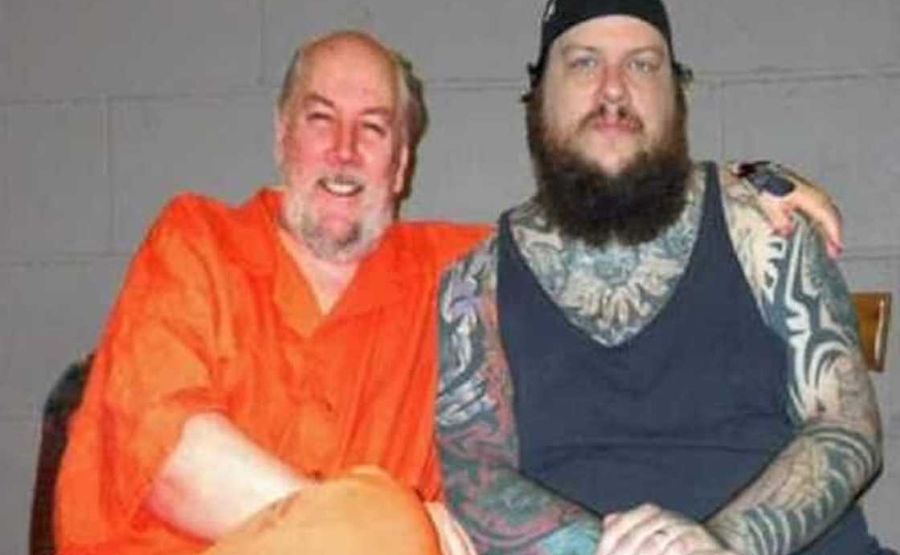
The Fan Problem
This is the part I can’t shake. Dwayne gets DMs from Iceman fans. Regularly. People who see his father as some kind of Tony Soprano figure, dangerous and cool, bad-boy charisma wrapped in a murder conviction.
A guy on his construction crew told him he looked like the Iceman. I laughed about it. Stopped laughing when Dwayne didn’t.
There are forums. Subreddits. Merchandise. You can buy Iceman memorabilia. The victims — Malliband, Hoffman, Smith, Masgay, Deppner — are mostly footnotes, or worse, just named in connection to how they were killed rather than who they were. That’s the economy of true crime celebrities: the killer inflates, the victim deflates, the family gets to live in the wreckage of both.
Merrick keeps her father’s ashes in a gray marble urn on her mantelpiece. She was the only one who wanted them. Their mother asked for her own ashes to be kept in a different room when she died.
Let that land.
Sister Stories, Briefly
Merrick Grayson — 61, sharp, survived it all — has complicated feelings that she describes with remarkable precision. She remembers a shoe shopping trip with her father. New Mary Janes plus boots, lunch on the way home. A memory she’s held for 50 years. She also remembers gripping the car door on the drive, terrified he’d lose his mind at another driver.
“I would have worn the cheapest shoes for one normal day,” she said.
She loved him. She says so. She also says she’s the only one who did. Barbara visited Richard for the first ten years in prison — she also, reportedly, was paid to convince him to do the HBO interviews, which is a whole other layer of complication that deserves its own article. The “Good Richie/Bad Richie” framing Barbara gave every interviewer reads differently when you know he stabbed her in the back to keep her from leaving, early in their relationship. That’s not a dual personality. That’s a man who had complete control over which version of himself he showed, and chose violence when it was useful.
Christin, the youngest daughter, keeps a blog. Doesn’t say much publicly. Neither does Barbara anymore.
What Dwayne Actually Is
Not a criminal. Not a victim in the made-for-TV sense. Not a cautionary tale. Not a feel-good redemption arc, either — he’s too grounded for that performance.
He’s a 57-year-old man who grew up in genuine domestic terror, spent some years making bad decisions, then built a life with his hands and raised a kid he refuses to make afraid of.
He sat across from a journalist in a New Jersey diner — forty years after his father’s arrest — and talked about it for the first time. Calmly. Clearly. With what I’d call an earned flatness.
He still doesn’t understand fan worship. Probably never will. Probably shouldn’t have to.
The hatchet by the bed was real. The baseball games that never happened were real. The relief when his father got arrested was real. Everything else — the legend, the mythos, the HBO specials, the Michael Shannon movie — that’s the noise that grew up around one family’s nightmare and called itself entertainment.
Dwayne just lives in the aftermath. That’s the job nobody signs up for and nobody else sees.
Final Words
No one truly wants a true crime tale about Dwayne Kuklinski—not the kill count, not the freezer, not the Daily News headline about the cyanide burger. It’s the story of a kid who armed his bedroom against his own father. Who called his thanks to the cop who arrested him, years later, through a journalist. who silently decided that the cycle ended with him while holding his baby boy.
Nobody will make an HBO documentary about that. There’s no orange-tinted sunglasses, no dead-eyed stare into the camera, no theatrical confession to a body count. Just a man, a construction site, a son who doesn’t fear him, and a very deliberate silence about everything else.
A lot of work is being done by that stillness. I respect it.
FAQs
1. Is Dwayne Kuklinski a criminal like his father?
No. He’s had his troubles — arrested at 27, vague on the details — but he built a straight life in construction and has been open that he owns his choices without blaming Richard.
2. Did Dwayne know what his father was doing?
Not the killings. Nobody in the family did. They knew “Bad Richie” — the rages, the violence — but the contract killing was hidden behind a suburban facade.
3. Why did Dwayne keep weapons in his bedroom as a kid?
Protection against his own father. A bat by the door, a hatchet by the bed. In case Richard came for him in the night. He said this to Rolling Stone, flatly, like it was just a fact of childhood.
4. Does Dwayne have contact with true crime fans?
Unwillingly. He gets hundreds of Facebook friend requests from people who idolize his father. He’s publicly stated he doesn’t understand it and finds it troubling.
5. Did Dwayne attend his father’s trial?
Yes. He, his mother Barbara, and his sisters Merrick and Christin attended the 1988 trial together.
6. What did Richard say when Dwayne stood up to him?
“I was aware that this day would arrive.After that, they departed. Then got arrested shortly after. Dwayne has described this as the defining moment of his adolescence.
7. How did Dwayne react to his father’s death in 2006?
He hasn’t said publicly in great detail. Merrick was the only family member who wanted Richard’s ashes. That tells you something.
8. Does Dwayne have children?
Yes, a son, now about 12-13 years old. Dwayne says holding him for the first time changed his life — the first thing that mattered more to him than himself.
9. How many people did Richard Kuklinski actually kill?
Cops and forensic experts estimate 10–15. Richard claimed up to 200. The inflated number served his prison reputation. He was convicted of five murders.
10. Did Barbara Kuklinski know about the killings?
She says no. She was aware of his harsh and domineering nature. She visited him in prison for ten years and reportedly was paid to convince him to do the HBO interviews.
11. Why did Merrick Kuklinski keep her father’s ashes?
She says she was the only one who loved him. She keeps a framed photo and his ashes on her mantle. Her mother requested her own ashes be kept in a separate room when she dies.
12. Has Dwayne ever spoken publicly before the 2026 Rolling Stone interview?
No. He specifically said he was speaking to a journalist for the first time, forty years after his father’s arrest.
Read beyond the ordinary with The Nexus Magazine.